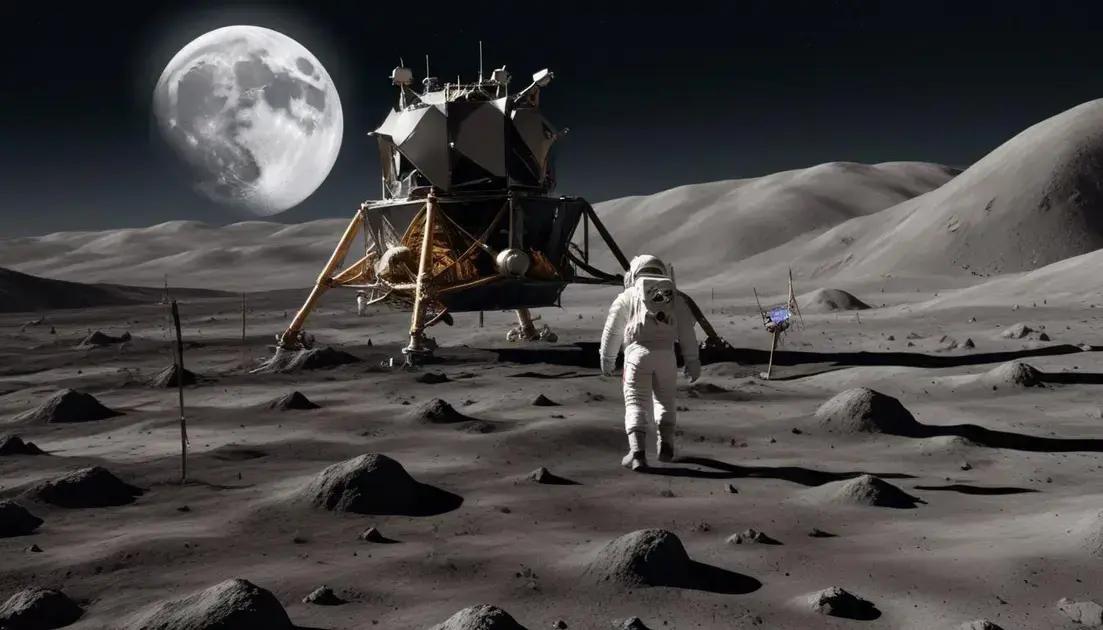
Sputnik and Gagarin: The Space Pioneers
The legacy of Soviet space exploration has greatly influenced modern science and technology. Landmark achievements like the launch of Sputnik and Gagarin’s flight paved the way for international collaboration in space. These innovations not only inspired future generations but also led to advancements we use today, including satellite communications and the development of the International Space Station. The impact of these early missions continues to shape our understanding and approach to space exploration.
When we talk about space exploration, we cannot overlook the monumental contributions of the Soviet Union, especially with pioneers like Gagarin. Curious about how these early adventures shaped our journey into the cosmos? Let’s dive in!
The Early Days of Space Exploration
The early days of space exploration were exciting and full of challenges. In the 1950s, the world watched as nations raced to explore the final frontier. The Soviet Union took a giant leap when they launched Sputnik in 1957. It was the first artificial satellite ever to orbit Earth.
People around the globe were amazed. Sputnik beeped signals back to Earth, and it wasn’t long before the United States responded by launching their own satellites. This race pushed both countries to innovate rapidly.
Another key moment came in 1961 when Yuri Gagarin became the first human to travel into space. His mission lasted about 108 minutes, orbiting Earth once. Gagarin’s achievement made headlines everywhere, showing that humans could venture beyond our planet.
The excitement didn’t stop there. Each achievement built on the last. Countries began developing more advanced technology. Engineer teams worked tirelessly to improve rockets and satellites. Every successful mission inspired new dreams and sparked public interest in space.
Schools started teaching kids about space. Books and movies about astronauts captured the imaginations of children. Gagarin became a hero, not just in the Soviet Union but also around the world. He showed that we could reach beyond the sky.
As nations continued their quests, the idea of exploring deep space began to take shape. The early missions set a foundation for everything that followed. Human curiosity and the drive to explore have always led to great discoveries, and space exploration was just beginning.
Sputnik: The First Satellite
Sputnik was the world’s first artificial satellite. Launched by the Soviet Union on October 4, 1957, it changed everything. This small metallic ball measured about 58 centimeters in diameter. It weighed around 83.6 kilograms, but its impact was huge.
People around the globe watched with excitement as Sputnik beeped radio signals back to Earth. It orbited our planet every 96 minutes. This accomplishment shocked many, especially in the United States. It marked the start of the space race.
The launch of Sputnik led to a wave of curiosity. Schools taught students about space, and families gathered around radios to listen to updates. It sparked interest in science and technology among young people.
This mission was not only important for science but for politics, too. Many saw it as a symbol of Soviet strength. The U.S. government realized it needed to catch up in space technology. This pushed America to invest more in education and research.
After Sputnik, further missions followed. The world eagerly awaited news about what would come next. Sputnik showed us that space was within reach, and humanity’s journey into the cosmos had just begun. This tiny satellite opened the door to a new era of exploration, adventure, and discovery.
Gagarin’s Historic Flight
Yuri Gagarin made history on April 12, 1961. He became the first human to journey into space. His spacecraft, Vostok 1, launched from the Soviet Union. Gagarin’s flight lasted about 108 minutes and orbited Earth once.
As he flew, Gagarin saw our planet from space for the first time. It was an amazing sight. He reported how beautiful Earth looked. His famous words were, “I see Earth! It is so beautiful!”
Gagarin’s successful mission changed everything. It showed that humans could travel beyond our atmosphere. This flight also sparked strong emotions worldwide. Many celebrated his bravery and achievement. He became a hero instantly, loved by millions.
His journey was not just a victory for the Soviet Union. It made people everywhere dream about space exploration. Schools taught kids about Gagarin’s historic flight. It inspired new generations to pursue careers in science and engineering.
After the flight, Gagarin toured the world. He spoke at events and shared his experience. People wanted to meet the man who journeyed into space. His flight marked the beginning of human space travel and opened doors for future missions.
The Impact of Soviet Achievements on Space Race
The Soviet achievements in space had a huge impact during the space race. The launch of Sputnik in 1957 shocked the world. It proved the Soviet Union could lead in space technology. This event caused a wave of excitement and fear.
Following Sputnik, Yuri Gagarin’s historic flight in 1961 was a game-changer. Gagarin’s mission showed that humans could travel into space. This success put pressure on the United States to catch up quickly.
In response, America invested heavily in its space program. President Kennedy famously set the goal to land a man on the Moon by the end of the 1960s. This promise fueled innovation and scientific breakthroughs in the U.S.
Meanwhile, the Soviets continued to achieve remarkable feats. They sent the first woman, Valentina Tereshkova, into space in 1963. Each success pushed the competition further, igniting public interest around the globe.
The achievements from both countries inspired many young scientists and engineers. Students started focusing on math and science. The space race encouraged nations to invest more in research and education.
Ultimately, the space race changed how we view our universe. It sparked a spirit of exploration that continues today. Many of the tools we use for space exploration now were developed during this intense period of competition.
Legacy of Soviet Space Exploration
The legacy of Soviet space exploration continues to influence our world today. The successful missions inspired future generations to pursue careers in science and technology. Gagarin’s flight opened many doors for human space travel.
After Gagarin, the Soviet Union launched more missions. They sent the first space station, Salyut, into orbit in 1971. These early programs demonstrated how humans could live and work in space.
Soviet achievements laid the groundwork for international cooperation in space. In the 1990s, many former programs collaborated with NASA. This helped grow the International Space Station (ISS), combining ideas and resources from different countries.
The advancements in rocket technology from the Soviet era also changed space exploration. These innovations made space travel safer and more efficient. They pushed other nations to enhance their space programs and technologies as well.
Today, many people benefit from the technologies they developed. Satellites, telecommunications, and GPS technologies stem from these early space missions. Even our daily lives are shaped by the results of their pioneering efforts.
The spirit of exploration and innovation from Soviet space exploration continues to inspire us. It reminds us of the importance of dreaming big and reaching for the stars.
Conclusion
In conclusion, the legacy of Soviet space exploration has shaped our understanding of science and technology today. Their remarkable achievements, from launching Sputnik to trailblazing human spaceflight, have inspired generations. These missions not only opened the doors to space but also set the stage for international collaboration.
We continue to benefit from their innovations, which have improved technology in our daily lives. From satellite communications to advances in science, their impact is still felt. By learning from this rich history, we can encourage curiosity and exploration in future generations. Let’s keep dreaming big and reaching for the stars!