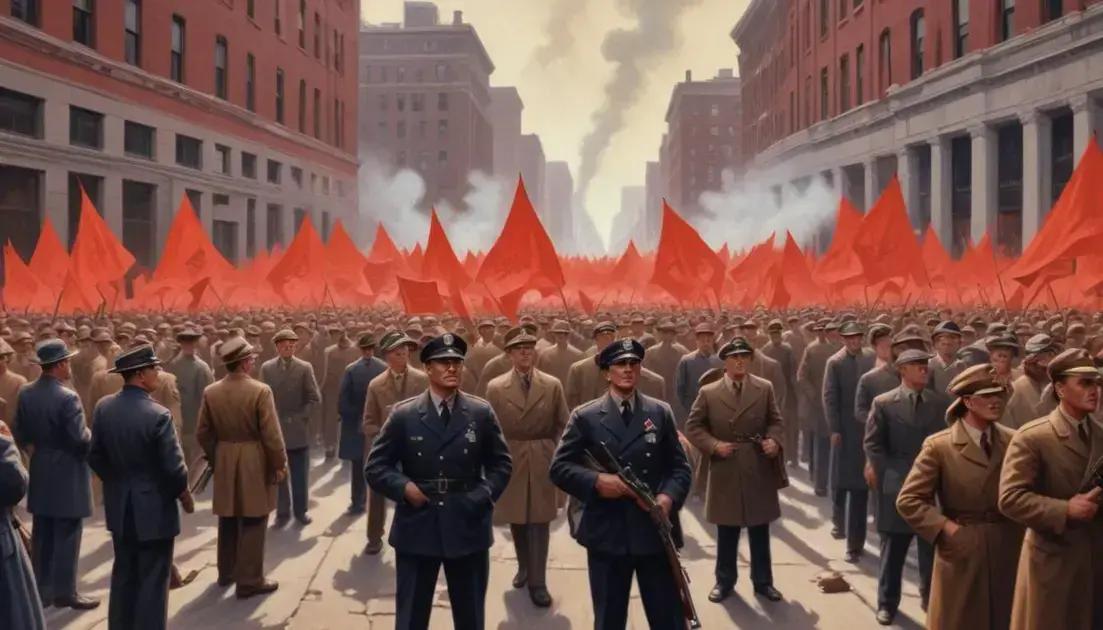
Fear and Surveillance: Control in Cold War Societies
The Cold War era was marked by fear and surveillance, significantly impacting societal norms and individual freedoms. Governments implemented censorship and ideological control to monitor citizens and suppress dissent. Lessons from this period underscore the importance of transparency, critical thinking, and respect for privacy in today’s society. Understanding these historical tactics can help prevent similar practices from resurfacing, promoting a more open and engaging environment for all.
In the tense atmosphere of the Cold War, the interplay of fear and surveillance became a crucial tool for control. What can we learn from this era? Join us as we explore these fascinating dynamics!
Understanding the Climate of Fear in the Cold War
The Cold War was a time filled with tension and uncertainty. People lived in fear of potential threats and conflicts. Governments used this fear to justify many actions. They believed that monitoring citizens was necessary for safety. This created a sense of distrust among friends and families.
The Role of Propaganda
Propaganda played a big part in shaping public perception. Governments spread messages that exaggerated threats. This helped to maintain a state of fear among the population. News reports often focused on dangers, reinforcing the idea that vigilance was essential.
Effects on Daily Life
Daily life was impacted in many ways. Citizens changed their behaviors, sometimes even avoiding certain topics in conversation. Schools taught children about the importance of being alert. This constant monitoring made everyone feel like they were under watch.
Case Studies of Fear Tactics
Many governments had specific tactics to instill fear. Some used surveillance techniques to keep track of suspected dissidents. Others spread rumors to create chaos and distrust among communities. These actions made it clear that the ‘enemy’ could be anyone.
Social events often showcased loyalty to the state. Public gatherings became spaces for displaying patriotism and discouraging dissenting views. This environment made it hard for people to speak out or share their opinions freely.
The Role of Surveillance Tactics
Surveillance tactics were a key part of life during the Cold War. Governments believed that watching citizens would keep them safe. They used various methods to monitor behavior, from wiretaps to neighborhood watch groups. These tactics aimed to catch potential threats before they could act.
Types of Surveillance Used
Different types of surveillance were common. For example, many governments employed spies to gather information. They also used cameras in public places to track movements. This constant observation made people feel uneasy and on edge.
Community Involvement
Sometimes, communities were encouraged to help with surveillance. Neighbors were asked to report suspicious activity. This led to a culture of distrust, where people felt they couldn’t trust even those close to them. The idea was to create a watchful environment.
The Impact on Privacy
Privacy was greatly affected by these tactics. Many individuals felt their personal lives were no longer private. Even simple actions were subject to scrutiny. This created a sense of fear that stopped people from expressing their true feelings and opinions.
Surveillance also influenced how people communicated. Many avoided discussing sensitive topics, knowing they might be overheard. This resulted in self-censorship, where individuals modified their behavior to avoid trouble.
Impact of Ideological Control
Ideological control was an important aspect during the Cold War. Governments used it to influence people’s thoughts and beliefs. By controlling information, they shaped the way citizens understood the world around them.
The Power of Media
The media played a big role in spreading ideology. News outlets often reported biased stories that supported the government’s views. Propaganda movies and posters reinforced the ideas of loyalty and fear. This made it hard for people to see alternative perspectives.
Education as a Tool
Schools also served to instill ideological beliefs. Students learned that their country was always right. Textbooks omitted facts that could challenge these beliefs. This created a generation that accepted the official story without question.
The Consequences of Control
When governments exercise ideological control, dissent is often silenced. People who question the official narrative might face serious consequences. This leads to a culture of fear and conformity. Most people avoid speaking out to stay safe.
Some citizens felt isolated because they couldn’t share their true feelings. Friendships and family ties were strained due to differing views. This created a society where trust was hard to find.
Censorship: Tools and Tactics
Censorship was a significant tool during the Cold War. Governments used it to control the flow of information. By restricting access to certain ideas, they aimed to maintain their power. Censorship affected everything from books to films and news articles.
Methods of Censorship
There were many methods of censorship. One common tactic was banning books. Books that criticized the government or promoted different ideas were removed. This limited access to alternative viewpoints.
Controlling Media
Media outlets were another target. Governments often controlled what news could be reported. They required journalists to follow strict guidelines. This way, only the state’s perspective was presented to the public.
Impact on Entertainment
Even entertainment was not safe from censorship. Movies and music were monitored for messages that didn’t align with government ideology. Artists faced pressure to create content that matched official narratives. Many avoided controversial topics to avoid trouble.
Censorship created an environment where people felt unsafe to express themselves. This led to a culture of silence and fear. Many stopped questioning or exploring new ideas because of the risk involved.
Case Studies of Surveillance in Cold War Societies
Case studies reveal how surveillance affected societies during the Cold War. Different countries used various methods to monitor their citizens. Let’s look at some notable examples.
East Germany and the Stasi
In East Germany, the Stasi was a powerful surveillance agency. They had thousands of informants spying on ordinary citizens. Their aim was to maintain control by discovering dissent quickly. The atmosphere was filled with paranoia and distrust among the people.
The Soviet Union’s Monitoring
The Soviet Union also had extensive surveillance systems. KGB agents kept a close eye on anyone who spoke against the government. This included artists, writers, and everyday citizens. Fear of arrest for one’s thoughts was common.
United States and the Red Scare
In the United States, the Red Scare led to significant surveillance as well. The government monitored supposed Communists and radicals. FBI surveillance included wiretapping and monitoring of private organizations. This created a climate where many felt their freedoms were at risk.
These case studies show the powerful role of surveillance in shaping public life. The constant monitoring built a culture of fear, affecting how people interacted daily.
Lessons Learned for Today
The Cold War teaches us many lessons that are still relevant today. One key lesson is the danger of fear-driven policies. People should always question how fear influences government actions.
The Importance of Transparency
Governments need to be transparent in their actions. When people know what their leaders do, trust builds. Transparency can help prevent the misuse of power and protect civil liberties.
Critical Thinking and Media Literacy
Education plays a big role in promoting critical thinking. Citizens should learn how to analyze information. Understanding media sources helps people resist manipulation and propaganda.
Respect for Privacy
Today’s technology allows for easy surveillance. It’s important to respect personal privacy. People should be aware of their rights and how to protect their information in a digital age.
Reflecting on history can guide us in making better choices now. By remembering the lessons from the Cold War, we can work toward a more open and trusting society.
Conclusion
In conclusion, the lessons from the Cold War remind us of the ongoing need for vigilance and awareness. Understanding the impact of fear, surveillance, and censorship can help prevent history from repeating itself. Transparency, critical thinking, and respect for privacy are essential in today’s world.
By reflecting on how these issues affected societies in the past, we can better safeguard our freedoms today. It’s important to remain engaged citizens to ensure that our rights are respected and that we learn from history rather than ignore it. Ultimately, promoting an open society will lead us towards a more just and thoughtful future.
Tags: