Marxism-Leninism: Theory, Revolution and Power
Marxism-Leninism significantly influenced education, culture, and politics in the Soviet Union and beyond. By establishing a single-party system, it emphasized state control, creating a powerful propaganda machine that shaped societal norms and values. This ideology not only impacted domestic policies but also extended its reach globally, inspiring communist movements in various countries. The cultural landscape was redefined with a focus on socialist themes in literature and art, although this often came at the expense of individual expression. Understanding the political ramifications and cultural shifts driven by Marxism-Leninism remains essential for comprehending contemporary global relations.
Marxism has been a foundational ideology shaping nations and movements across the globe. But what does it truly mean in practical terms?
Overview of Marxism-Leninism
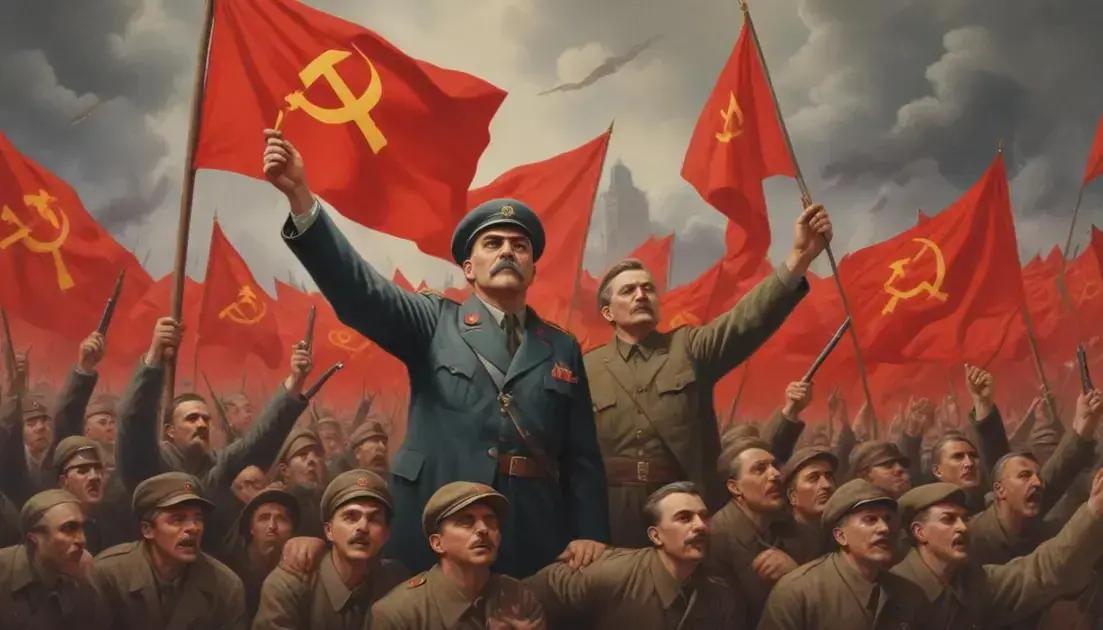
Marxism-Leninism is a political ideology developed from the ideas of Karl Marx and Vladimir Lenin. It combines Marx’s theories about society and economics with Lenin’s strategies for revolution. This ideology became the backbone of Soviet policies and influenced many other movements worldwide.
At its core, Marxism-Leninism focuses on the struggle between different social classes. It argues that the working class must rise against the capitalist class to create a classless society. Lenin expanded on Marx’s ideas, emphasizing the need for a vanguard party to lead this revolution. This party would guide the proletariat to overthrow the ruling elites.
One key concept is the idea of socialism as a transition phase. After the revolution, countries would move toward communism, where all property is owned collectively. Early followers believed that achieving socialism would require a strong, centralized government to manage resources and direct the economy.
Over time, Marxism-Leninism shaped not only politics but also culture and education in Soviet states. Schools, art, and media were influenced by this ideology. It aimed to promote a unified vision of society based on these principles.
Marxism-Leninism has faced criticism over the years. Some argue that it leads to authoritarianism and stifles individual freedoms. Despite this, its influence remains significant in many countries around the globe.
Understanding this ideology helps us grasp various social and political movements today, as its impact is still felt in contemporary politics.
Education under Soviet Influence
Education under Soviet influence played a vital role in shaping citizens’ beliefs and values. The Soviet government saw education as a means to promote Marxism-Leninism. Schools taught students about communism and the importance of collective ownership.
Curriculums focused on science, technology, and ideology. Children learned about the achievements of socialism and the leadership of the Communist Party. Daily activities slowly introduced them to the ideals of their leaders.
Teachers became crucial in this educational system. They were expected to instill loyalty to the state. Stories of heroic workers and revolutionary leaders were common in lessons. This created a sense of pride and unity among students.
Higher education was also impacted. Universities offered specialized training that aligned with state needs. Fields like engineering and medicine were emphasized to support a growing economy.
However, the system had its challenges. Artistic and creative subjects often faced restrictions. Education focused more on conformity than innovation. Many students felt pressured to follow a strict ideological path, limiting their potential.
Despite this, education remained a powerful tool. It helped to reinforce the government’s control. Children were taught to value the community over the individual. This approach shaped a generation of Soviet citizens molded by a single ideology.
Cultural Impacts
Cultural impacts of Marxism-Leninism were significant in shaping Soviet society. The government used culture as a tool to promote its ideology. It encouraged arts and education that aligned with Marxist beliefs.
Literature flourished under strict guidelines. Writers were expected to create works that celebrated the working class and the successes of socialism. Notable authors like Maxim Gorky became key voices for the regime.
Film and theater also served as platforms for propaganda. Movies often depicted heroic workers and the triumphs of the revolution. These productions aimed to inspire loyalty and pride among citizens.
Music played an important role too. Composers created songs that celebrated the Soviet state. The goal was to foster a sense of unity and purpose among the people.
While culture thrived, it faced restrictions. Many artists struggled with censorship. Those who did not follow party lines risked persecution. This pressure led to a creative tension within the arts.
Moreover, traditional values often clashed with new ideologies. Folk culture was sometimes suppressed in favor of a more uniform Soviet identity. Yet, communities found ways to preserve their heritage despite state control.
Overall, Marxism-Leninism greatly influenced cultural expressions. It shaped how art, literature, and music developed in Soviet society. The effects of these changes can still be seen today in former Soviet states.
Political Ramifications
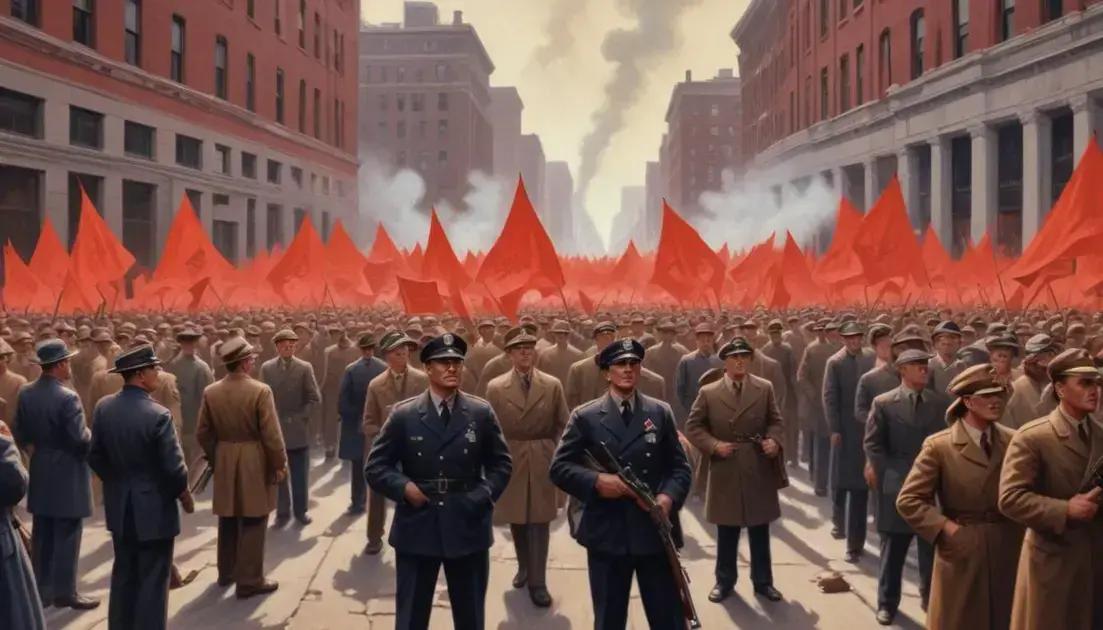
Political ramifications of Marxism-Leninism shaped the structure of government in Soviet states. It emphasized a single-party system controlled by the Communist Party. Dissent was not tolerated, and political opposition was often repressed.
This ideology promoted the idea that the party represents the people’s will. However, in reality, it concentrated power in the hands of a few leaders. Citizens had limited options to influence policies or leadership.
The government controlled all aspects of life, including the economy, media, and education. This control aimed to ensure loyalty to the state and its ideals. State-sponsored propaganda reinforced the belief in the superiority of socialism.
Marxism-Leninism also affected international relations. The Soviet Union sought to spread its ideology to other countries. It supported various communist movements worldwide, leading to proxy wars and tensions during the Cold War.
Critics argued that this foreign policy often resulted in conflict. Nations influenced by Soviet ideals ended up under authoritarian regimes. Human rights abuses became common in the name of maintaining stability.
Despite its emphasis on social equality, many faced oppression under this political system. Political purges and show trials were used to eliminate threats to power. Citizens were often afraid to express their opinions freely.
Overall, the political impact of Marxism-Leninism was profound. It established a system that prioritized power and control, affecting millions of lives.
Global Reach of Soviet Ideology
The global reach of Soviet ideology extended far beyond the borders of the USSR. Marxism-Leninism sought to spread its principles around the world. Many countries adopted these ideas during the 20th century, especially after World War II.
Communist parties formed in various nations, inspired by the Soviet model. These parties aimed to seize power and establish socialist governments. Some succeeded, creating regimes aligned with Moscow.
Europe saw a rise in communist influence. Countries like Poland and East Germany were under Soviet control. Here, the government enforced Marxist-Leninist principles in politics, economy, and culture.
In Asia, China adopted a version of this ideology under Mao Zedong. The Chinese Communist Party followed a similar path to power. This led to a significant shift in the balance of power in Asia.
In Africa and Latin America, many liberation movements were influenced by Soviet ideas. Countries like Cuba became major allies of the USSR. These nations sought to challenge Western imperialism through socialism.
However, the spread of Soviet ideology wasn’t without problems. Many nations faced internal conflict due to divisions over Marxist principles. Some governments became authoritarian, losing sight of the original ideals.
As the Cold War progressed, tensions rose between capitalist and communist nations. The Soviet Union and its allies often clashed with Western powers, leading to proxy wars. This conflict shaped international relations for decades.
Today, the legacy of Soviet ideology can still be seen in some countries. While communism has evolved, its roots in Marxism-Leninism remain significant in global politics.
Conclusion
In conclusion, the impact of Marxism-Leninism on education, culture, and politics has been profound. This ideology shaped not only the Soviet Union but also many other countries around the globe. Through its emphasis on a single-party system, the promotion of state control, and the spread of its ideas, Marxism-Leninism left a lasting legacy.
The cultural influences can still be seen today, as artists and writers continue to explore themes of identity and power. Meanwhile, the political ramifications remind us of the power dynamics that can arise in authoritarian regimes.
Understanding how these ideologies spread and evolved helps us grasp the complexities of modern politics. As we reflect on the past, we can better appreciate the ongoing impact of these ideas in shaping societies around the world.