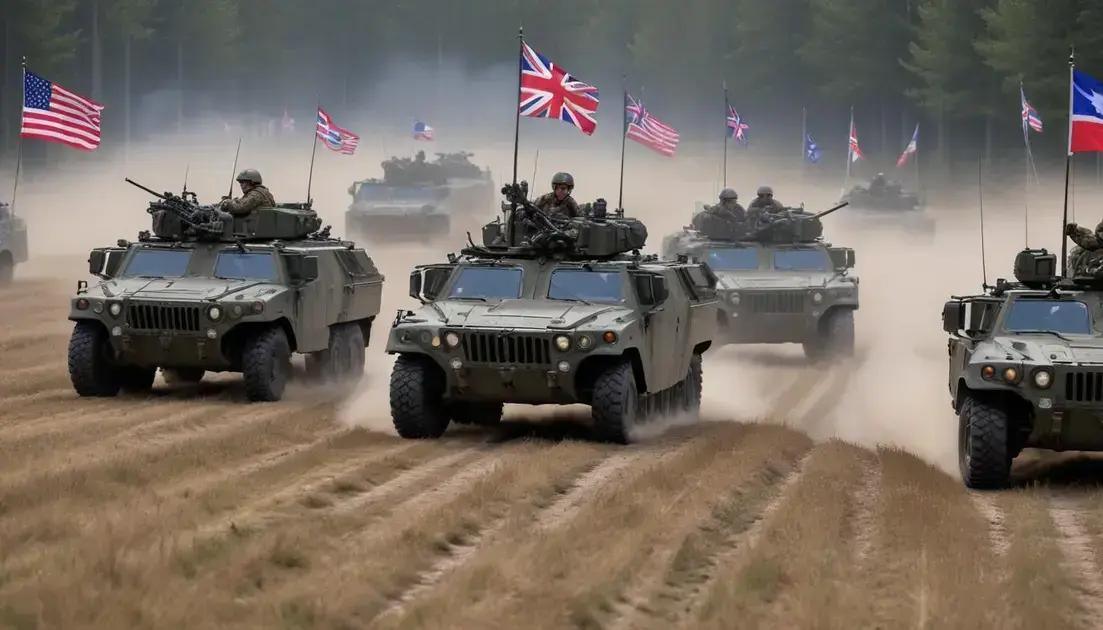
NATO: The Military Bloc That Survived the Cold War
NATO, or the North Atlantic Treaty Organization, is a military alliance formed in 1949 to ensure collective defense among its member states. Initially created to counter the Soviet threat, NATO has evolved to address modern challenges such as terrorism and cyber security. The alliance focuses on cooperation, partnerships beyond Europe, and its presence in Eastern Europe in response to regional tensions. Key events like the Korean War and the 9/11 attacks have significantly shaped NATO’s mission, reinforcing its relevance in maintaining global security today.
NATO is a remarkable military alliance that has not only survived the Cold War but has adapted to the complexities of modern geopolitics. Curious about its journey? Let’s delve in!
Formation and Purpose of NATO
NATO, or the North Atlantic Treaty Organization, was formed in 1949. Its main goal was to provide collective defense against the threat from the Soviet Union. When one member is attacked, all members respond together. This principle makes NATO a strong alliance.
Why NATO Was Created
The fear of Soviet expansion after World War II pushed Western countries together. They wanted to ensure their safety and protect democratic values. By forming NATO, countries like the U.S., Canada, and several European nations united for mutual defense.
Key Principles of NATO
NATO operates on the principle of collective security. This means that an attack on one member is seen as an attack on all. It’s like having a group of friends who support each other. If one friend is in trouble, everyone steps in to help.
Expansion Over Time
Since its founding, NATO has grown. New members have joined, which shows the alliance’s importance. Countries in Eastern Europe sought membership to ensure their security and strengthen ties with the West.
NATO’s Role Today
Today, NATO faces new challenges. These include terrorism, cyber threats, and other global issues. The alliance continues to adapt its strategies to meet these modern challenges and ensure the safety of its members.
Adaptation Post-Cold War
After the Cold War ended, NATO faced new challenges. It needed to evolve and respond to a changing world. Instead of just a military focus, NATO began to include political and economic cooperation.
New Challenges and Responses
With the fall of the Soviet Union, NATO expanded its mission. It aimed to handle crises in Europe and beyond. The alliance participated in peacekeeping operations to stabilize regions like the Balkans.
Partnerships Beyond Europe
NATO grew its partnerships with countries outside Europe. For example, it established relationships with nations like Japan and Australia. These partnerships help NATO tackle global security issues together.
Focus on Counter-Terrorism
In the wake of 9/11, counter-terrorism became a key focus. NATO joined forces with other nations to combat terrorism worldwide. They conducted military operations and shared intelligence to increase security.
Cybersecurity Initiatives
As technology advanced, cyber threats emerged. NATO recognized the importance of cybersecurity. It started initiatives to strengthen defenses against cyber attacks on member states.
Continued Relevance
Even after the Cold War, NATO remains vital. It adapts to new threats, ensuring the safety of its members. The alliance’s ability to change helps it address modern challenges like terrorism and cybercrime.
Key Events that Shaped NATO
NATO has been shaped by several key events throughout its history. Each event influenced the alliance’s mission and strategies. These moments were crucial in defining NATO as we know it today.
The Signing of the Washington Treaty
On April 4, 1949, twelve countries signed the Washington Treaty. This founding act established NATO. It marked the start of collective defense and strong military cooperation.
The Korean War
The Korean War began in 1950 and tested NATO’s resolve. It highlighted the need for a unified military response. This crisis led NATO to strengthen its military planning and response capabilities.
The Cuban Missile Crisis
In 1962, the Cuban Missile Crisis brought NATO’s unity into focus. The threat of nuclear war revealed the importance of strong alliances. NATO countries worked closely to communicate and coordinate during this tense period.
The Fall of the Berlin Wall
The fall of the Berlin Wall in 1989 was a turning point for NATO. It signaled the end of the Cold War. Following this, NATO redefined its purpose and expanded into Eastern Europe.
Post 9/11 Operations
After the September 11 attacks in 2001, NATO invoked Article 5 for the first time. This article states that an attack on one member is an attack on all. NATO led military operations in Afghanistan to combat terrorism.
Recent Challenges
In recent years, NATO has faced new threats. Cybersecurity, terrorism, and regional conflicts have tested the alliance. NATO continues to adapt and respond to these evolving challenges.
Current Relevance of NATO
NATO remains a vital alliance in today’s world. The organization adapts to meet new security challenges. It’s not just about military strength; NATO focuses on cooperation and diplomacy.
Responding to Global Threats
Current global issues make NATO’s role important. NATO addresses threats like terrorism and cyber attacks. It works to protect both member states and global security.
Collective Defense
The principle of collective defense is at NATO’s core. If one member is attacked, all respond together. This unity provides a strong deterrent against potential aggression.
Partnerships with Other Nations
NATO collaborates with other countries and organizations. These partnerships strengthen security across the globe. Countries outside the alliance can work with NATO on shared goals.
Focus on Eastern Europe
NATO pays close attention to Eastern Europe. Russia’s actions have raised concerns among member states. NATO has increased its presence in the region to reassure its allies.
Future Challenges
NATO faces challenges like climate change and resource shortages. These issues could impact global security. The alliance is exploring how to address these emerging threats.
Conclusion
In conclusion, NATO’s role remains crucial in today’s world. The alliance adapts to new threats, ensuring member states are safe. By focusing on collective defense, NATO fosters unity and support among its members.
Moreover, NATO’s partnerships with other countries enhance global security. Together, they tackle issues like terrorism and cyber threats. As global challenges evolve, NATO continues to explore new strategies to address them effectively.
Ultimately, NATO’s commitment to cooperation and defense proves its relevance now and in the future. By standing strong together, member nations can face whatever challenges lie ahead.