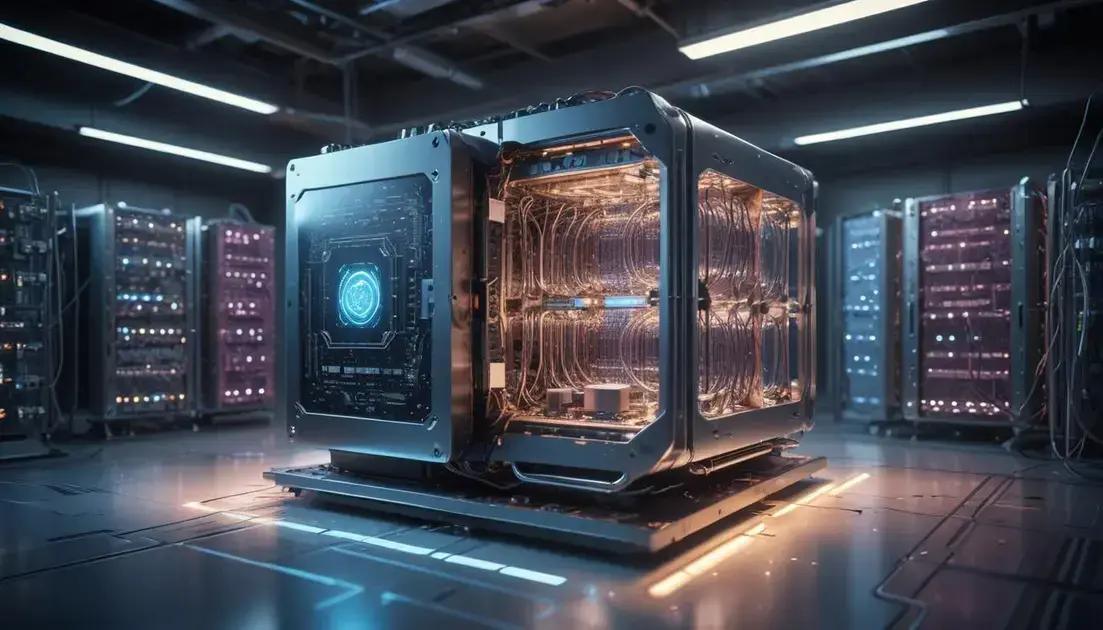
Quantum computing: the next technological revolution
The future of quantum processing promises significant advancements in speed and capability, transforming various industries such as healthcare and artificial intelligence. Major players like Google, IBM, and Microsoft are leading the charge, focusing on improving qubit stability and affordability. As these challenges are addressed, quantum technology could unlock new opportunities and redefine problem-solving processes across many sectors.
Curious about Quantum Computing? This technology is set to revolutionize everything from cybersecurity to artificial intelligence. Dive in with us!
The rise of quantum computing
The rise of quantum computing is changing the tech landscape. Traditional computers use bits, which are like tiny switches that can be on or off. But quantum computers use qubits. Qubits are special because they can be both on and off at the same time. This unique feature allows quantum computers to solve complex problems faster than ever.
Why is Quantum Computing Important?
Quantum computing can tackle problems that are too difficult for regular computers. For example, it can help in drug discovery by quickly analyzing large data sets. This means new medicines could be developed much faster.
The Key Players in Quantum Computing
Many countries are investing in quantum technology. Major tech companies like Google, IBM, and Microsoft are leading the charge. Each company is developing its own quantum systems to gain an edge. They are racing to build faster and more powerful quantum computers.
Challenges in Quantum Computing
Even with all the excitement, there are challenges. Quantum computers are still in their early stages. They are expensive to build and maintain. Researchers are also working on how to keep qubits stable. These hurdles need to be overcome to make quantum computers practical for everyday use.
What the Future Holds
The future of quantum computing looks bright. As technology improves, we might see it used in various fields like finance, medicine, and security. Imagine a world where computations that take years could be done in seconds. That’s the promise of quantum computing.
In summary, the rise of quantum computing is paving the way for amazing breakthroughs. It’s an exciting time in technology, and staying informed is essential as these developments unfold.
Implications for global supremacy
The implications of quantum computing for global supremacy are vast. Countries see it as a key to power and security. With quantum technology, nations can improve their military capabilities and intelligence operations. This advancement could shift the balance of power on a global scale.
Enhancing National Security
Quantum computing can make data encryption stronger, protecting sensitive information. This means that military and government secrets could be safer from cyber attacks. As nations work to harness this technology, securing data becomes crucial.
Economic Advantages
Countries leading in quantum computing could boost their economies. They can attract investments and skilled workers interested in this cutting-edge field. Industries like finance and healthcare could see increased efficiency and innovation.
Competition and Collaboration
While nations compete for dominance in quantum technology, collaboration is also important. Sharing knowledge can speed up advancements and create international standards. This cooperation could help address global challenges, such as climate change and public health.
Ethical Considerations
As quantum computing grows, ethical issues arise. Governments must consider the effects of their advancements on society. Finding a balance between progress and responsibility is essential.
The race for quantum supremacy is about more than technology. It affects how countries interact and compete with each other. Understanding these implications is essential as this technology continues to evolve.
Major players in quantum technology
The field of quantum technology is growing rapidly, and several major players lead the way. Tech giants like Google, IBM, and Microsoft are investing heavily in quantum research. They see it as a path to revolutionary new technologies.
Google’s Quantum Initiative
Google has made significant strides in quantum computing. Their quantum computer, named Sycamore, achieved quantum supremacy in 2019. This means it performed a complex calculation faster than the best supercomputers.
IBM’s Quantum Efforts
IBM is also a leader in this space. They offer a cloud-based quantum computing platform called IBM Quantum. This platform lets researchers and developers experiment with quantum algorithms without needing a quantum computer of their own.
Microsoft’s Quantum Program
Microsoft focuses on developing software for quantum computers. Their Q# language is designed to help programmers build quantum applications easily. Microsoft also supports partnerships to advance quantum research.
Other Key Players
Other companies are also making a mark. Startups like Rigetti Computing and IonQ are innovating in quantum hardware and algorithms. Governments are getting involved as well, investing in quantum research labs and universities.
The competition among these players fosters quick advancements in technology. As more companies join the race, we can expect exciting developments in the quantum field.
Future of quantum processing
The future of quantum processing holds amazing possibilities. As technology evolves, we can expect breakthroughs that improve our daily lives. Quantum computers could solve complex problems that traditional computers can’t handle.
Advancements in Speed and Power
Future quantum processors will be much faster and more powerful. Researchers are working on expanding qubit numbers. More qubits mean better processing and the ability to tackle larger tasks.
Real-World Applications
In the near future, quantum processing might help in various areas. For example, it could revolutionize drug discovery by simulating molecular interactions accurately. This can lead to new and effective medications.
Impact on Artificial Intelligence
Quantum computing could also enhance AI capabilities. It can analyze vast amounts of data quickly, leading to smarter algorithms. This means AI systems could become more efficient and effective.
Challenges to Overcome
Despite its potential, there are challenges ahead. Researchers need to find ways to keep qubits stable over long periods. Also, building practical quantum computers that are affordable remains a challenge.
The path to the future of quantum processing is exciting yet complex. With ongoing research and investment, we may unlock its full potential sooner than we think.
Conclusion
In conclusion, the future of quantum processing is bright and full of potential. As technology progresses, we can expect major advancements that will change how we solve problems. Quantum computers could transform industries, from healthcare to artificial intelligence, making processes faster and more efficient.
Challenges remain, such as maintaining qubit stability and making these systems affordable. Yet, with continued research and investment, we are likely to see exciting breakthroughs. Embracing the power of quantum processing will be essential to unlock new opportunities and improve our world.