Space shuttles: when the dream of space became routine
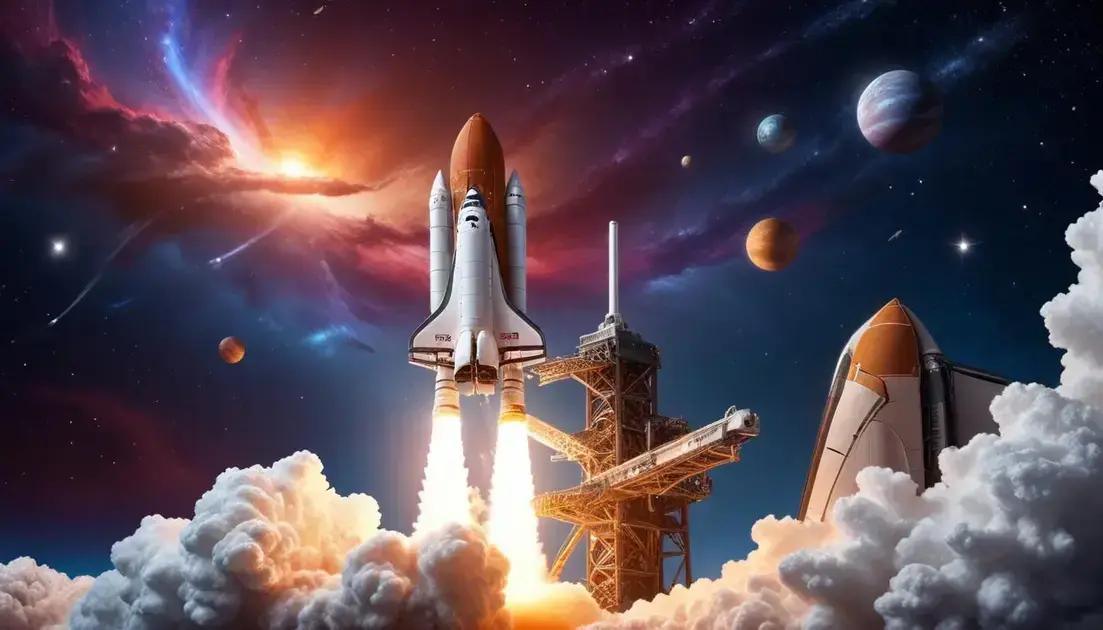
The Space Shuttle program greatly influenced space exploration and technology, completing 135 missions from 1981 to 2011. It played a key role in constructing the International Space Station and advancing scientific research in microgravity. The program inspired generations to pursue STEM fields and established a legacy of innovation that continues to impact our understanding of space and life on Earth.
Space Shuttle missions changed the course of history, transforming our perception of travel and exploration beyond Earth. Have you ever wondered how a mere dream morphed into regular journeys among the stars?
The evolution of space travel
The journey of space travel began with dreams and ambitions to explore beyond our planet. In the early days, humans looked up at the stars and wondered what lay beyond. This curiosity sparked the development of rockets and missions to reach space.
In the 20th century, technology advanced rapidly. The first successful manned space mission was the Vostok 1, launched by the Soviet Union in 1961. Yuri Gagarin became the first human to orbit the Earth, marking a historic milestone in space exploration.
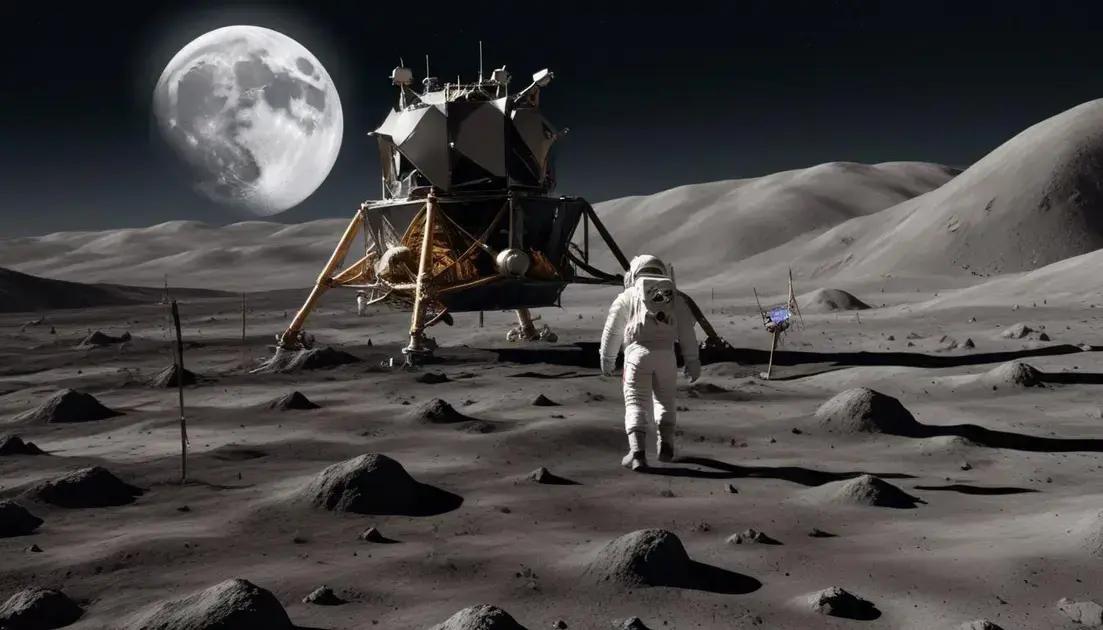
The 1960s saw the famous Apollo missions. Apollo 11 in 1969 was a groundbreaking achievement when humans first landed on the Moon. Neil Armstrong’s famous words, “That’s one small step for man, one giant leap for mankind,” inspired generations.
As the years went by, the focus shifted from just reaching space to living and working there. The Space Shuttle program, which began in the 1980s, allowed astronauts to travel back and forth to space more easily. Shuttles like Atlantis and Endeavour made regular trips, carrying supplies and astronauts to the International Space Station (ISS).
Today, space travel is more accessible than ever. Private companies are now joining the race for we are seeing advancements in reusable rockets, which reduce the cost of space missions. Exciting plans for Mars exploration are also in the works. Who knows what the future holds?
Iconic space missions
Many iconic space missions changed how we see the universe. Each mission had its own story and impact on science. One of the most famous is the Apollo 11 mission. In 1969, astronauts Neil Armstrong and Buzz Aldrin landed on the Moon. Their journey marked a great leap for humankind.
Another important mission was the Space Shuttle program, which began in the 1980s. The Space Shuttle flew 135 missions, taking astronauts to the International Space Station. It made space travel routine and brought many scientific advancements.
The Mars rovers, like Spirit and Opportunity, were also game changers. Launched in 2003, these small robots explored the Martian surface for years. They provided valuable information about the planet’s geology and atmosphere.
More recently, the Mars Perseverance Rover landed in 2021. It’s searching for signs of past life and collecting rock samples. This mission is key in understanding our neighboring planet.
Lastly, the Hubble Space Telescope has given us breathtaking images of the universe. Launched in 1990, it helped discover new galaxies and study cosmic phenomena. These missions inspire everyone to look up and imagine our place in the cosmos.
Challenges faced by astronauts
Astronauts face many challenges during their missions in space. Life aboard a spacecraft is very different from life on Earth. One of the biggest challenges is dealing with weightlessness. Floating can be fun, but it can also make doing simple tasks hard.
Another challenge is the lack of gravity. It affects the body in many ways. Muscles can weaken, and bones can lose density. Astronauts must exercise daily to stay healthy while in space.
Isolation is another tough issue. Being away from family and friends can be lonely. Astronauts stay in touch through video calls and messages. However, they still miss home.
Radiation exposure is a serious risk. Space is full of harmful radiation that can affect health. Astronauts have to rely on their spacecraft for protection.
Lastly, time management is key. Astronauts have strict schedules, balancing work and rest. They must stay focused to complete their tasks and ensure mission success.
Impact on science and technology
The impact on science and technology from space exploration is huge. Every mission teaches us new things. For instance, the Space Shuttle era helped develop technology that benefits life on Earth.
One example is the advances in materials science. NASA created heat-resistant materials for spacecraft. These materials are now used in everyday products like fireproof clothing and building materials.
Medical technology also improved thanks to space research. Astronauts’ health is monitored closely. This led to better techniques for diagnosing and treating conditions on Earth. For example, ultrasound technology was improved by space studies.
Additionally, satellite technology has revolutionized communication. We now have GPS, weather forecasting, and global communication networks thanks to satellites. These technologies make life easier and help businesses grow.
Finally, space exploration sparks interest in STEM fields. Many young people are inspired to study science and engineering. This drives innovation and creativity, ensuring future advancements.
Legacy of the Space Shuttle program
The legacy of the Space Shuttle program is significant. It changed space travel forever. The program ran from 1981 to 2011. During this time, it completed 135 missions, allowing astronauts to live and work in space.
One major impact was the construction of the International Space Station (ISS). The Space Shuttle delivered modules and supplies necessary for building the ISS. This collaboration involved many countries and made space a shared human endeavor.
The Shuttle also allowed scientists to conduct experiments in microgravity. These experiments led to breakthroughs in various fields, like medicine and materials science. The knowledge gained continues to benefit us on Earth.
Additionally, the program inspired generations. Many kids dreamt of being astronauts after watching Shuttle launches. This enthusiasm has led to growth in science, technology, engineering, and math (STEM) fields.
Finally, the Space Shuttle’s reusability changed how we think about space travel. It paved the way for new spacecraft designs and has influenced modern missions.
Conclusion
In conclusion, the legacy of the Space Shuttle program has greatly shaped our understanding of space exploration. It brought people together from different countries to work on the ISS, showing us that we can achieve incredible things when we collaborate.
The advances in science and technology from Shuttle missions continue to benefit life on Earth. From important medical breakthroughs to inspiring a new generation of scientists, the impact is clear. The program has not only changed how we explore space but also how we see our place in the universe.
As we look to the future, the lessons learned from the Space Shuttle will guide us. They remind us that each mission offers knowledge that pushes boundaries and sparks curiosity. The dreams of the past will fuel the discoveries of tomorrow.