Artificial Intelligence and the Future of Warfare
Artificial Intelligence is increasingly vital in modern warfare, enhancing decision-making, logistics, and autonomous operations. As military technologies evolve, ethical considerations, accountability, and the integration of AI with other systems become crucial topics. Future trends suggest greater autonomy and improved training methods, all while ensuring a focus on responsible use of AI in combat scenarios.
Artificial Intelligence has radically transformed warfare, enabling decisions that were once left to generals. In this brave new world, what does the future hold?
Introduction to Artificial Intelligence in Warfare
Artificial Intelligence (AI) is changing how wars are fought. It helps militaries make quick decisions in high-pressure situations. AI can analyze data faster than humans, spotting patterns and potential threats.
How AI Works in Warfare
AI systems use large amounts of data to learn. They can predict enemy movements and identify targets. For example, drones equipped with AI can fly and find targets on their own.
Real-World Examples
Many countries are already using AI in their military operations. Some use AI to enhance surveillance and improve response times in battle. Others rely on AI for logistics, ensuring supplies get to where they’re needed most.
Benefits of AI in Warfare
One major benefit of AI is speed. In warfare, every second counts. AI can process information quickly, helping commanders make better choices. This can lead to fewer casualties and more successful missions.
Risks and Concerns
However, the use of AI in warfare isn’t without risks. There are concerns about ethical implications. Who is responsible if an AI system makes a mistake? It raises questions about accountability and control.
As we look to the future, AI’s role in warfare will likely grow. Understanding its benefits and challenges is crucial for nations as they navigate this new battlefield.
Historical Context
The history of warfare has always been about adapting to new technologies. From swords to guns, nations have embraced innovations. Today, artificial intelligence is the latest leap.
Early Uses of Technology in War
In ancient times, armies used simple tools and tactics. The invention of the bow and arrow changed the game. Later, cannons and firearms changed battle tactics forever.
World Wars and Technological Advances
During World War I and II, technology advanced rapidly. Tanks and aircraft became vital. These innovations helped shape strategies and outcomes. Each conflict pushed nations to innovate.
The Cold War Era
In the Cold War, the arms race led to more advanced technologies. Nuclear weapons and advanced reconnaissance tools became crucial. This period saw the importance of intelligence gathering grow immensely.
Entering the Digital Age
The rise of computers in the late 20th century brought major changes. Armed forces began using satellites for communication and surveillance. This shift laid the groundwork for AI in modern warfare.
The Modern Battlefield
Today, AI is reshaping how wars are fought. Militaries use drones and autonomous systems to gain an edge. Understanding this historical context helps us see the importance of technology in conflicts.
Current Applications
Today, artificial intelligence plays a big role in warfare. It helps armies make quick, informed decisions on the battlefield. Here are some ways AI is currently used.
Drones and Autonomous Systems
Drones equipped with AI are changing aerial operations. They can fly missions without human pilots. This technology helps in surveillance, target identification, and reconnaissance.
Intelligence Gathering
AI analyzes vast amounts of data. It can spot patterns that humans might miss. This ability aids in understanding enemy movements and predicting actions.
Logistics and Supply Chain Management
AI also streamlines logistics. It ensures that supplies get to where they need to go quickly. By analyzing routes, AI predicts the best paths and times for delivery.
Training Simulations
Military training has become more immersive due to AI. Virtual reality (VR) and AI create realistic battle scenarios for soldiers. This helps them prepare for real-life situations.
Cyber Warfare
In the realm of cybersecurity, AI identifies threats. It helps defend systems from cyberattacks and monitors networks for suspicious activity. This is crucial in protecting military operations.
Ethical Implications
The rise of artificial intelligence in warfare brings important ethical questions. These questions concern how AI is used and its impact on human life. It’s essential to think carefully about these issues.
Accountability
Who is responsible when AI makes a mistake? If a drone hits the wrong target, should the programmer be held accountable? These questions challenge our understanding of responsibility.
Decision-Making and Human Oversight
AI can make decisions at lightning speed. But is this always a good idea? Many believe human oversight is crucial. Military leaders should have the final say in life-and-death situations.
Bias in Algorithms
AI can reflect biases present in its training data. If the data used to train an AI has biases, the AI might make unfair decisions. This can lead to grave consequences in warfare and beyond.
Autonomous Weapons
There’s a big debate over autonomous weapons. These machines can operate without human control. Many worry this could lead to unintended conflicts or escalations.
Impact on Warfare
The use of AI changes how wars are fought. It’s important to consider the human cost. Greater reliance on technology might mean less value placed on human life.
Future Trends
The future of artificial intelligence in warfare is exciting but also challenging. As technology advances, we can expect many changes. Let’s explore what’s on the horizon.
Increased Autonomy
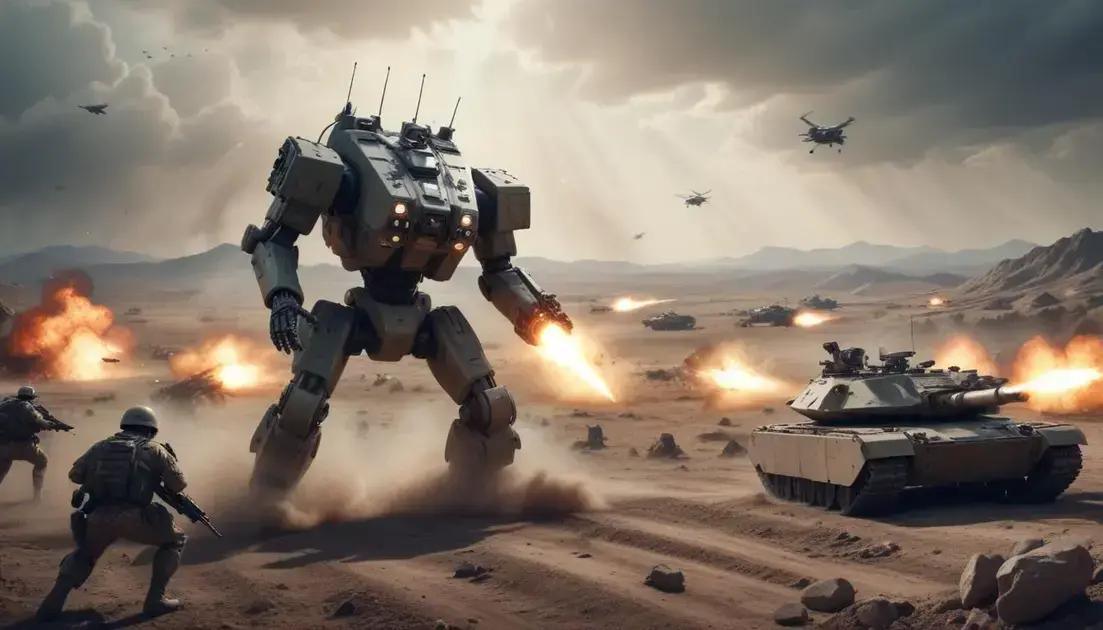
More military systems will become autonomous. Drones and ground robots will operate with less human control. This could improve efficiency but raises ethical concerns.
Better Decision-Making
AI will enhance decision-making in real-time. It will analyze data faster than ever and provide insights. This will help commanders make informed choices during conflicts.
Integration of AI with Other Technologies
Future warfare will see AI combining with other technologies. For instance, AI and cybersecurity will work together. This will protect military systems from attacks while enhancing operational capabilities.
Focus on Ethical Guidelines
As AI grows, so will the need for ethical guidelines. Countries must create rules to govern AI use in warfare. Discussions on accountability and transparency will be crucial.
AI in Training and Simulation
Training methods will improve with AI-powered simulations. Soldiers can train in more realistic environments. This will better prepare them for real-world situations.
Conclusion
In conclusion, the use of artificial intelligence in warfare presents both exciting opportunities and serious challenges. AI is transforming how battles are fought and decisions are made. As we move into the future, technologies will become more autonomous and integrated.
However, with these advancements, ethical considerations are more important than ever. Nations need clear guidelines for AI use in military settings to ensure accountability and safety. Training will also evolve, helping soldiers prepare for new types of warfare.
Overall, understanding these trends will help us navigate the future of warfare. Embracing AI responsibly can enhance military effectiveness while keeping human values at the forefront.