How the space race created our modern tech
The Space Race was a pivotal period that drove significant technological innovations, influencing modern life in areas like communication, navigation, and healthcare. Key lessons from this era include the importance of teamwork, learning from failures, and the need to set ambitious goals. Technologies developed during this time, such as GPS and satellite communications, continue to impact our daily lives, showcasing how competition can lead to extraordinary advancements.
Space Race was more than just a battle for dominance among nations; it reshaped our everyday technology. Curious about how this era of competition birthed the conveniences we enjoy today? Let’s dive in!
The Origins of the Space Race
The Space Race began during the Cold War in the late 1950s. It was a fierce competition mainly between the United States and the Soviet Union. Each country wanted to prove its power and technological capability.
It all started with the launch of Sputnik by the Soviet Union in 1957. This was the first artificial satellite to orbit Earth. The launch shocked the world and sparked fear in the U.S. Many Americans felt that the Soviets were ahead in technology. This led to a wave of excitement and urgency to catch up.
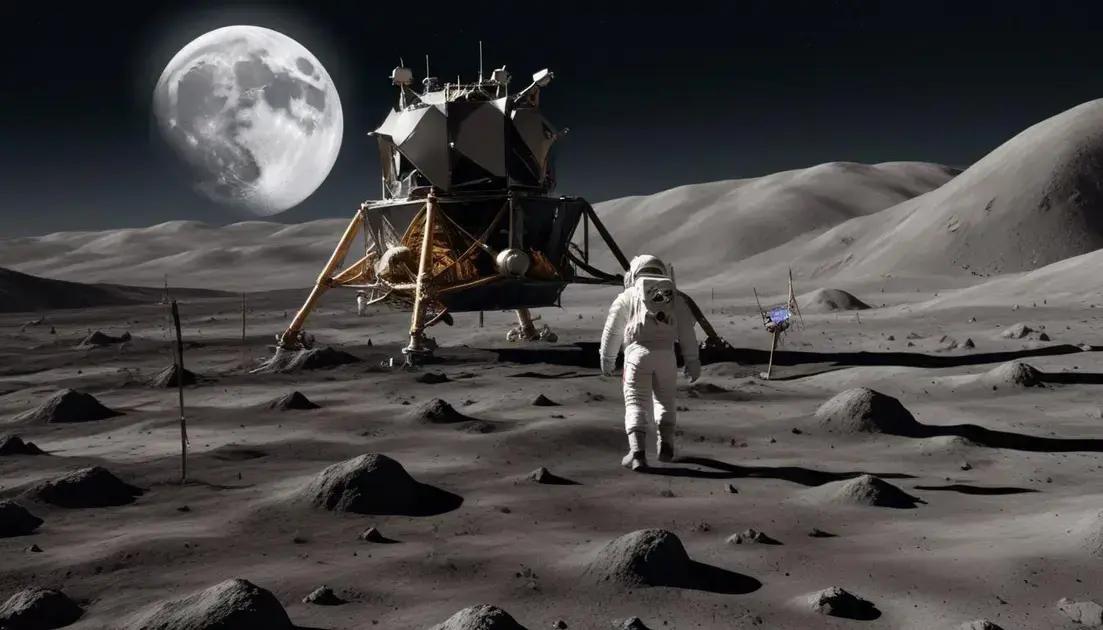
In response, the U.S. created NASA in 1958. This new agency was focused on space exploration. It quickly set goals to develop powerful rockets and send humans into space. President John F. Kennedy famously declared that sending a man to the Moon was a priority. This goal fueled many advancements in technology.
Both countries worked hard to achieve milestones in the Space Race. There were significant events such as the first human in space, Yuri Gagarin, and America’s Project Apollo, which aimed for the Moon landing.
As efforts continued, both countries made strides in technology. The race pushed scientists and engineers to innovate. They designed better rockets, improved computers, and developed life support systems for astronauts.
In the end, the Space Race was about more than just reaching the Moon. It was a test of national pride and human spirit. The innovations that came from this period are still part of our everyday lives today.
Technological Innovations Spurred by Competition
The Space Race led to many exciting technological innovations. Both the U.S. and the Soviet Union raced to create new technologies. These advancements have changed our lives today.
One big milestone was the development of powerful rockets. The U.S. created the Saturn V rocket to take astronauts to the Moon. This rocket was huge and could carry large payloads. It paved the way for space exploration.
Another innovation was the miniaturization of technology. Computers were once large and cumbersome. During the Space Race, engineers shrank these machines. This made computers more accessible for everyday use.
Satellite technology also took off. Satellites are now part of our daily lives. They help with communication and weather forecasting. GPS, which depends on satellites, is crucial for navigation today.
Furthermore, life support systems were developed for astronauts. These systems ensure that astronauts have air and water in space. They were vital for missions but also led to advances in safety for all.
Lastly, materials science saw significant breakthroughs. Researchers developed heat-resistant materials for rockets. These materials are now used in everyday products like fireproof clothing.
In summary, the competition drove rapid advancements. Many technologies born from the Space Race are still helping us today. Where would we be without them?
Impact on Everyday Life and Modern Tech
The Space Race didn’t just change the world of science; it shaped our everyday lives too. The innovations made during this time paved the way for many modern technologies.
One major impact is in communication. The satellites built for space missions now help us connect worldwide. We rely on them for phone calls, internet access, and television broadcasts.
Another key area is navigation. GPS technology, derived from space satellites, helps us find our way. Whether driving or walking, most of us use GPS daily to get directions or check traffic.
Healthcare also benefited from this race. Techniques developed for monitoring astronauts in space led to better medical imaging machines. Devices like MRI and CT scans help doctors diagnose patients more effectively.
The Space Race even touched home appliances. For instance, technologies from space missions led to the microwaves we use today. These devices cook food quickly, making meal prep easier for everyone.
Education and research developed new learning methods, too. Many schools use technology in classrooms that was once only available for astronauts. Virtual reality (VR) and simulations are now part of teaching that captures students’ attention.
In summary, the impact of the Space Race is everywhere. From how we communicate to how we navigate, the advancements made continue to shape daily life in meaningful ways.
Lessons Learned from the Space Race
The Space Race taught us many valuable lessons. These lessons go beyond rockets and satellites. They shape how we think about science and technology today.
First, teamwork is vital. The Space Race showed that great achievements happen when people work together. Scientists, engineers, and astronauts all played crucial roles. Their collaboration led to amazing successes.
Second, embracing failure is important. Both the U.S. and the Soviet Union faced setbacks. Rockets sometimes exploded or missions failed. However, these failures taught valuable lessons and led to improvements.
Third, investing in education pays off. The race sparked an interest in STEM fields—science, technology, engineering, and math. More students chose these subjects, leading to a stronger workforce of innovators.
Fourth, setting big goals can inspire progress. JFK’s goal to land on the Moon drove the nation forward. It motivated countless people to contribute their skills and passion to make it happen.
Lastly, thinking outside the box is essential. The innovations from the Space Race came from creative problem-solving. Using imagination to overcome challenges can lead to breakthroughs.
In summary, lessons from the Space Race still apply today. By working together, embracing failure, investing in education, setting goals, and innovating, we can achieve great things.
Conclusion
In conclusion, the Space Race was more than just a competition between two nations. It brought about significant technological advancements that we benefit from today. Innovations in communication, navigation, and healthcare all stem from this exciting era.
The lessons learned from the Space Race continue to guide us. Teamwork, embracing failure, and thinking creatively are essential to solving today’s challenges. As we look to the future, let’s remember the spirit of innovation that this race inspired.
By understanding these lessons and appreciating the impact of the Space Race, we can motivate ourselves to reach new heights. Just like the pioneers of space exploration, we should strive to push boundaries and explore what’s possible.