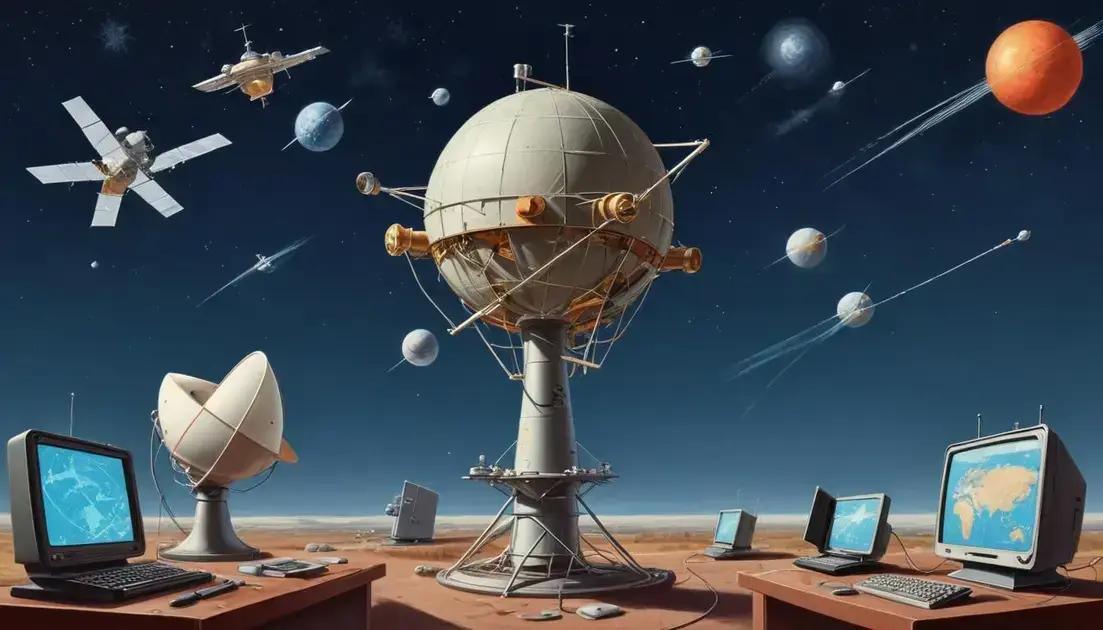
The space race’s hidden impact on communication
The Cold War led to significant advancements in technology that transformed communication globally. Key innovations like satellites and computers enabled faster connections and introduced tools such as the internet and smartphones, making communication accessible to everyone. Understanding the historical context of these developments helps us appreciate their impact on modern connectivity and informs how we use technology today.
Cold War technologies have left a lasting mark on our communication systems today. Ever wondered how your phone connects you across the globe? The answer lies in the innovations birthed from the fierce rivalry between superpowers.
Introduction to the space race’s influence on technology
The space race was a time filled with exciting developments in technology. During this period, nations pushed each other to explore beyond Earth. This competition led to innovations that changed how we communicate today.
For example, satellites developed for space exploration helped improve communication networks. These satellites now play a vital role in our daily lives, from GPS navigation to weather forecasting.
Rocket technology also made waves. Engineers created systems that now allow us to send signals across vast distances. Today, these advancements support everything from phone calls to live streaming.
The race to space didn’t just focus on exploring other worlds; it transformed how we connect at home.
Furthermore, the Cold War sparked a drive for better technology. This need for communication and surveillance led to the invention of tools we take for granted today, like the internet and mobile phones.
As we look back at the space race, we can see its incredible impact on our communication. It brought us not only the thrill of exploration but also the technology that keeps us connected.
Key technologies developed during the Cold War
During the Cold War, many important technologies were developed. These advancements have shaped our modern world. One key area was satellite technology. Satellites allowed for better communication and spying.
Another big invention was the computer. Early computers were huge and needed special rooms. Over time, they became smaller and more accessible. Today, we use them for everything.
Additionally, the Cold War led to the development of radar systems. Radar helps us detect objects in the sky and on the ground. This made air travel safer.
Telecommunications also got a boost. New systems emerged for faster and clearer communication. These technologies laid the groundwork for our smartphones.
Space exploration was another highlight. Rockets were built for missions to reach space. These rockets helped us learn about the universe and brought us satellites.
Finally, medical technology advanced during this time. Innovations in medical imaging, like MRI and CT scans, were made possible. These machines help doctors see inside our bodies without surgery.
In summary, the technologies developed during the Cold War have a lasting influence. They form the backbone of many devices and services we rely on today.
How these technologies transformed communication today
Technologies from the Cold War have truly changed how we communicate today. These advancements make staying in touch easier than ever.
First, thanks to satellites, we can connect with anyone around the world. They transmit signals that allow phone calls and internet access. Before satellites, long-distance communication was much tougher.
Another change comes from the development of computers. They help us send emails and share information instantly. Today’s computers are powerful tools that keep us connected.
Mobile phones are another big transformation. Early phones were bulky and only for calls. Now, smartphones allow us to text, browse, and social network anytime, anywhere.
Telecommunication systems have improved as well. Faster and clearer connections mean better conversations. We no longer have to deal with static or dropped calls.
Additionally, video calling is now common. Tools like Zoom and Skype let us see each other while talking. This feels so much more personal than just a voice.
Even social media plays a role. Platforms like Facebook and Twitter let us share updates with many people at once. They help us stay connected in real-time.
Overall, the technologies that grew from the Cold War have had a lasting impact. They have made global communication fast, easy, and accessible to everyone.
Impact on global connectivity and communication networks
The impact of Cold War technologies on global connectivity is huge. These innovations have changed how we connect with each other.
First, satellite technology created a network that spans the entire globe. This means we can make calls, send texts, and use the internet no matter where we are.
Telecommunication systems have also evolved. They allow us to share information faster and clearer than ever before. High-speed connections mean smoother conversations and quick downloads.
Moreover, the rise of the internet connects people like nothing else. It gives us access to information and helps us communicate in real-time, no matter the distance.
Globalization is another result of these technologies. Businesses can sell products worldwide, making it easier than ever for consumers to connect with brands across borders.
Social media platforms play a vital role too. They enable people to share their thoughts and experiences instantly. This fosters a sense of community, even across miles.
Lastly, video conferencing tools have transformed remote work. They create a virtual meeting space, making collaborations smoother. Teams can connect, share ideas, and work together from different locations.
In summary, Cold War technologies have greatly improved global connectivity. They allow us to share information, connect with others, and work together more effectively than ever before.
Reflections on the importance of historical context in technology
Understanding historical context is crucial when looking at technology. It helps us see how past events shape our current tools and communication.
For example, the Cold War drove many innovations. Competition between nations sparked new ideas in technology and communication systems. These ideas are the base of what we use today.
Looking back lets us appreciate how far we’ve come. Early satellite communications made global connectivity possible. Now, we take it for granted.
Moreover, history shows us the risks and rewards of technology. It’s important to learn from past mistakes. For instance, government surveillance raised concerns about privacy during the Cold War. Today, we still face these issues with new communication tech.
Reflecting on the past also inspires future innovations. Understanding how technologies evolved can guide us in creating better solutions. History and technology intertwine, showing us that each step matters.
Lastly, knowing the history helps us value our tools. When we understand the effort behind developments, we can use technology more thoughtfully. This appreciation can lead to smarter decisions in how we communicate.
Conclusion
In conclusion, the technologies that emerged from the Cold War have revolutionized how we communicate and connect. Innovations like satellites and computers have transformed our daily lives, making global communication easier than ever. Understanding the historical context of these advancements helps us appreciate their impact and informs our use of technology today.
By reflecting on the past, we not only recognize the importance of these developments but also learn from them. This knowledge equips us to make smarter choices in our rapidly changing world. As we move forward, the lessons of history remind us to harness technology wisely and thoughtfully.