Living under paranoia: psychology of the Cold War
The psychology of the Cold War was heavily influenced by fear and paranoia, shaping political decisions, artistic expression, and social dynamics. During this era, constant anxiety about nuclear war drove leaders to make choices based on fear rather than facts, impacting both national policies and individual lives. Artists reflected these sentiments in their work, creating powerful pieces that resonated with a public grappling with uncertainty. Today, similar emotions arise from contemporary issues like terrorism and climate change, highlighting the ongoing relevance of fear in shaping our world.
Welcome to a journey through the Cold War era, where paranoia not only shaped politics but also seeped into art and daily life. Ever wonder how fear can shape a generation? Let’s dive in!
The psychological landscape during the Cold War
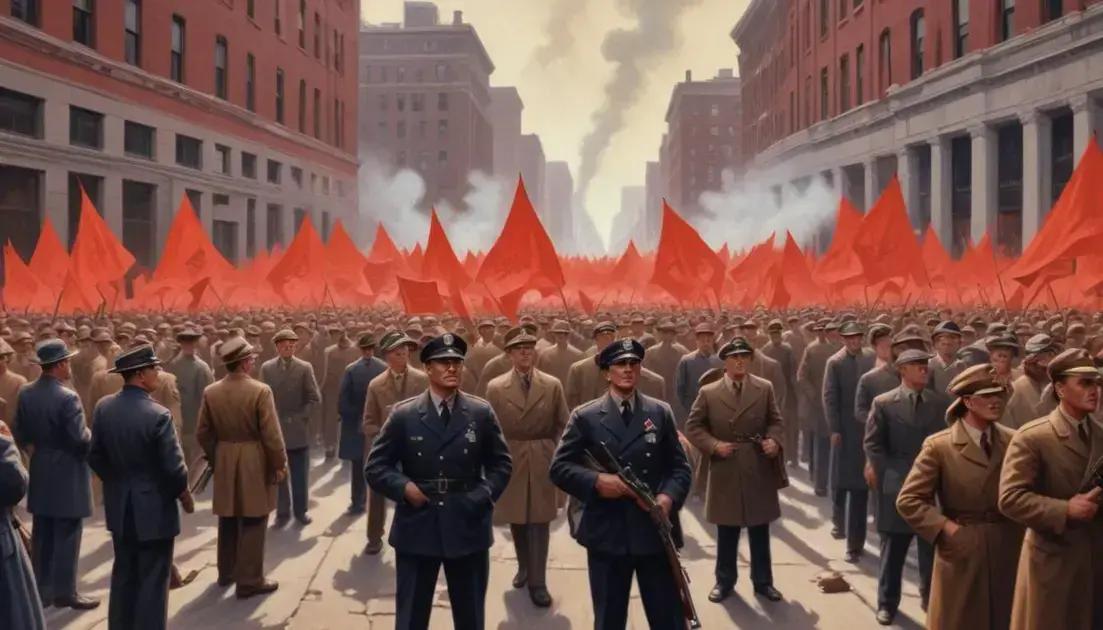
The psychological landscape during the Cold War was deeply influenced by fear and uncertainty. Many people lived with constant anxiety about nuclear war. Government propaganda played a big role in shaping public perceptions. It painted a picture of an enemy that was always lurking, ready to attack.
Families were affected too. Parents worried about the safety of their children and the world they would inherit. Schools taught children about the threats of Communism, often including drills for worst-case scenarios. These practices heightened the stress experienced during this period.
In art and literature, the feelings of paranoia and dread were prevalent. Many artists expressed their concerns through their work. This became a way for people to process their fears. Writers and filmmakers often depicted dystopian futures based on these fears, reflecting the mindset of a generation.
In society, friendships sometimes changed. People were cautious about discussing politics. Trust started to erode among neighbors, as many suspected that anyone could be a spy. This shift impacted relationships and changed how communities interacted.
Despite the challenges, people found ways to cope. They formed support networks and shared their thoughts and feelings with each other. Cultural events provided outlets for expression and creativity amid the tension. This allowed individuals and communities to navigate the psychological turmoil of the era.
How fear influenced artistic expression
Fear played a major role in how artistic expression was influenced during the Cold War. Artists found themselves grappling with the anxiety of the times. Many created works that reflected the feelings of uncertainty and dread. This resulted in powerful pieces that resonated with the public.
Visual art often showed dark and foreboding themes. Painters used bold colors and sharp lines to convey their messages. These works expressed their fears about war and the future. Artists wanted viewers to feel the intensity of these emotions.
Literature also changed significantly. Writers explored the themes of paranoia and distrust. Characters often faced moral dilemmas against the backdrop of an uncertain world. These stories encouraged readers to question their own lives and society.
Film directors capitalized on this atmosphere of fear, too. Movies often depicted dystopian scenarios and the consequences of nuclear conflict. This genre became a mirror of society’s anxieties, captivating audiences with thrilling plots.
Music saw a rise in protest songs that voiced discontent and fear. Artists used lyrics as a rallying cry for change and awareness. These songs became anthems for a generation grappling with its worries.
Overall, fear was a driving force behind many artistic expressions during the Cold War. It pushed creatives to explore the depths of human experience, making their work relatable and powerful. The result was an explosion of creativity that helped people cope with their fears.
The role of paranoia in political decisions
The role of paranoia in political decisions during the Cold War cannot be understated. Leaders often made choices based on fear rather than facts. This paranoia led to actions that shaped international relations for decades.
Politicians worried about the spread of Communism. They believed that if one country fell, others would follow. This fear influenced many decisions, including military interventions and foreign aid. The idea was to stop the so-called domino effect.
In the U.S., the government created policies that reflected this anxiety. Programs like McCarthyism targeted suspected Communists, leading to widespread paranoia. Many innocent people faced accusations, and lives were ruined.
The nuclear arms race was another product of this paranoia. Nations stockpiled weapons to feel secure. This created a tense atmosphere, where any miscommunication could lead to disaster.
Political leaders often used the media to spread their messages. Propaganda painted a picture of a world filled with threats. This increased public fear and supported the need for defense spending and military action.
In conclusion, paranoia played a huge role in shaping political decisions during the Cold War. It affected everything from domestic policies to international relations. Understanding this impact helps us make sense of the historical period.
Comparative analysis of Cold War psychology with contemporary issues
A comparative analysis of Cold War psychology with contemporary issues shows both similarities and differences. During the Cold War, fear and paranoia dominated public life. Today, while we face new challenges, some underlying emotions remain the same.
Back then, people lived under the constant threat of nuclear war. This created anxiety that shaped daily behavior and relationships. Today, issues like terrorism and climate change evoke similar fears. People worry about safety and the future.
Social media now plays a big role in spreading information. During the Cold War, propaganda and news shaped perceptions. Today, misinformation can rapidly escalate fears. This makes comparison vital, as our sources of information have changed dramatically.
Coping mechanisms also differ. In the Cold War, people often turned to creative outlets like art and literature. Today, people use digital platforms to express their concerns and connect with others. This can lead to a rapid sharing of ideas and emotions, unlike before.
Political strategies have evolved as well. Cold War politics relied heavily on military strength and alliances. In contrast, modern politics often involves global cooperation and dialogue. Yet, fear still plays a role in shaping policies, sometimes leading to divisions among nations.
Overall, studying Cold War psychology alongside current issues helps us understand how fear shapes our world. The past provides valuable lessons about how we respond to threats today.
Conclusion
In conclusion, examining the psychology of the Cold War alongside today’s issues shows us how fear continues to shape our world. While the tools and contexts may have changed, the emotions are still very real. Understanding how paranoia influenced decisions in the past can help us navigate our modern challenges.
Art and expression remain vital ways for people to cope with fear. Just as artists found ways to communicate their anxieties during the Cold War, today’s creators use digital platforms to express themselves. This ongoing dialogue allows us to connect over shared fears.
By learning from the past, we can develop better strategies for addressing our current issues. Fear may still drive some decisions, but knowledge and awareness can help us make choices grounded in understanding. Ultimately, facing our fears together can lead to a more hopeful future.