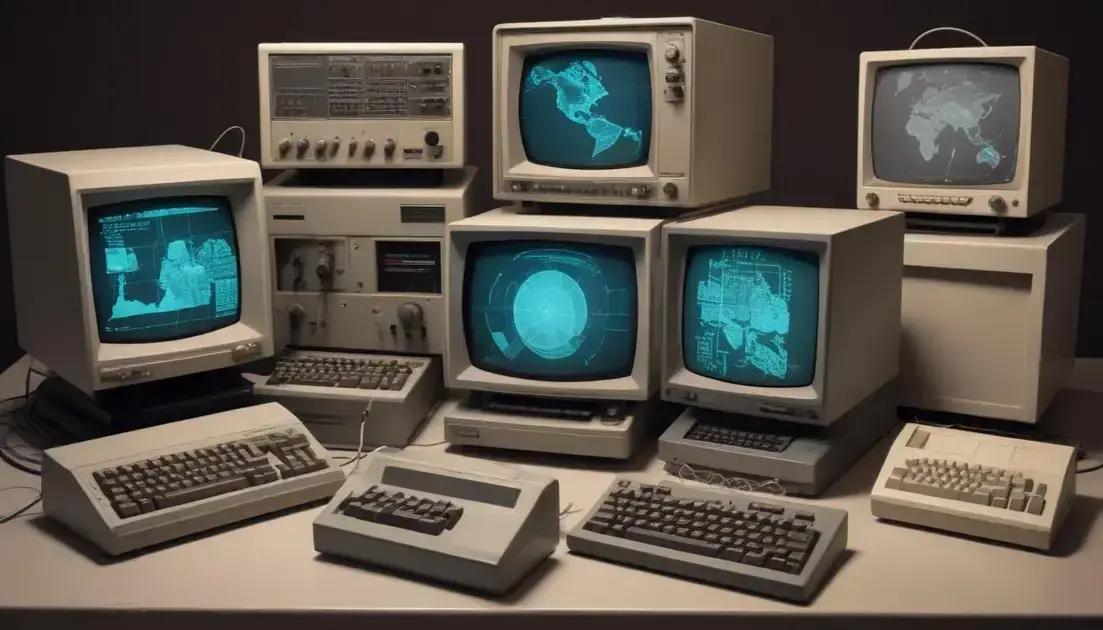
How the Cold War created modern computing
The Cold War significantly influenced modern computing by driving innovations that are integral to today’s technology. Key advancements such as early computers, the internet’s development, and satellite technology emerged from military competition. These technologies have not only shaped military applications but also transformed everyday consumer tech. Furthermore, the ongoing impact of these Cold War legacies is evident in areas like artificial intelligence, cybersecurity, and global tech collaboration, underscoring their relevance in our current digital landscape.
Cold War isn’t just a chapter in history; it ignited a fierce race that shaped our digital world. Have you ever wondered how this tension sparked innovation?
The origins of modern computing during the Cold War
The origins of modern computing during the Cold War were shaped by a race for technological superiority. Governments and nations pushed for faster calculations and advanced machines. This competition led to groundbreaking innovations.
Early Computers
During the Cold War, computers were mainly used for military purposes. The need for secure communication and data analysis drove early developments. Systems like the ENIAC and later developments paved the way for modern software.
Pioneers of Computing
Many brilliant minds contributed to these advancements. People like Alan Turing and John von Neumann played vital roles. Their ideas on programming and computer architecture set the stage for future technology.
Impact on Science
Computers also revolutionized scientific research. Scientists used them to model complex systems and analyze massive amounts of data. This helped in various fields, from climate studies to space exploration.
Legacy of Cold War Technology
The legacy of Cold War technology can be seen today. Innovations born from this era laid the foundation for today’s computers and the internet. The drive for technological advancement continues to influence modern society.
Key technological advancements driven by the Cold War
The Cold War led to key technological advancements that changed the world. As nations competed, they pushed the limits of technology. This period saw many innovations that we still use today.
Advancements in Computer Technology
During this time, computers became smarter and faster. The need for quick calculations drove research. Computers were built to handle complex tasks, making them essential for military and space missions.
Development of the Internet
In the 1960s, ARPANET was created as a military project. This was the first version of the internet. It allowed different computers to communicate. Later, this technology formed the basis for today’s internet.
Satellite Technology
Another important advancement was in satellite technology. Satellites were used for spying and communication. They helped gather data and provided real-time information about global events.
Impact on Everyday Life
These advancements didn’t just affect the military. They also shaped civil life. Technologies like GPS and personal computers became part of our daily routine. Today, we rely on these inventions in many ways.
Impact of Cold War competition on today’s technology
The impact of Cold War competition can be seen in technology today. The race for military dominance pushed nations to innovate. This spurred many breakthroughs we now rely on.
Driving Innovation
Cold War tensions encouraged rapid advancements in various fields. Technology developed for defense also found its way into civilian life. Things like satellite communications and GPS were born from this competition.
Consumer Technology
Many everyday devices trace their roots back to Cold War inventions. For example, early computers helped launch the personal computer revolution. Now, we use computers for countless tasks.
Global Connectivity
Advancements in technology during the Cold War laid the groundwork for our connected world. The internet, which began as a military project, now links people everywhere. It’s hard to imagine life without it.
Continued Influence
Today’s tech companies thrive because of past innovations. The competition from the Cold War era still inspires new technologies today. We keep pushing for progress in ways that benefit our lives.
Legacies of the Cold War in modern computing systems
The legacies of the Cold War are evident in our modern computing systems. Many of today’s technologies trace back to research from that time. The drive for military superiority sparked vital developments.
Advanced Computer Architecture
Many computer designs we use today were influenced by Cold War projects. For example, the von Neumann architecture remains the blueprint for most computers. It helped standardize how computers operate.
Early Networking Technologies
The need for secure communication led to early networking systems. These systems were critical for military operations. Today, they paved the way for the internet as we know it.
Artificial Intelligence and Machine Learning
Cold War research also laid the groundwork for artificial intelligence. Initial efforts focused on problem-solving and data processing. Now, AI is part of many applications, from smartphones to smart homes.
Impact on Global Collaboration
The legacy of competition has also led to global cooperation in tech. Nations share knowledge to drive advancements further. This collaboration continues to shape our future in computing.
Future implications of Cold War technologies
The future implications of Cold War technologies are vast and exciting. The innovations from that time continue to shape our lives. Many technologies we take for granted today started as military projects.
Ongoing Technological Advancements
Cold War technologies laid the groundwork for future innovations. Advances in artificial intelligence, robotics, and quantum computing show promise. These fields are evolving quickly and changing how we live and work.
Increased Cybersecurity Needs
As technology advances, so do threats. Cold War-era approaches to security inform today’s cybersecurity strategies. Protecting sensitive data has never been more crucial.
Global Cooperation in Tech
Cold War tensions taught us the importance of collaboration in technology. Today, countries share research to tackle global challenges. Joint efforts in space exploration, climate change, and health are unfolding.
Ethical Considerations
With great power comes great responsibility. We must consider the ethics of new technologies. As we harness Cold War innovations, we need to ensure they’re used for good.
Conclusion
In conclusion, the legacies of the Cold War still influence our technology today. Innovations from that time paved the way for advancements we now enjoy. From the early computers to the internet, many key technologies originated during this period.
As we look forward, the impact of Cold War technologies will continue to grow. This will shape our future in exciting ways. We must remain mindful of how we use these powerful tools. By doing so, we can ensure they benefit everyone and tackle global challenges effectively.