Civil Rights: the struggle that reshaped America
The Civil Rights Movement significantly reshaped America by challenging segregation and advocating for equal rights. Key figures like Martin Luther King Jr. and Rosa Parks played essential roles in advancing equality. This movement led to transformative laws such as the Civil Rights Act of 1964 and the Voting Rights Act of 1965, ensuring protection against discrimination. Today, the ongoing fight for equality continues to empower diverse groups, inspiring new generations to engage in social justice efforts and advocate for a fair society.
Civil Rights shaped the history of America, igniting fervent battles for justice and equality. Ever wondered how the struggle of individuals like Rosa Parks and Martin Luther King Jr. led to profound changes? Let’s dive in!
Origin of Civil Rights Movement
The Civil Rights Movement began in the 1950s. It was a time when many African Americans were fighting for equality. They wanted fair treatment, the right to vote, and an end to segregation.
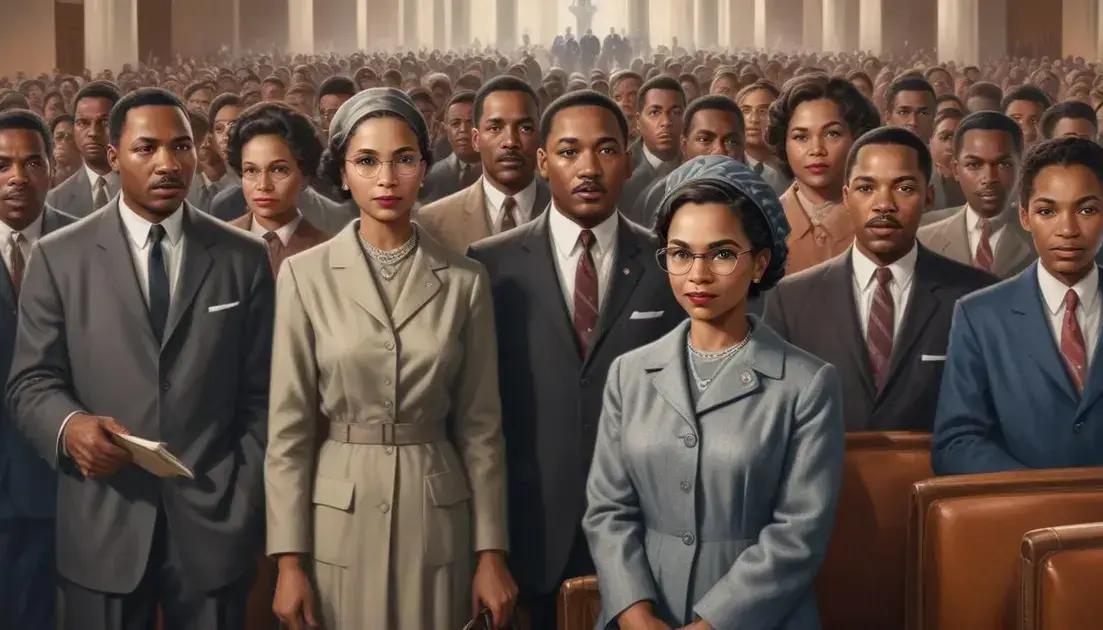
One important moment was when Rosa Parks refused to give up her seat on a bus in Montgomery, Alabama. Her brave act sparked protests and boycotts. People gathered to demand change and end unfair laws.
Another key figure was Martin Luther King Jr.. He inspired many with his speeches and peaceful protests. His famous “I Have a Dream” speech changed hearts and minds across the country. This movement brought people together to stand against injustice.
Many events, like the March on Washington in 1963, helped raise awareness. Thousands of people joined together to show their support for civil rights. They marched for freedom, equality, and justice. Everyone deserves to be treated fairly, no matter their skin color.
The struggle continued through the 1960s and 1970s. It led to important laws that protect civil rights today. It not only changed America but also inspired people around the world. The legacy of the Civil Rights Movement is still alive today.
Key Figures and Events
The Civil Rights Movement had many important figures who helped bring change. One of the most notable was Martin Luther King Jr.. He led peaceful protests and was a strong voice for equality. His famous “I Have a Dream” speech inspired millions.
Another key figure was Rosa Parks. Her refusal to give up her bus seat sparked the Montgomery Bus Boycott. This event showed how one person can ignite a larger movement.
Malcolm X also played a significant role. He spoke out for Black pride and empowerment. While he promoted a different approach than King, his message reached many people.
Major events, like the March on Washington in 1963, brought thousands together for a common cause. People marched to demand jobs and freedom, showing unity for civil rights.
The Selma to Montgomery marches in 1965 were crucial as well. Activists marched to secure voting rights. These events brought national attention and led to the Voting Rights Act.
Each of these figures and events helped shape the fight for justice. Their courage and dedication made history and still inspire people today.
Impact on Modern America
The Civil Rights Movement changed America in many important ways. First, it helped end segregation. This meant people of all races could go to the same schools, restaurants, and parks. Such progress created a more fair society.
Second, the movement inspired laws that protect rights for everyone. The Civil Rights Act of 1964 banned discrimination based on race, color, religion, or gender. This law opened doors for many people.
Another big change was in voting rights. The Voting Rights Act of 1965 made it easier for African Americans to register and vote. This act helped many voices be heard in elections.
The movement also sparked other groups to fight for their rights. People with disabilities, women, and LGBTQ+ individuals drew strength from its lessons. They worked to end discrimination and push for equality.
Today, the legacy of the Civil Rights Movement is still seen in America. Many strive to continue the fight for justice. Schools teach about its history, inspiring new generations to advocate for change. It reminds us that standing up for rights is important.
Continuing the Fight for Equality
The struggle for equality didn’t end with the Civil Rights Movement. Many people today still fight for justice. They work to ensure everyone has the same rights, regardless of race, gender, or background.
Young activists take inspiration from past leaders like Martin Luther King Jr. and Rosa Parks. They use social media to raise awareness. Platforms like Twitter and Instagram help share important messages quickly.
Groups are uniting to address modern issues. Movements like Black Lives Matter focus on ending police violence against Black individuals. They demand justice, accountability, and systemic change.
Women’s rights activists also continue the fight. They advocate for equal pay, reproductive rights, and protection against violence. Their passion keeps the conversation going.
Additionally, LGBTQ+ rights have gained more attention. Many people stand up for the rights of LGBTQ+ individuals. They strive for acceptance and equal treatment in all areas of life.
Every year, more people join the cause. Protests, rallies, and educational events highlight these ongoing battles. The fight for equality is far from over. It’s up to all of us to keep pushing for change.
Conclusion
In conclusion, the Civil Rights Movement has left a lasting legacy on America. It taught us the importance of standing up for justice and equality. The struggles of past leaders inspire new generations to continue fighting for rights today.
People from all walks of life are still working hard to ensure everyone is treated fairly. Modern movements remind us that the fight for equality is ongoing. By respecting each other’s rights, we can build a better future together.
As we look back at history, it’s clear that change is possible. Every voice matters in this struggle. Together, we can create a society where everyone is valued and has equal opportunities.