Cold War presidents: leadership in an age of fear
The Cold War was a pivotal time in world history, defined by the political and military strategies of several U.S. presidents. From Truman’s containment of communism to Reagan’s resurgence against the Soviet Union, these leaders shaped U.S. foreign policy through critical decisions. Events like the Cuban Missile Crisis under Kennedy and Vietnam escalation under Johnson highlighted the complexities of international relations. Understanding these key moments and strategies provides valuable insights into how the Cold War influenced global dynamics and continues to affect politics today.
Cold War presidents left a lasting impact on global politics, each shaping their era’s narrative of power and dominance. How did these leaders navigate fear and uncertainty? Let’s explore the pivotal moments.
The context of the Cold War
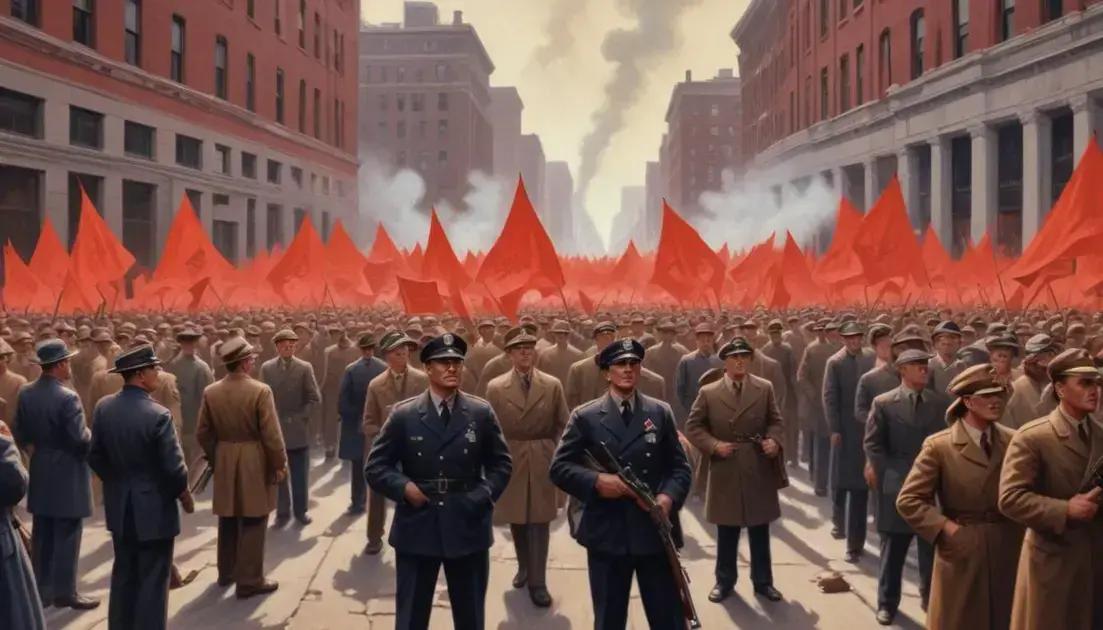
The Cold War was a unique period in history, marked by tension and competition between the United States and the Soviet Union. This conflict was not a traditional war with battles but rather a battle of ideologies. Many saw it as a clash between capitalism and communism, two opposing ways of organizing society.
After World War II, both nations emerged as superpowers, with different visions for the future. The United States wanted to spread democracy and capitalism. On the other hand, the Soviet Union aimed to promote communism and expand its influence.
The Cold War included many critical events. These events shaped international relations for decades. For example, the Berlin Blockade in 1948 tested the West’s resolve against Soviet pressure. The Arms Race led to the buildup of nuclear weapons, creating fear of potential destruction.
The conflict also spread beyond Europe. In Korea, the Korean War divided the nation, while in Vietnam, a fierce battle took place to prevent the spread of communism. There were also various uprisings and revolutions throughout Latin America and Africa influenced by both superpowers.
Understanding the context of the Cold War helps us grasp why global politics are shaped so dramatically today. The alliances formed during this era still influence international relations. It’s fascinating to see how history weaves through our modern world.
Truman’s foreign policy
Harry S. Truman’s foreign policy played a key role during the early years of the Cold War. After taking office in 1945, Truman faced tough choices. He wanted to contain communism and promote democracy worldwide.
One of his major strategies was the Truman Doctrine. This policy aimed to support countries resisting communism. Truman believed that by helping nations like Greece and Turkey, he could prevent the spread of Soviet influence.
Another key part of Truman’s policy was the Marshall Plan. This plan provided economic aid to rebuild Western Europe after World War II. The U.S. sent billions of dollars to help countries recover. This support helped strengthen economies and reduce the appeal of communism.
Truman also established several alliances, like NATO. This military alliance included Western nations aimed at defending each other against Soviet aggression. NATO became a critical part of the U.S. strategy during the Cold War.
His policies did not come without conflict. The Korean War (1950-1953) showed how committed Truman was to containing communism. When North Korea invaded South Korea, Truman quickly sent U.S. troops to help.
Overall, Truman’s foreign policy set the stage for the U.S. role in global politics. His decisions shaped many future leaders and their responses to similar situations.
Eisenhower’s approach
President Dwight D. Eisenhower took office in 1953, and his approach during the Cold War focused on containment and diplomacy. He wanted to manage the threat of communism without direct military conflict.
Eisenhower introduced the New Look policy, which emphasized a strong nuclear arsenal. He believed having nuclear weapons would deter the Soviet Union from attacking. This approach aimed to save money and resources while maintaining a strong defense.
One of his notable strategies was the Domino Theory. Eisenhower feared that if one country fell to communism, neighboring countries would follow. This belief led to more U.S. intervention in global conflicts, such as in Southeast Asia.
Eisenhower also prioritized forming alliances. He strengthened relationships with countries in the middle and far east. For example, he made deals with nations like Iran and Saudi Arabia to combat communist influence.
Another key aspect of Eisenhower’s policy was the use of covert operations. The CIA conducted missions to influence foreign governments without open warfare. This included actions in places like Guatemala and Iran, aiming to establish friendly governments.
Overall, Eisenhower’s approach mixed military strength with diplomatic efforts. It tried to balance avoiding war while countering the spread of Soviet influence across the globe.
Kennedy and the Cuban Missile Crisis
The Cuban Missile Crisis in 1962 was a major moment during the Cold War. It involved a tense standoff between the United States and the Soviet Union. President John F. Kennedy faced a critical decision that could change the world.
The crisis began when the U.S. discovered Soviet nuclear missiles in Cuba, just 90 miles from Florida. This revelation shocked Americans and created fear of an immediate nuclear threat. Kennedy knew he had to act quickly to protect the country.
In response, Kennedy decided to implement a naval blockade around Cuba. He called it a “quarantine” to avoid escalating the situation. His goal was to stop Soviet ships from delivering more military supplies.
During this tense period, both sides communicated through letters and messages. Kennedy and Soviet leader Nikita Khrushchev exchanged words while the world held its breath. The threat of nuclear war loomed large, creating anxiety everywhere.
After several days of negotiation, a deal was reached. The Soviets agreed to remove the missiles from Cuba in exchange for Kennedy’s promise not to invade the island. Additionally, the U.S. secretly agreed to withdraw its missiles from Turkey.
The resolution of the Cuban Missile Crisis highlighted the importance of diplomacy. Kennedy’s careful handling of the situation avoided a potential disaster. This event remains a key example of managing Cold War tensions.
Johnson’s escalation
President Lyndon B. Johnson’s time in office marked a significant escalation in the Vietnam War. After taking office in 1963, he faced rising tensions and pressure to act.
Initially, Johnson followed a strategy of containment, similar to his predecessor. However, as violence grew in Vietnam, he decided to increase U.S. military involvement. He believed that failing to act would lead to the spread of communism in Southeast Asia.
In August 1964, the Gulf of Tonkin incident occurred. This involved reported attacks on U.S. Navy ships by North Vietnamese forces. Johnson used this event to secure congressional approval for military action. The Gulf of Tonkin Resolution allowed him to escalate the conflict without formally declaring war.
Following this resolution, Johnson increased troop levels rapidly. By 1965, over 180,000 U.S. soldiers were in Vietnam. Many Americans supported his actions at first, believing they were necessary to stop communism.
However, as the war dragged on, public opinion began to shift. Images of the conflict and reports of casualties led to growing anti-war protests across the United States. Many people questioned the government’s decisions and the cost of the war.
Johnson’s escalation in Vietnam ultimately defined his presidency. Despite his intentions, it sparked controversy that would impact American society for years. The choices he made during this time left a lasting legacy on U.S. foreign policy.
Nixon’s détente
President Richard Nixon’s approach during the Cold War is often known as détente. This strategy aimed to ease tensions between the United States and the Soviet Union. Nixon believed that improving relations could help avoid conflict.
One key event was Nixon’s visit to China in 1972. This trip marked a major shift in foreign policy. By engaging with China, Nixon aimed to counterbalance Soviet power. The visit opened diplomatic relations and improved trade between the two nations.
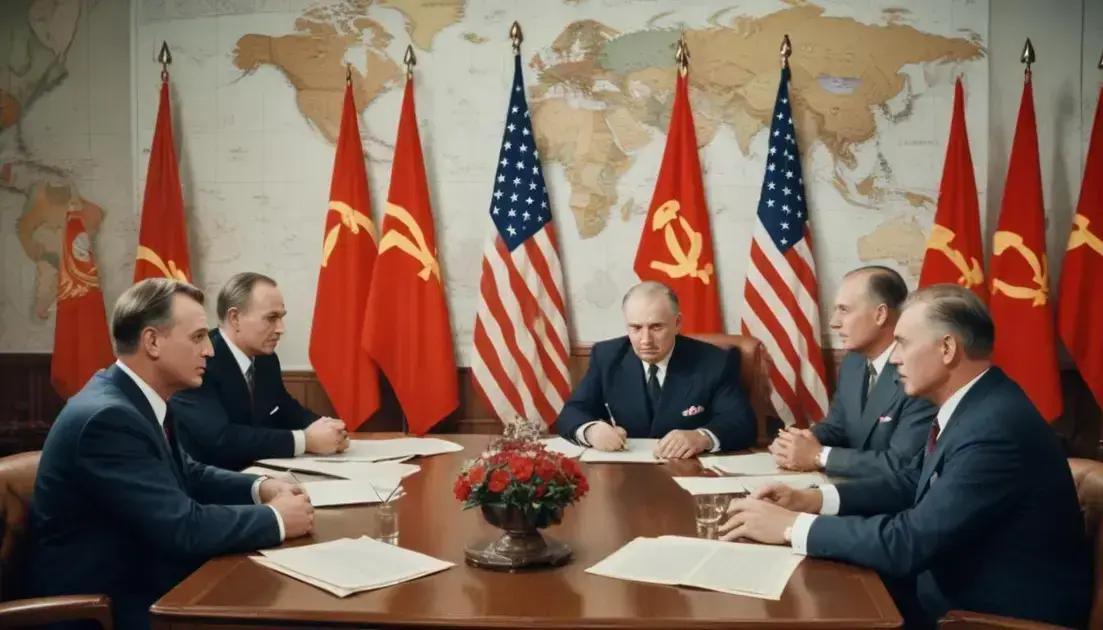
Nixon also sought to communicate directly with Soviet leaders. His meetings with Leonid Brezhnev led to significant agreements. The most important agreement was the Strategic Arms Limitation Talks (SALT). This sought to limit the number of nuclear weapons each country could have.
During this time, both nations signed treaties to promote peace and cooperation. These efforts helped to reduce the risk of direct conflict. They focused on mutual interests, like arms control and trade.
While détente did not eliminate all tensions, it changed the dynamic of the Cold War. Nixon’s approach created new opportunities for dialogue. This helped pave the way for future negotiations and agreements.
Nixon’s détente was significant in shaping U.S. foreign policy. It showed that engaging with rivals can lead to positive outcomes. Although challenges remained, his efforts illustrated a shift toward cooperation during a tense period.
Reagan’s resurgence
President Ronald Reagan’s era marked a significant resurgence in U.S. policy during the Cold War. He took office in 1981 and brought a new attitude towards the Soviet Union. Reagan viewed communism as a major threat and wanted to take a strong stand against it.
One major step was increasing military spending. Reagan believed a strong military would deter any Soviet threats. He introduced the Strategic Defense Initiative (SDI), aimed at developing missile defense systems. This initiative was controversial but showed his commitment to national security.
Reagan also used rhetoric to challenge Soviet power. He famously called the Soviet Union the “Evil Empire.” This strong messaging aimed to unite Americans against communism and increase public support for his policies.
Another key aspect was promoting democracy in other countries. Reagan supported anti-communist movements worldwide. He provided aid to groups fighting against Soviet influence in places like Nicaragua and Afghanistan.
Reagan’s foreign policy also focused on diplomacy. He engaged in arms reduction talks with Soviet leader Mikhail Gorbachev. Their meetings led to important treaties, such as the INF Treaty, where both nations agreed to eliminate certain nuclear weapons.
By the end of his presidency, Reagan’s approach helped change the course of the Cold War. His combination of military strength and diplomatic efforts contributed to lifting the Iron Curtain.
Conclusion
In conclusion, the Cold War was a complex period shaped by different leaders and their strategies. From Truman’s decisive actions to combat communism, to Eisenhower’s efforts for military balance, each president played a crucial role. Kennedy’s handling of the Cuban Missile Crisis demonstrated the delicate line between conflict and peace.
Johnson’s escalation in Vietnam changed public perception, while Nixon’s détente aimed to ease tensions. Finally, Reagan’s resurgence helped redefine U.S. foreign policy and challenged the Soviet Union. Understanding these leaders and their choices gives us insights into how history was made, and how their decisions still influence our world today.