JFK: the hope, the vision, the tragedy
John F. Kennedy, the youngest U.S. president, served from 1961 until his assassination in 1963. His presidency is marked by significant events, including the Cuban Missile Crisis, the push for civil rights, and the commitment to space exploration that aimed for a lunar landing. JFK’s legacy continues to influence American politics, embodying ideals of hope and equality. His tragic death shocked the nation and added to the complexity of his enduring impact on history and culture.JFK remains a name that resonates with hope and tragedy, representing a pivotal moment in American history. What could he have achieved if fate had been kinder?
Introduction
JFK was one of the youngest presidents in American history. He brought new ideas and energy to the White House. His vision was to create a better future for everyone. From space exploration to civil rights, he aimed high.
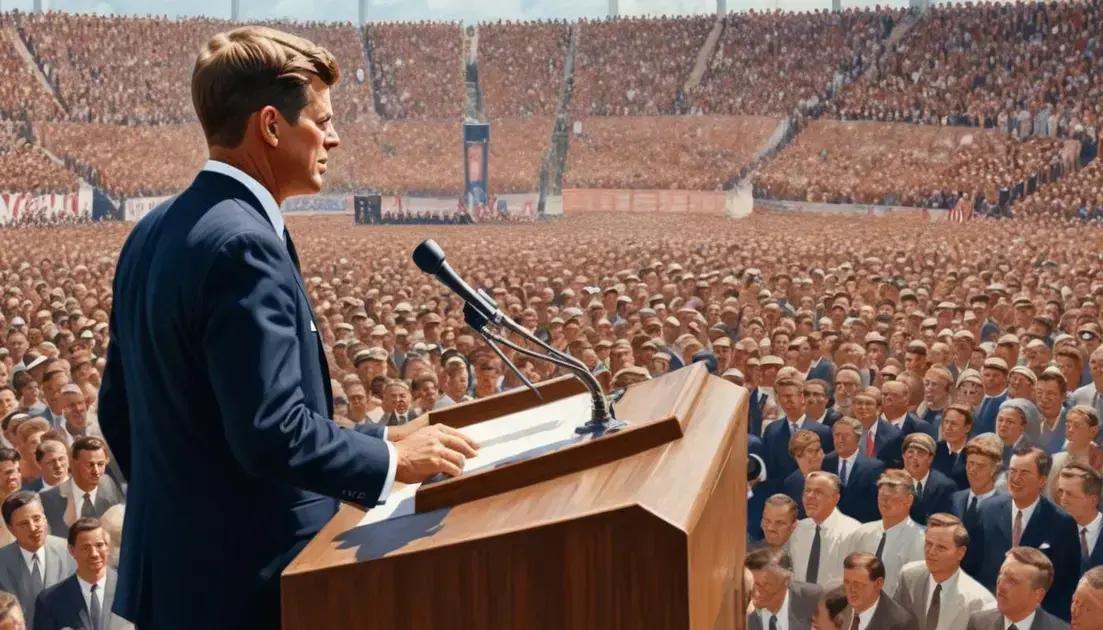
People still remember his famous speech where he said, “Ask not what your country can do for you — ask what you can do for your country.” This line inspired many to contribute to society.
JFK faced huge challenges, like the Cuban Missile Crisis. He worked hard to keep the peace during tense times. His leadership during this crisis showed his ability to handle pressure.
The young president also pushed for civil rights, aiming to end segregation and promote equality. He believed everyone deserved the same rights, regardless of race.
Sadly, his time was cut short by an assassination in 1963. This tragedy shocked the nation and the world. It made many reflect on the promise of his vision.
Even today, JFK’s legacy lives on. He showed that hope and idealism can inspire change. His presidency remains a topic of discussion, reminding us of the impact he had during his short time in office.
Early Life
JFK was born on May 29, 1917, in Brookline, Massachusetts. He came from a big family and had eight siblings. His father, Joseph Kennedy, was a wealthy businessman. His mother, Rose, was devoted to her children.
From a young age, JFK showed interest in politics. He often listened to his father discuss important issues. Education was essential in the Kennedy household. JFK attended Harvard University and graduated in 1940.
During World War II, he served in the Navy. His boat, PT-109, was sunk in the Pacific. JFK exhibited bravery by rescuing his crew members. This experience shaped his character and leadership skills.
After the war, JFK returned to politics. He ran for the House of Representatives in 1946 and won. His early career marked a growing interest in public service and dedication to his country.
Presidency
JFK became president on January 20, 1961. He was 43 years old, making him the youngest elected president. His inauguration speech inspired many, as he spoke of hope and change. JFK wanted to create a “new frontier” in America.
During his presidency, he focused on civil rights. He believed in equality for all people. JFK pushed for laws to end segregation and promote fairness. His efforts helped shape the civil rights movement.
One of his biggest challenges was the Cuban Missile Crisis in 1962. This event brought the world close to nuclear war. JFK handled the situation carefully, choosing diplomacy over military action.
He also supported the space program, emphasizing the importance of exploration. Under his leadership, NASA worked hard to land a man on the moon. JFK famously said, “We choose to go to the moon not because it is easy, but because it is hard.”
JFK’s presidency was full of both achievements and struggles. He made significant impacts on America, and his vision inspired many people. His time in office highlighted his commitment to progress and peace.
Civil Rights
Civil Rights were very important to JFK during his presidency. He believed everyone should have equal opportunities. Discrimination based on race was a big issue in the 1960s. JFK took action to address these problems.
In 1963, he delivered a powerful speech supporting civil rights. He called for an end to segregation. He said that everyone deserved equal rights, regardless of their race or background.
JFK proposed the Civil Rights Act to Congress. This act aimed to end segregation in public places. It also aimed to ensure voting rights for African Americans. His efforts helped shine a light on social injustices.
Campaigning for civil rights was not easy. JFK faced opposition from various groups. However, he stood firm in his beliefs. His support helped inspire many activists across the country.
One of the most famous moments came during the March on Washington in 1963. Here, Martin Luther King Jr. gave his iconic “I Have a Dream” speech. JFK’s commitment to civil rights resonated deeply with many Americans.
JFK’s actions laid the groundwork for future reforms. His leadership encouraged ongoing efforts to achieve equality for all citizens. The legacy of his commitment to civil rights still influences discussions today.
Foreign Policy
Foreign Policy was a major focus for JFK during his presidency. He faced several key challenges on the global stage. His approach aimed to balance strength with diplomacy.
One of his biggest issues was the Cold War. This tension existed between the U.S. and the Soviet Union. JFK believed in maintaining a strong military while also seeking peaceful solutions.
In 1962, the Cuban Missile Crisis emerged. The Soviet Union placed nuclear missiles in Cuba, just miles from the U.S. JFK responded with careful planning, choosing a naval blockade instead of direct military action. This decision helped avoid a possible war.
Another important aspect of JFK’s foreign policy was the Alliance for Progress. This program aimed to improve relations with Latin America. It focused on economic cooperation and social reform. JFK wanted to prevent the spread of communism in the region.
JFK also supported the concept of flexible response. This meant the U.S. should be ready for any situation, using both military and diplomatic means. His leadership style emphasized the importance of communication and alliance building.
Overall, JFK’s foreign policy was complex and strategic. He understood the stakes during a time of global uncertainty. His actions reflected a blend of strength, negotiation, and vision for a peaceful world.
Assassination
The assassination of JFK happened on November 22, 1963. He was shot while riding in a motorcade in Dallas, Texas. This shocking event stunned the nation and the world.
JFK was in Dallas to gather support for his re-election. He traveled in an open-top limousine with his wife, Jacqueline, and Texas Governor John Connolly. Suddenly, shots rang out. JFK was hit and rushed to the hospital.
Despite efforts to save him, JFK was pronounced dead shortly after arrival. News of his death spread quickly, and people across America mourned the loss of their president.
Lee Harvey Oswald was arrested for the crime. Many people were confused and angry about what had happened. Oswald was shot two days later by nightclub owner Jack Ruby. This added even more mystery and conspiracy theories to the story.
JFK’s assassination changed the course of history. It raised questions about security and trust in government. Many important issues were left unresolved due to his sudden death.
The nation entered a period of mourning. His legacy and vision for America were abruptly cut short. The impact of his assassination is still felt in politics and culture today.
Legacy
Legacy refers to the impact JFK left behind after his presidency. His time in office was short, but it was full of significant changes. Many still remember his vision for America.
JFK is known for inspiring a generation. His speeches encouraged young people to engage in public service. The phrase, “Ask not what your country can do for you — ask what you can do for your country,” remains famous.
His efforts in civil rights helped push forward important legislation. The Civil Rights Act was influenced by his commitment to equality. This set the stage for future advancements in social justice.
JFK also had a strong focus on space exploration. His push to land a man on the moon inspired NASA and future generations of scientists. The Apollo program became a symbol of American innovation.
After his assassination, JFK’s legacy became even more significant. It sparked a national conversation about loss, hope, and progress. Many saw him as a symbol of youth and potential.
Even decades later, JFK’s influence is felt in politics and culture. He remains a figure of inspiration for leaders and citizens alike. His vision still shapes discussions on freedom, equality, and public service.
Conclusion
In conclusion, JFK’s life and presidency left a lasting impact on America and the world. His vision for a better future inspired many people, especially the young. From pushing for civil rights to his commitment to space exploration, he made significant achievements in a short time.
His tragic assassination shocked the nation and changed the course of history. Yet, his legacy continues to resonate today. The principles of equality, service, and hope that he stood for remain relevant.
By reflecting on JFK’s contributions, we can learn valuable lessons. His story encourages us to strive for progress and to believe in the power of change. As we remember JFK, let’s honor his vision by continuing to work towards a better and more equal society.