The Wright Brothers: humanity’s first flight
The Wright Brothers revolutionized aviation with their invention of the 1903 Wright Flyer, the first successful powered aircraft, permanently altering how we travel. Their innovative designs led to advancements in aircraft technology, inspiring future generations in both commercial and military aviation. Today, their legacy of determination and engineering excellence continues to influence modern flight and space exploration.
Wright Brothers forever altered the course of history with their daring quest to achieve powered human flight. Curious how they turned dreams into reality?
Introduction to the Wright Brothers’ dream of flight
The Wright Brothers, Orville and Wilbur, were two dreamers from Ohio. They shared a vision of flight that would change the world forever. They believed that humans could soar through the skies, just like birds. Their journey began with curiosity and a deep love for mechanics.
Early Inspiration
The brothers were fascinated by engines and how they worked. They studied the flight of birds, watching how they glided and soared. This inspired their dream. They wanted to build a machine that could fly. Their first step was to learn everything they could about aerodynamics.
Building the First Glider
In 1900, they designed their first glider. It was a simple structure but essential for their experiments. Testing the glider in the windy hills of Kitty Hawk, North Carolina, helped them understand how lift worked. Each flight taught them something new, leading them closer to their goal.
Persistence and Hard Work
The path was not easy. They faced many failures, but they never gave up. Each setback was a lesson learned. Their persistence paid off in 1903 when they achieved powered flight. Their invention was not just a machine; it was the start of a new era.
The Wright Brothers’ dream wasn’t just about flying high; it was about flying smart. They combined imagination with engineering, making history that day. Their story inspires many to chase their dreams and never stop believing.
Key experiments leading to the first flight
Experiments were essential for the Wright Brothers as they sought to achieve flight. They didn’t just build a plane overnight. They started with gliders to understand how to get off the ground. These early tests made their dream of powered flight possible.
Understanding Lift and Control
Lift is what allows an airplane to rise. The Wright Brothers studied this concept carefully. They built several kite-like gliders to see how they could soar. Each time, they learned more about balance and control.
Testing in Kitty Hawk
In 1900, they chose Kitty Hawk, North Carolina, for their tests. The area had strong winds, perfect for gliding experiments. They carefully recorded data and made adjustments. Each flight brought new insights, helping refine their designs.
The Wind Tunnel Experiment
They didn’t stop at flying outside. They built a small wind tunnel. This allowed them to test wing shapes safely. They discovered which designs provided the best lift and stability. These findings were crucial when they built their powered aircraft.
From Glider to Flyer
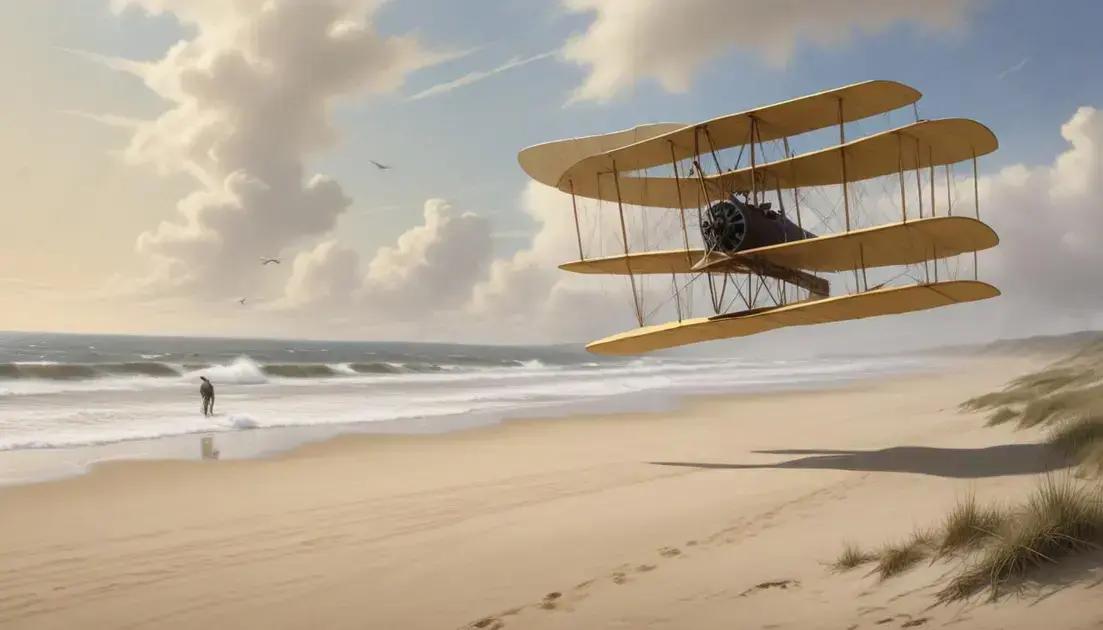
After many tests, the brothers built their first powered plane, the Wright Flyer. They applied everything they learned during their glider tests. On December 17, 1903, their hard work paid off. The Flyer took flight for the first time!
Their success wasn’t just about flying. It was about pushing the limits of what was possible. Each experiment brought them closer to realizing their dream.
The 1903 Wright Flyer: A historic machine
The 1903 Wright Flyer was a groundbreaking invention. It was the first successful powered aircraft in history. Built by Orville and Wilbur Wright, this machine changed aviation forever. It took its first flight on December 17, 1903, at Kitty Hawk.
Design Features
The Flyer was not big. It measured only about 40 feet long. Its wings were made of a lightweight frame covered with fabric. This design allowed it to catch the wind effectively. The aircraft used a unique control system for steering.
Engine and Propulsion
The Flyer had a 12-horsepower engine. This small engine powered two wooden propellers. The propellers were designed after studying the principles of flight. They helped generate the lift needed to take off.
First Flights
On that historic day, the Wright Flyer made four flights. The first flight lasted 12 seconds, covering 120 feet. The last flight went even farther, reaching 852 feet in 59 seconds. These flights proved that powered flight was possible.
Legacy of the Flyer
The 1903 Wright Flyer paved the way for modern aviation. Its success inspired further developments in flight technology. Pilots and engineers across the world learned from the Wrights’ innovations. This machine marked the start of a new era in transportation.
Today, the original Flyer is preserved at the Smithsonian National Air and Space Museum. It serves as a symbol of human ingenuity and the spirit of exploration. The Wright Brothers’ vision of flight continues to inspire dreamers everywhere.
Legacy of the Wright Brothers in modern aviation
The Wright Brothers left a lasting mark on aviation. Their innovations laid the groundwork for all modern flight. Without their work, our skies might look very different today.
Inspiration for Future Generations
The Wright Brothers inspire countless engineers and pilots. Their story shows that dreams can become reality. People still look up to their determination and creativity. They remind us that hard work pays off.
Advancements in Technology
The principles of aerodynamics they discovered are still used today. New aircraft designs build on their ideas about lift and control. This foundation has helped create faster and safer airplanes.
Influence on Aviation Education
The Wright Brothers’ achievements are taught in schools worldwide. From science classes to engineering programs, their story is important. Students learn about their trials and innovations, sparking interest in aviation careers.
Celebration of Their Legacy
Many events celebrate their contributions to flight. Museums showcase their original aircraft and detailed exhibits. The Wright Brothers have become symbols of progress and innovation.
Every time an airplane takes off, we can think of the Wrights. They showed what’s possible when we dare to dream and innovate. Their legacy continues to soar in our modern world.
Influence of their invention on future flying innovations
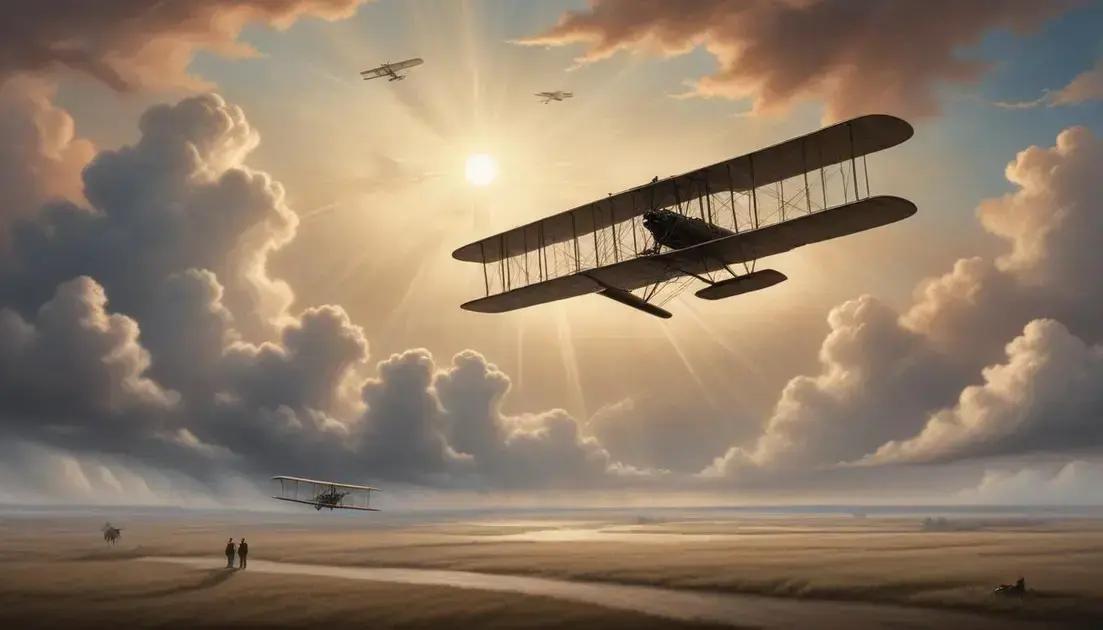
The Wright Brothers’ invention had a huge impact on aviation. Their work inspired many future flying innovations. Because of their success, engineers began to explore new designs and technologies.
Improvements in Aircraft Design
After the Wright Flyer, many inventors started building better airplanes. They used ideas from the Wrights about wing shape and structure. This led to faster aircraft with improved control and stability.
Development of Commercial Aviation
The Wright Brothers also inspired the birth of commercial aviation. Their flights opened doors for passenger travel by air. Soon, airlines were created to take people around the world.
Military Applications
The military took note of the Wrights’ invention as well. Planes began to be used for scouting and combat. This changed warfare and led to more advanced military aircraft.
Space Exploration
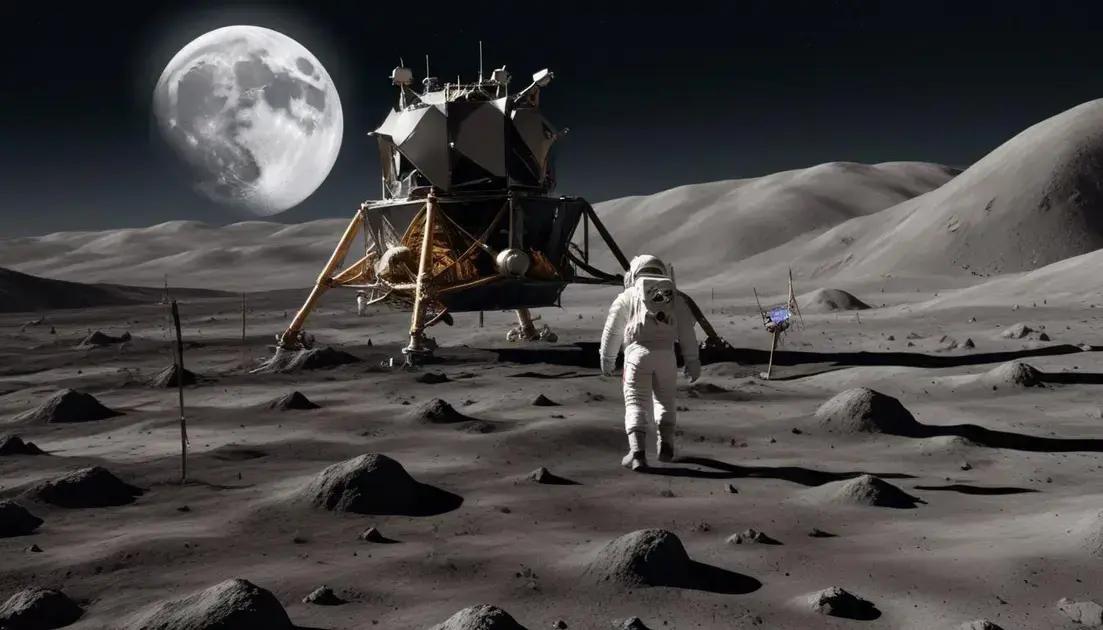
The principles of flight the Wright Brothers discovered were key to space travel. Their work laid the groundwork for future innovations like rockets and space shuttles.
Overall, the Wright Brothers sparked a revolution in aviation. Their passion and perseverance led to inventions that changed how we travel and explore our world.
Conclusion
In conclusion, the Wright Brothers changed the world with their invention of powered flight. Their hard work and creativity opened the skies for everyone. They not only inspired future generations of engineers and pilots but also laid the foundation for modern aviation.
Their achievements have led to incredible advancements in aircraft design, commercial aviation, and even space exploration. Today, every time a plane takes off, we can think of the Wrights and their dream of flying.
As we continue to explore new frontiers in aviation, let’s remember their legacy. The spirit of innovation and determination they showed will always guide us into the future of flight.