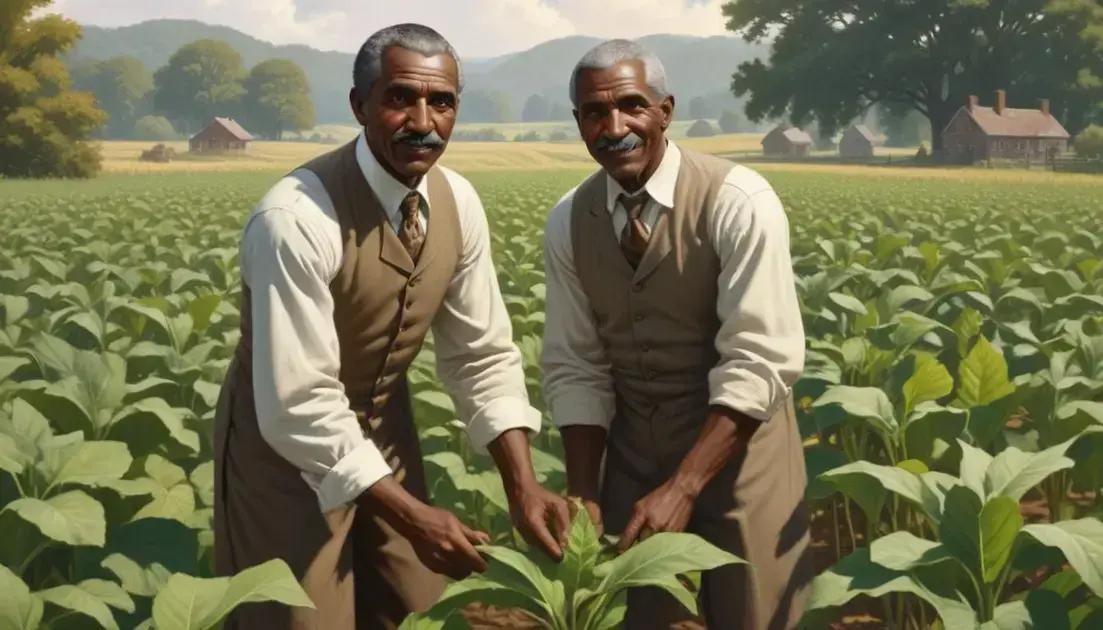
George Washington Carver: Innovation from the Soil
George Washington Carver was a pioneering agricultural scientist whose innovations transformed Southern farming. He advocated for crop rotation, introduced alternative crops like peanuts and sweet potatoes, and developed numerous products to diversify income for farmers. Carver’s contributions helped revive the economy in the South, while his dedication to education inspired future generations. His legacy as a symbol of resilience and creativity continues to influence sustainable agriculture practices today.
George Washington Carver was more than just a scientist; he was a beacon of hope who transformed agriculture in the South. Curious about how his innovations changed lives? Let’s dig deeper!
Introduction
George Washington Carver made a huge impact on farming and the economy in the South. He was born into slavery, yet he overcame many challenges. Carver loved nature and studied plants at a young age. His passion for agriculture drove him to find ways to improve farming methods.
Carver encouraged farmers to plant crops like peanuts and sweet potatoes. This helped restore the soil’s nutrients that cotton had worn out. He created simple, easy-to-follow guides for farmers. These guides showed how to rotate crops and use natural fertilizers. This made farming less demanding and more productive.
Many farmers saw great results and loved his ideas. They started growing more diverse crops, which brought better harvests and more money to their families. Carver also spoke about the value of education, urging farmers to learn more for themselves.
His work didn’t just help farmers; it inspired many people across the nation. Carver’s dedication to helping others made him a beloved figure in American history.
Early Life and Education
George Washington Carver was born around 1864. He grew up on a small farm in Missouri. His early life was tough. He was born into slavery and faced many challenges. But he was curious and loved learning about plants and nature.
As a child, Carver often got sick. This made it hard for him to do hard work on the farm. Instead, he developed a passion for learning. He wanted to go to school, but there were no schools for black children nearby. So, he left home at a young age to find an education.
Carver traveled to different towns, often living with kind families. He worked various jobs to pay for school. He showed a natural talent for art and science. His teachers noticed how bright he was and encouraged him to continue learning.
In 1890, Carver enrolled at Simpson College in Iowa. He was the first black student there. He later transferred to Iowa State Agricultural College. There, he studied agriculture and earned his bachelor’s and master’s degrees.
His education laid the groundwork for his future work. Carver gained knowledge that he would use to help farmers and improve their lives.
Innovations in Agriculture
George Washington Carver brought many innovations in agriculture that changed farming practices. He understood how important it was to take care of the soil. Carver introduced crop rotation, which means changing the types of crops grown each season.
This method helped restore nutrients in the soil. For example, farmers could plant peanuts, which added nitrogen back into the soil. This made the land healthier for future crops like corn and cotton.
Carver also created new products from peanuts and sweet potatoes. He developed over 300 uses for peanuts, including making soap, glue, and even ink. This showed farmers that they could earn more money by diversifying their crops.
By teaching farmers to grow different crops, Carver helped them become less dependent on cotton. This was vital, especially after the Civil War when many struggled to make a living. His ideas opened new markets and opportunities for black farmers.
Carver’s work highlighted the connection between agriculture and industry. He encouraged farmers to think creatively about their products, leading to more sustainable farming practices. His innovations still influence agriculture today.
Impact on Southern Economy
George Washington Carver had a huge impact on the Southern economy. His work helped farmers bounce back after the Civil War. Many Southern farms were struggling, and cotton prices were low. Carver showed farmers how diverse crops could improve their income.
By introducing crops like peanuts and sweet potatoes, he helped farmers make more money. These crops not only enriched the soil but also offered new market opportunities. Farmers could sell their products in local and national markets.
Carver’s ideas encouraged farmers to stop relying solely on cotton. This made the economy more stable and less risky. When farmers diversified their crops, they became more resilient in tough times.
Moreover, Carver’s work did not only benefit individual farmers. It also boosted the local economy. As farmers earned more money, they spent it in their communities. This created jobs and helped local businesses grow.
His influence reached beyond agriculture too. Government officials and leaders recognized the importance of supporting sustainable farming. Carver’s legacy inspired programs and policies to improve the agricultural landscape in the South.
Legacy and Recognition
George Washington Carver’s legacy is felt far and wide. His contributions to agriculture changed the way people farmed. Carver became a symbol of innovation and hard work. His ideas continue to inspire farmers and scientists today.
Many institutions honor his memory. Schools and colleges teach about his life and work. The U.S. government even established a national monument in his name. This site celebrates his achievements and educates the public about his impact.
Carver also received numerous awards. He was recognized by organizations for his work in agriculture, education, and civil rights. He showed how one person’s efforts could improve lives and help communities thrive.
He was not just a scientist; he was also a mentor. Carver taught many students and farmers. He wanted everyone to understand the importance of sustainable farming. His focus on education continues to influence agricultural programs.
Carver’s story reminds us of the power of determination and innovation. Through his hard work, he changed an entire industry and helped people find new ways to succeed. His legacy will live on as a symbol of hope and progress.
Conclusion
In conclusion, George Washington Carver’s work in agriculture had a profound impact on the South. His innovations helped farmers diversify their crops, leading to better income and healthier soil. Carver not only changed farming practices but also inspired future generations to embrace education and creativity.
His legacy reminds us of the importance of sustainability in agriculture. By advocating for crop rotation and alternative crops, he transformed how farming is done. Carver’s dedication to helping others shows how one person’s efforts can create lasting change.
Ultimately, Carver’s life story is one of resilience and innovation. His achievements teach us that with hard work and determination, we can overcome challenges and improve our communities. The lessons learned from his life continue to guide us in making better choices for the future.