Frederick Douglass: the voice that challenged a nation
Frederick Douglass was a prominent abolitionist and civil rights leader who fought against slavery and advocated for equality. His powerful speeches and writings inspired many to join the movement for justice. Douglass’s legacy endures today, influencing ongoing efforts for civil rights and social justice, as his principles of equality and freedom continue to motivate activists around the world.
Frederick Douglass was not just a name; he was a force of nature. His journey from slavery to becoming a leading abolitionist and orator is nothing short of inspiring. Want to learn how he challenged a nation? Let’s dive in!
1. Early Life of Frederick Douglass
Frederick Douglass was born around 1818 in Maryland. He grew up in slavery, which was a tough life. His mother was a slave, and he never knew his father. Douglass was separated from his mother when he was very young. This was a common situation for many enslaved children.
He learned to read and write, which was quite rare for enslaved people. Douglass taught himself by using old books he found. He valued education and believed it was the key to freedom. Douglass often said that knowledge was his ticket out of slavery.
As a young boy, he was sent to live with different masters. Some were cruel, while others were more lenient. This helped him understand the different ways people treated others. Despite the harsh conditions, Douglass dreamed of a better life. His hope for freedom grew stronger each day.
When he was in his teens, he was sent to live with a man named Edward Covey. Covey was known for breaking the spirits of slaves. Douglass faced many hardships there, but he refused to let Covey control him. This experience fueled his desire to escape from slavery.
Eventually, Douglass escaped to the North in 1838. He managed to reach New York City and was a free man at last. His journey from being a slave to becoming free shaped his future and his role as an important leader.
2. The Rise of a Voice
Frederick Douglass became a powerful voice for freedom. After escaping slavery, he shared his story everywhere. He spoke about the injustices faced by enslaved people. His words inspired many to fight for change.
In 1841, Douglass gave his first major speech. It was at an abolitionist meeting in Massachusetts. People listened closely as he spoke with passion. His life story made him stand out because he knew the pain of slavery firsthand.
Douglass published his own newspaper called the North Star. It became a platform to speak against slavery. The paper reached many readers and educated people about the struggles of African Americans. Douglass’s writing was clear and direct, making his message powerful.
Douglass did not only focus on slavery. He fought for women’s rights, too. He believed that all people should have equal rights. His involvement in the women’s suffrage movement showed his commitment to justice.
His speeches and writings had a big impact. Douglass traveled across the country, sharing his message. He spoke to crowds and met with leaders. People felt his energy. They were motivated to join the fight for equality.
Through his work, Douglass helped change minds and hearts. He became a symbol of hope. His rise as a voice for freedom made him a key figure in American history.
3. Douglass’s Impact on Civil Rights
Frederick Douglass made a huge impact on civil rights in America. He fought tirelessly for the freedom of enslaved people. Douglass believed that everyone deserved equal rights, regardless of their background.
His powerful speeches and writing inspired many. Douglass spoke out against slavery and called for justice. He wanted to change the laws that treated people unfairly.
Douglass was one of the first African Americans to hold a high government position. He served as U.S. Marshal for the District of Columbia. This role showed that African Americans could achieve great things.
He also advocated for women’s rights. Douglass attended the Seneca Falls Convention in 1848. This event was the first major gathering for women’s rights in the U.S. He spoke passionately for women’s suffrage and the right to vote.
Douglass’s influence extended beyond his lifetime. His work inspired future generations to continue the fight for civil rights. Leaders like Martin Luther King Jr. looked up to Douglass as a pioneer of the movement.
Today, his legacy lives on in laws that promote equality. Douglass showed that one voice can make a difference. His contributions to civil rights are celebrated and remembered.
4. Legacy and Influence Today
Frederick Douglass’s legacy is still felt today. His fight for freedom and equality inspires many people. He showed that perseverance and courage can bring about change.
Douglass’s writings and speeches continue to be studied in schools. Students learn about his contributions to civil rights and the abolition of slavery. His words motivate new generations to advocate for justice.
Many organizations honor Douglass’s legacy by promoting equality. They work to address social issues that matter today. His impact helps to highlight ongoing struggles for civil rights.
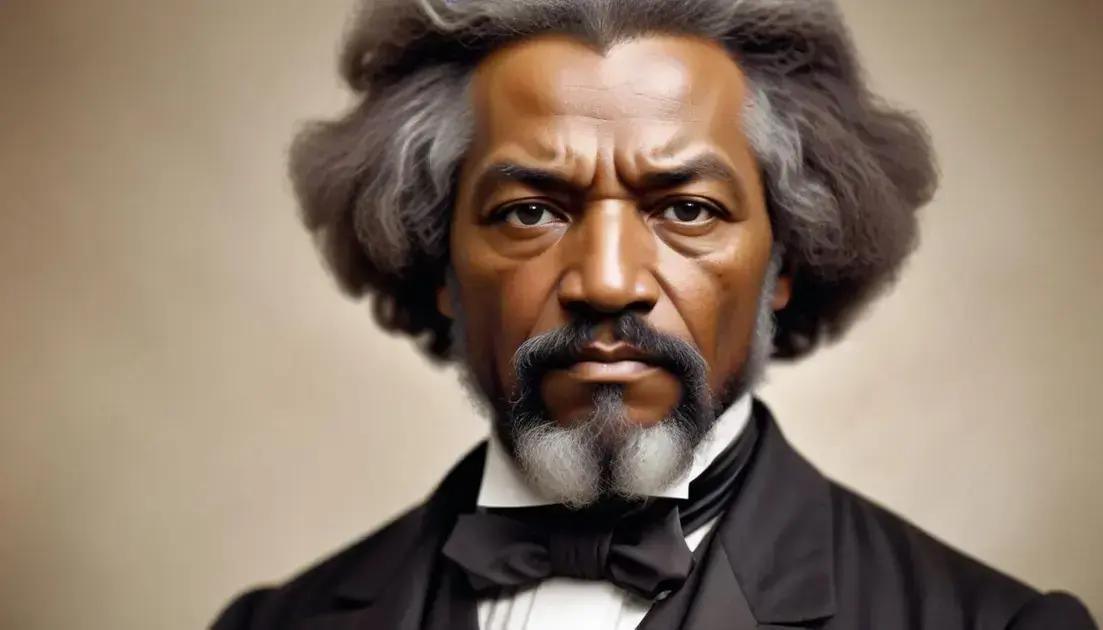
Memorials and statues of Douglass can be found across the U.S. These reminders of his work encourage conversations about freedom and human rights. His image symbolizes the strength of the abolitionist movement.
Moreover, Douglass’s principles influence modern leaders. Activists fighting for racial equality often cite his ideas. They use his teachings to inspire new campaigns for social justice.
Today’s movements for voting rights and racial equality echo Douglass’s mission. His belief that everyone deserves a voice motivates those who advocate for change. Douglass’s fight for justice continues to resonate strongly.
Conclusion
In conclusion, Frederick Douglass’s legacy remains powerful today. His fight for civil rights and equality inspires people around the world. Douglass showed us the importance of standing up against injustice and believing in freedom for all.
His writings and speeches continue to educate and motivate new generations. They remind us that one voice can make a big difference. As we reflect on Douglass’s life, we can find strength in our own efforts to create change.
By learning from Douglass, we can work towards a fairer society. His commitment to justice encourages us to keep fighting for equality. Remembering his legacy helps us carry on his work and strive for a better future for everyone.