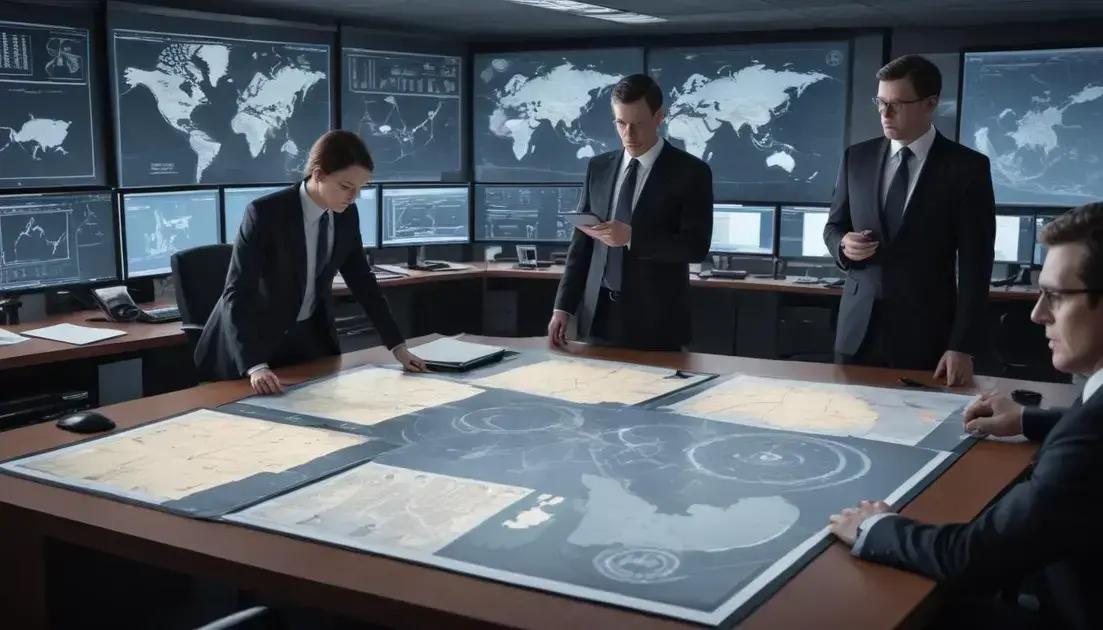
How America built its intelligence empire
Intelligence in modern America is crucial for national security, shaping policies and responses to threats. It involves gathering and analyzing information to identify risks, including cyber threats and terrorism. Agencies use advanced technology and collaborate internationally to enhance security. This evolving role of intelligence helps protect citizens and ensures informed decision-making by leaders, highlighting its importance in daily life and global affairs.
Intelligence has been a crucial part of shaping America’s stance on global issues, evolving through history and impacting foreign policy in ways we often overlook. Want to dive into how? Let’s explore!
Introduction to America’s Intelligence Empire
The intelligence services in America have a rich history shaped by critical moments. They were created to gather, analyze, and use information for national security. Each agency has its own role and focus, but they all work towards the same goal of protecting the country.
In the early days, intelligence was quite basic. Information was gathered from local sources and reports. As time moved on, the needs became more complex. During World War II, for example, intelligence played a key part in major decisions. It helped shape strategies that saved lives and resources.
Key Agencies
Today, we have several important agencies like the CIA and NSA. The CIA, or Central Intelligence Agency, focuses on global issues. They work overseas to collect valuable data. Meanwhile, the NSA, or National Security Agency, protects American communications and gathers data to prevent threats.
Intelligence in Action
Throughout history, intelligence work has influenced many events. For instance, in the Cold War, intelligence helped to keep the peace. They gathered information on potential threats and monitored specific countries. This type of work continues today, with modern technologies making the process faster and more accurate.
As we dive deeper into America’s intelligence empire, we’ll see how it has transformed over time. Understanding its roots helps us grasp its importance in today’s world.
The Evolution of Intelligence Agencies
The evolution of intelligence agencies in America shows how they adapt to new challenges. Initially, these agencies were small and limited. They relied on human spies and basic communications to gather information. Over time, their methods became more advanced.
In World War I, intelligence needs grew. The U.S. started to recognize the importance of gathering accurate data. By World War II, the intelligence agencies had transformed. The Office of Strategic Services (OSS) was formed to coordinate efforts in the war.
The Birth of Modern Agencies
After World War II, the Cold War began. This era demanded better intelligence to respond to threats. In 1947, the Central Intelligence Agency (CIA) was created. It focused on gathering information abroad and carrying out covert operations.
The Age of Technology
As technology advanced, so did intelligence work. The introduction of computers and satellites changed everything. Agencies began using these tools to collect and analyze vast amounts of data.
The National Security Agency (NSA) emerged during this time, focusing on signals intelligence. They intercept communications, ensuring national security. Now, they play a crucial role in monitoring threats and protecting information.
Adapting to New Challenges
In recent years, intelligence agencies have faced new challenges. Cybersecurity threats have risen, requiring agencies to adapt quickly. They now monitor and respond to cyber threats that could harm national security.
These changes show that intelligence agencies evolve continuously. They must stay ahead of threats and use new technology effectively. Their journey reflects the ongoing need for safety and security in a complex world.
Key Events that Reshaped Foreign Policy
Many key events have reshaped foreign policy in America over the years. Each event brought lessons and changes that influenced how the country interacts with the world.
One major event was World War II. It showed how powerful alliances could help win conflicts. After the war, the U.S. focused on building strong relationships with other nations. This led to the formation of NATO in 1949, a military alliance aimed at mutual defense.
The Cold War Era
During the Cold War, tensions with the Soviet Union defined foreign policy. The threat of nuclear conflict pushed the U.S. to take a strong stance against communism. This led to policies like the Truman Doctrine, which aimed to contain communism around the world.
Key Treaties
Significant treaties also shaped America’s approach. The 1968 Non-Proliferation Treaty aimed to prevent the spread of nuclear weapons. This agreement showed the U.S. commitment to global security and arms control.
Another crucial moment came with the Vietnam War. The conflict sparked protests and debates about U.S. involvement abroad. It ultimately changed how American leaders considered military engagement in future conflicts.
Modern Foreign Policy Shifts
In recent times, events like the September 11 attacks shifted focus to counterterrorism. The U.S. launched operations in Afghanistan and Iraq, aiming to combat threats directly. These actions marked a significant shift from traditional warfare to battling terrorism.
These key events demonstrate how foreign policy evolves. America continually adjusts its strategies to meet new challenges and opportunities on the world stage.
The Impact of Intelligence on National Security
Intelligence plays a vital role in ensuring national security. It provides policymakers with the information they need to make informed decisions. Without effective intelligence, the country can face serious threats.
Intelligence helps to identify risks before they become real problems. Agencies gather data on potential threats, whether from terror groups or hostile nations. This information is crucial for preventing attacks and keeping citizens safe.
Early Warning Systems
One important function of intelligence is creating early warning systems. These systems can alert officials to dangerous situations. For example, tracking movements of suspected terrorists allows for timely intervention.
Cooperation with Allies
Intelligence agencies also work with allies around the world. Sharing information helps strengthen global security. When countries cooperate, they can create a more comprehensive understanding of threats.
Joint operations based on shared intelligence can lead to more effective responses. This collaboration brings different perspectives and resources to tackle common problems.
Policy Influence
Moreover, intelligence influences foreign policy decisions. Leaders rely on reports from agencies to shape their strategies. Strong intelligence can lead to diplomatic solutions rather than military action.
In crises, accurate intelligence can mean the difference between peace and conflict. For instance, understanding an enemy’s intentions can prevent misunderstandings and escalation.
By providing critical insights, intelligence remains a backbone of national security. Its impact goes beyond defense, shaping how the nation interacts with the world.
Conclusion: Intelligence in Modern America
Intelligence today is more crucial than ever in America. It shapes policies, strategies, and responses to threats. As the world changes, so does the role of intelligence.
Modern intelligence focuses on various challenges, including cyber threats and terrorism. Agencies work hard to stay ahead of these ever-evolving risks. They must adapt quickly, using advanced technology to analyze data efficiently.
Innovation and Technology
Innovation in technology has transformed intelligence work. With tools like artificial intelligence and big data analysis, agencies can process information faster. This helps them identify patterns and threats quickly.
Collaboration and Communication
Collaboration among agencies is key. Sharing information allows for a more comprehensive approach. When agencies work together, they create a stronger defense against potential dangers.
International cooperation also matters. Many threats are global, requiring nations to work together. Intelligence sharing among allies can prevent attacks and ensure security.
The Future of Intelligence
Looking ahead, intelligence will continue to evolve. It must keep pace with global changes and emerging threats. The importance of intelligence in maintaining national security will remain high.
As we move forward, understanding the role of intelligence will help us appreciate its impact on everyday life. A well-informed public can support and engage with intelligence efforts more effectively.
Conclusion
In conclusion, the role of intelligence in modern America is vital for national security and defense. It helps protect citizens by identifying threats and providing crucial information to leaders. As our world changes, intelligence agencies must adapt and innovate to keep pace with new challenges.
By using advanced technology and collaborating with both domestic and international partners, they can stay one step ahead. Understanding the impact of intelligence allows us to appreciate its importance in our daily lives. Ultimately, a strong intelligence system is key to maintaining peace and security in an increasingly complex world.