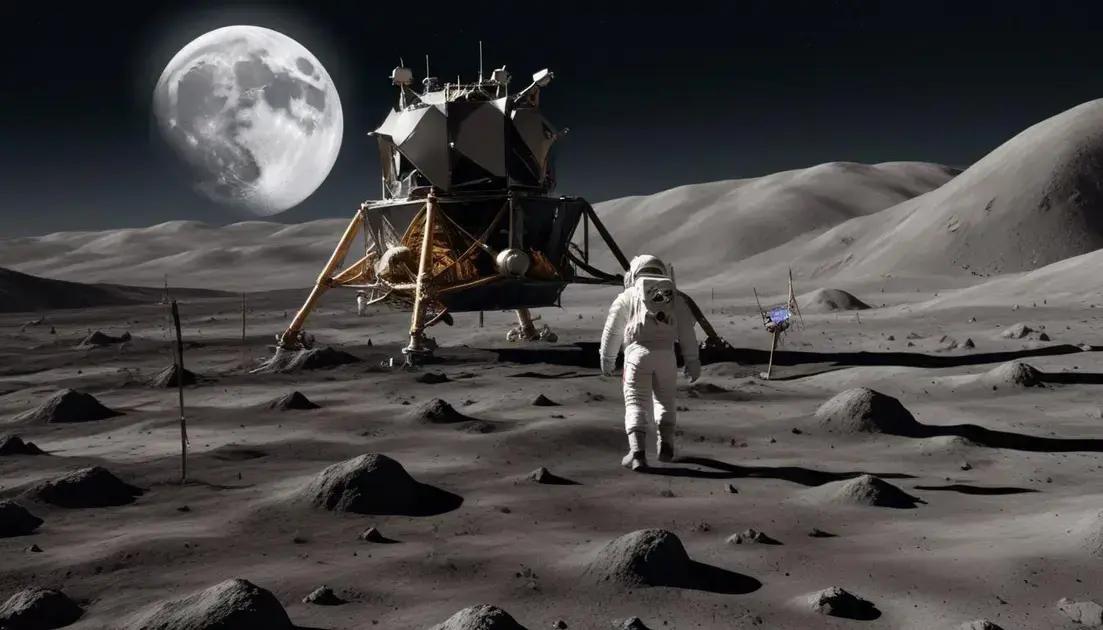
Saturn V: the rocket that took humanity to the moon
The Saturn V rocket, a key achievement in space exploration, represents human ingenuity and cultural significance. Launched during the Apollo Program, it successfully took astronauts to the moon, inspiring global unity and interest in science. Its legacy continues to influence modern space missions and educational initiatives, encouraging future generations to pursue their dreams of exploring the cosmos.
The Saturn V is more than just a rocket; it’s a towering testament to human ingenuity. As we reflect on its incredible journey to the moon, one can’t help but wonder: how did this engineering giant reshape our understanding of space?
The Legacy of Saturn V
The Saturn V isn’t just a rocket; it’s a symbol of what we can achieve. It stands tall as a testament to human spirit and innovation. Launched in the 1960s, this majestic rocket took astronauts beyond our planet, landing them on the moon. Its design was groundbreaking and complex, packed with powerful engines that made history.
The Saturn V was used in the Apollo missions, which brought back incredible stories and samples from the moon. Think about it! Humans set foot on another celestial body! The engineering behind the Saturn V was nothing short of miraculous. Each launch was like a ballet of science and creativity in motion.
Even today, the legacy of the Saturn V continues to inspire. It showed us that when we work together towards a common goal, we can reach for the stars – literally! Schools, museums, and events celebrate its achievements, introducing new generations to space exploration.
The rocket’s design has influenced many aspects of modern aerospace technology. Its success paved the way for future missions. Today, we see the impact of its legacy in how we explore space.
So, whenever you think of space travel, remember the Saturn V. It’s not just a rocket; it’s a symbol of human achievement and a reminder of what we can accomplish together. Who knows where the next great journey will take us?
Engineering Marvels Behind Saturn V
The Saturn V rocket is an engineering marvel. Its design was a blend of creativity and science. The rocket stood 363 feet tall. That’s taller than a 36-story building! It had three powerful stages that helped it escape Earth’s gravity and reach the moon.
Each stage of the Saturn V played a crucial role. The first stage used five massive F-1 engines. Together, they produced over 7 million pounds of thrust. This helped lift the rocket off the ground with incredible power. Imagine the roar it made!
The second stage was just as impressive. It used five J-2 engines to push the rocket even higher. This stage helped the Saturn V reach space. Finally, the third stage, with a single J-2 engine, was vital for getting to the moon.
But it wasn’t just about the engines. Every part of the Saturn V was carefully designed. From the massive fuel tanks to the guidance systems, each component worked together perfectly. Engineers had to solve many tough problems to make it all happen.
The Saturn V also used advanced materials for its structure. Lightweight aluminum made it possible to carry more fuel. The design helped lower the weight while keeping it strong. Such innovation is what made the Saturn V a true giant of space exploration.
Today, the engineering behind the Saturn V inspires new generation engineers and innovators. Its legacy shows us what we can achieve with teamwork and imagination.
Key Missions: Apollo Program Overview
The Apollo Program was a series of missions that changed space exploration forever. It started in the early 1960s and aimed to land humans on the moon. This ambitious project was led by NASA, and it captured the world’s attention.
The first successful mission was Apollo 11 in July 1969. Astronauts Neil Armstrong, Buzz Aldrin, and Michael Collins made history. On this mission, Armstrong and Aldrin landed on the moon, while Collins stayed in orbit. Armstrong’s words, “That’s one small step for man, one giant leap for mankind,” became famous.
Apollo 12 followed in November 1969 and achieved another lunar landing. The next missions continued building on this success. Apollo 15, 16, and 17 included new technology and scientific goals. They brought back valuable moon rocks and conducted experiments on the lunar surface.
The Apollo 13 mission was marked by a dramatic twist. An oxygen tank exploded, putting the crew in danger. They quickly worked together to return safely to Earth. This mission showed the importance of teamwork and problem-solving in space.
Overall, the Apollo Program included six successful lunar landings. These missions helped us learn about the moon’s surface, geology, and potential for life. They inspired thousands, showing what humans can achieve through hard work and effort.
Today, the spirit of the Apollo missions lives on. They laid the groundwork for future space exploration initiatives. New missions to the moon and Mars are being planned, all thanks to the bold vision of the Apollo Program.
Impact on Future Space Exploration
The Apollo Program had a huge impact on future space exploration. Its success taught us how to send humans to the moon and back safely. This groundbreaking work laid the foundation for many future projects.
One clear effort is the Artemis Program. NASA wants to return astronauts to the moon. They plan to send the first woman and the next man by 2024. Artemis aims to create a lasting presence on the moon. This program will help us learn more about lunar resources.
Additionally, the Apollo missions inspired international collaboration. Countries worldwide now work together on space missions. The International Space Station (ISS) is a great example. Scientists from various nations share knowledge and skills aboard this outpost in space.
The lessons learned during Apollo also help us prepare for Mars exploration. NASA and other agencies study how the moon can be a launchpad for missions to Mars. Technologies developed for the Apollo missions are still useful today.
Engineering practices, safety protocols, and mission planning all came from Apollo experience. This strong foundation leads further advancements. Private companies, like SpaceX, are now developing their own space missions using Apollo ideas.
The Apollo Program reminds us that big dreams are possible. It showed us how much we can achieve when we work together. As we look to the stars, the journey started by Apollo continues to inspire.
Cultural Significance of Saturn V
The Saturn V rocket isn’t just a machine; it’s a cultural icon. Its powerful launches captured the imagination of millions. People around the world watched as it lifted off, marking humanity’s journey to the moon.
The Saturn V brought a sense of unity. It showed what countries could achieve together. During the space race, pride in national accomplishments was high. Yet, the Saturn V also symbolized hope for all of mankind.
In movies, books, and art, the Saturn V became a subject of fascination. It inspired creators to dream big, showing how humans can break physical limits. These stories resonate with the idea that anyone can achieve greatness.
Schools and educational programs now use the Saturn V to teach science and engineering. It gets students excited about space and exploration. By learning about its design and missions, kids discover how science impacts real life.
Moreover, the Saturn V appears in museums and exhibitions worldwide. People visit to see this incredible rocket. They marvel at its size and the stories behind it. This presence reminds us of the era of great adventures in space exploration.
The cultural impact of the Saturn V is profound. It represents what can happen when we pursue knowledge and adventure. Its legacy invites future generations to take their own giant leaps.
Conclusion
In conclusion, the Saturn V rocket is more than just a piece of machinery; it’s a symbol of human achievement. Its journeys to the moon inspired generations and sparked interest in space exploration. The lessons learned from its missions continue to influence how we explore space today.
The cultural significance of the Saturn V also highlights its role in uniting people from different backgrounds. It showed us what we can accomplish when we work together toward a common goal. As we look to the future, the legacy of the Saturn V will keep inspiring new explorers and dreamers.
Remember, each step we take in space exploration brings us closer to understanding the universe. The spirit of curiosity that the Saturn V represents lives on, encouraging future generations to reach for the stars.