The Black Death: the plague that changed the world
The Black Death dramatically transformed medieval society, affecting social structures, economies, and cultural beliefs. Key lessons from this pandemic include the significance of public health, community support, and the importance of adaptability in times of crisis. The plague led to better hygiene practices, increased wages for workers, and advancements in medicine. Additionally, it sparked introspection regarding faith and mortality, influencing cultural expressions in art and literature. Understanding these impacts helps us appreciate how historical events shape our current approach to health and community resilience.
Black Death unleashed a wave of despair and transformation in the Middle Ages, leaving a profound impact that resonates even today. Curious about how this plague changed everything?
Understanding the Black Death
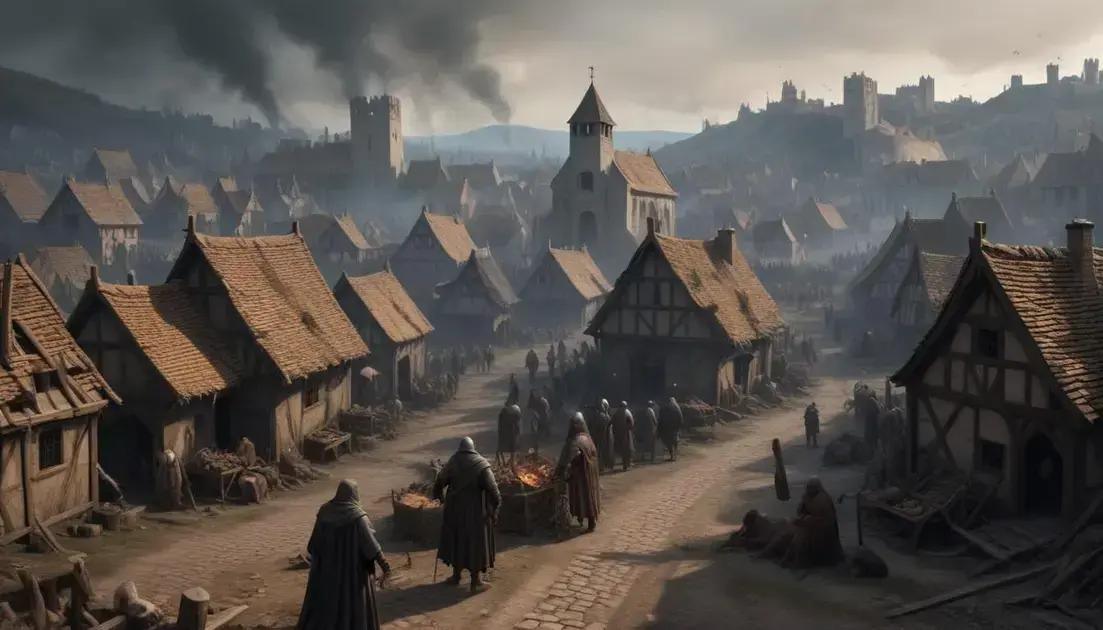
The Black Death was a terrifying pandemic that struck Europe in the 14th century. It killed millions of people, leaving deep scars on society. The disease spread quickly, affecting cities and villages across the continent.
Many believed it was a punishment from God. People turned to their faith for comfort, but fear and confusion ran rampant. The poor living conditions and lack of medical knowledge made matters worse. No one knew how to stop the spread.
The symptoms of the Black Death were horrifying. Victims suffered from fever, chills, and painful swellings called buboes. Those infected often died within days. This rapid spread shocked families and communities.
Trade and travel contributed to the Black Death’s spread. Merchants and travelers unknowingly carried the disease with them. As trade routes expanded, so did the plague. Major cities like Paris and London were hit hard.
Despite the horror, the Black Death changed society in significant ways. It forced people to think about health and hygiene. Families had to cope with loss and grief, creating a ripple effect that reshaped communities.
Understanding the Black Death helps us see the resilience of humanity. People learned to adapt, and societies slowly rebuilt after the devastation. Today, we remember this painful chapter in history, ensuring such a tragedy doesn’t happen again.
The Impact on Medieval Society
The Black Death had a huge impact on medieval society. It changed how people lived and worked. With so many deaths, labor became scarce. Workers gained more power and better wages.
This shift changed social structures. The feudal system began to weaken. Serfs and peasants sought more rights. They wanted fair pay for their hard work.
Families faced enormous grief. They lost loved ones and struggled to cope. The constant fear of death made people reassess their lives and values.
Religion also changed. Many viewed the plague as punishment from God. Others looked for answers and turned to new ideas. This led to a rise in different beliefs and movements.
People found ways to express their pain through art and literature. Stories and songs emerged that reflected the suffering of the time. This creativity helped society heal and remember.
Healthcare improved too. The horrors of the Black Death highlighted the need for better medicine. It sparked interest in hygiene and public health practices, laying the groundwork for modern medicine.
Overall, the Black Death reshaped medieval society in many ways. Though it brought tragedy, it also opened the door to changes that formed the world we know today.
Economic Changes Due to the Plague
The Black Death caused significant economic changes across Europe. With millions dead, many jobs went unfilled. This created a labor shortage that shifted power toward workers.
As a result, wages rose. Workers could demand better pay for their efforts. This was a big change from the past when they had to accept low wages.
The demand for goods also changed. Fewer workers meant that production dropped. Prices for some goods began to rise because demand outstripped supply.
People started to invest in better tools and farming methods. These investments helped improve productivity. Many landowners realized that healthier workers produced more and brought in more money.
Trade routes were affected too. Many towns relied on trade for their wealth. The plague slowed down trade as people feared traveling. However, this also encouraged local markets to grow.
Some merchants became wealthier during this time. They had the resources to adapt and invest wisely. Others, however, struggled to survive as trade faded.
The Black Death marked a turning point in economic history. It changed how people viewed work and value, leading to new economic systems in the years that followed.
Cultural and Religious Shifts
The Black Death led to significant cultural and religious shifts during the Middle Ages. Many people saw the plague as a punishment from God. This belief caused fear and desperation in communities.
People turned to their faith for answers. Many prayed more and sought the help of the church. They believed that faith could save them from the disease. Some even blamed others, leading to violence and scapegoating.
As the death toll rose, some questioned their beliefs. People wondered why a loving God would allow such suffering. This questioning opened the door to new ideas and movements.
Arts and literature also reflected these changes. Writers and artists created works that expressed grief and hope. The themes of death and mortality became very common in art during this time.
The plague sparked new religious movements as well. Some groups broke away from traditional beliefs, seeking new paths. They believed in personal connections with God rather than relying solely on the church.
In this way, the Black Death influenced how people viewed life and death. It caused many to reflect deeply on their beliefs and the world around them, leading to long-lasting cultural changes.
Lessons Learned from the Pandemic
The Black Death taught many important lessons that we remember today. One major lesson is the importance of public health. People realized that clean living conditions help prevent disease. Understanding how to maintain hygiene became crucial.
Another key lesson was the value of community. During the pandemic, people needed each other for support. Communities that worked together often survived better. They shared resources and helped those in need.
The pandemic also showed how quickly things can change. Life can be unpredictable. This taught people to adapt and be ready for anything. Flexibility became a vital trait for survival.
Science and medicine advanced because of the Black Death. The crisis pushed people to seek better understanding of diseases. It sparked interest in medical research and improved training for doctors.
Many learned the importance of mental health during tough times. The grief and loss affected many people deeply. Support systems and counseling became essential for healing.
Finally, the Black Death reminded us about the value of life. People became more aware of their health and the need to live fully. These lessons have influenced how societies respond to health crises even today.
Conclusion
In conclusion, the Black Death shaped history in many ways. It changed society, economy, culture, and beliefs. From the horrors of the plague, we learned valuable lessons about public health and community strength. These insights help us understand how to face challenges today.
By embracing the importance of hygiene and supporting one another, we can build stronger communities. The advances in science and medicine from this era serve as reminders of the power of knowledge. As we reflect on the impact of the Black Death, we also recognize the strength of the human spirit in overcoming adversity.
Let’s continue to learn from history, valuing life and health, while being ready to adapt in the face of change. Together, we can create a better future informed by our past experiences.
Tags: