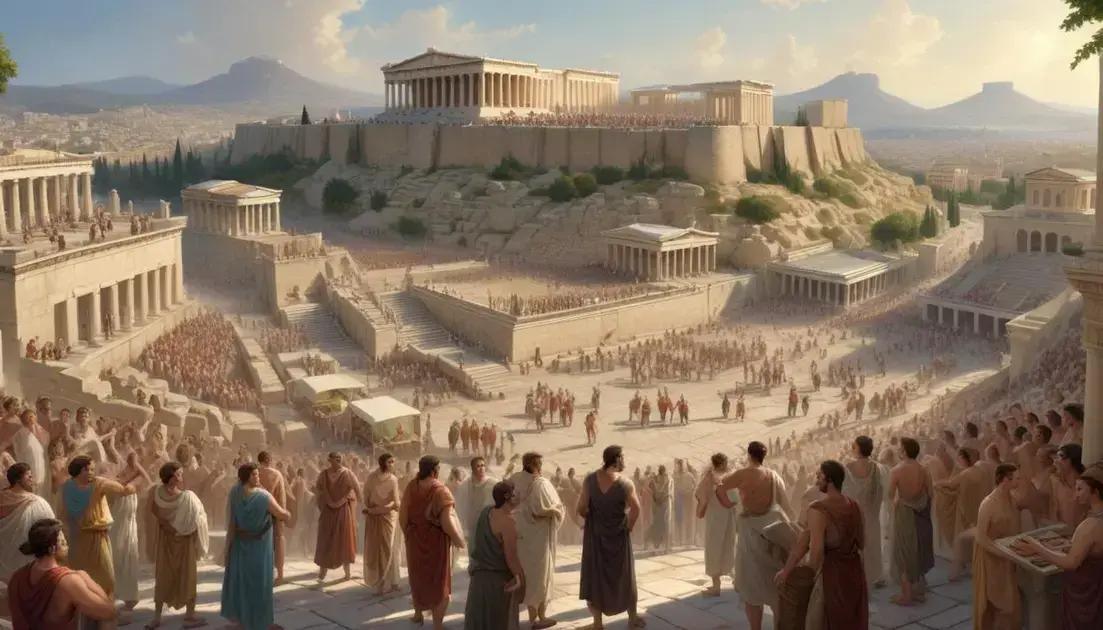
Athens: the birthplace of democracy
Athenian democracy introduced crucial principles like direct citizen participation, accountability of leaders, and freedom of expression that continue to influence modern governance. Its emphasis on fairness and equality laid the groundwork for contemporary democratic systems, highlighting the importance of involving citizens in decision-making processes.
Welcome to the fascinating world of Athenian Democracy, where citizens came together to shape the future of their city-state. Have you ever wondered how this early form of governance has influenced our current systems? Let’s dive in!
The Origins of Democracy in Athens
The origins of democracy in Athens date back to the 5th century BC. It was a time when the city-state began to change how decisions were made. Instead of being ruled by kings, ordinary citizens could now have a voice in government.
Athens and Its Citizens
Athens allowed its citizens to participate directly in decision-making. This was a big shift from other places that were ruled by a few powerful people. Citizens gathered in assemblies to discuss and vote on important matters.
The Reforms of Cleisthenes
One key figure in this change was Cleisthenes. He is often called the “Father of Democracy.” His reforms in 508 BC helped to organize society into a system where everyone could contribute. He introduced the practice of random selection for certain officials to ensure fairness.
The Role of the Assembly
The Athenian Assembly was crucial. This was where citizens met to debate laws and policies. Anyone who was a citizen could speak. This made the government more inclusive and responsive to the people’s needs.
The Impact on Future Democracies
The idea of democracy in Athens influenced many governments around the world. It showed that power could be shared among many rather than held by a select few. Today, many democratic systems still reflect the principles established in ancient Athens.
Understanding the origins of democracy helps us appreciate its value today. It reminds us of the importance of each person’s voice in shaping the community.
The Role of Citizens in Decision Making
The role of citizens in decision making was vital to Athenian democracy. Ordinary people had the chance to voice their opinions. This participation gave power to the people, making governance more fair and open.
Participation in Assemblies
Citizens would gather in assemblies to discuss laws and policies. Everyone had the right to speak. This helped ensure that different viewpoints were heard and considered.
Voting and Decision Making
Once the discussions were over, citizens voted on proposals. This was done by raising hands or using ballots. Each vote mattered, and it shaped the future of Athens.
The Importance of Debate
Debate was crucial in these assemblies. Citizens expressed diverse ideas. This not only educated everyone involved but also encouraged critical thinking and healthy discussions about important issues.
Accountability of Leaders
With citizen participation, leaders were held accountable. If citizens didn’t agree with decisions, they had the power to challenge those in charge. This made leaders more mindful of their actions and promises.
The role of citizens shaped ancient Athens into a vibrant democracy. It created a sense of community where everyone felt connected to their city’s future.
Key Features of Athenian Democracy
Athenian democracy had several key features that set it apart. These features made it unique and influenced future governments around the world.
Direct Participation
Citizens were directly involved in decision-making. Unlike modern representative democracies, they didn’t elect leaders to make choices for them. Instead, they voted on laws and policies themselves.
Random Selection of Officials
Athenian democracy used a system called sortition. This meant that officials were chosen randomly. This method helped prevent corruption and ensured that everyone had a fair chance to serve.
Accountability and Oversight
Leaders were held accountable for their actions. Citizens could even bring leaders to trial if they believed they misused their power. This ensured that those in charge acted in the best interest of the people.
The Role of the Assembly
The Assembly was where all citizens could meet to discuss and vote on issues. This gathering was open to everyone, encouraging active participation in governance.
Freedom of Speech
Athenian democracy valued freedom of speech. Citizens could express their opinions without fear of punishment. This openness promoted lively debates and diverse perspectives on issues.
These key features created an environment where citizens could engage fully. Athenian democracy was a bold experiment in self-governance that laid the groundwork for modern democratic systems.
The Impact of Athenian Democracy on Modern Governance
Athenian democracy has had a lasting impact on modern governance. Many ideas from ancient Greece shaped how we view democracy today.
Foundations of Democracy
The concept of citizens participating in decision-making is key. This idea started in Athens and still resonates today. Citizens want a say in their government.
Influence on Democratic Principles
Athenian democracy emphasized fairness and equality. Many modern democracies strive for these same values. Equal representation is a cornerstone of governments today, influenced by Athenian practices.
Direct vs. Representative Democracy
While Athenian democracy practiced direct democracy, most modern systems use representative democracy. Still, the idea of voting remains central. Citizens choose representatives to voice their opinions in government.
Accountability and Transparency
The accountability of leaders was essential in Athens. This principle is still important today. Governments are expected to be transparent and answerable to their citizens.
Freedom of Expression
Freedom of speech, valued in ancient Athens, is a vital part of modern democracy. Citizens today can express their views openly, influencing public policy.
Athenian democracy teaches us that participation matters. Its legacy continues to shape how we understand governance and citizen engagement in the modern world.
Conclusion
In conclusion, Athenian democracy has significantly shaped how we view governance today. Its focus on citizen participation remains a core principle in modern democracies. The ideas of fairness, accountability, and freedom of expression from ancient Greece continue to influence our political systems.
By learning from Athenian democracy, we can understand the importance of every voice in shaping our government. This legacy encourages us to engage actively in our communities and value our rights as citizens. Ultimately, the spirit of Athenian democracy inspires us to work towards a fairer and more inclusive society.