The Fall of Rome: How an Empire Collapsed
The fall of the Roman Empire resulted from a combination of invasions, political corruption, and economic crises. Barbarians attacked its borders, leaders prioritized personal gain over the public good, and inflation led to widespread poverty and food shortages. This chaos not only caused the empire’s decline but also paved the way for the rise of new kingdoms and significant cultural changes in Europe.
Have you ever wondered how the fall of Rome led to such a drastic shift in world history? It’s a tale filled with intrigue, power struggles, and lessons for our time. Let’s dive in!
Understanding the Fall
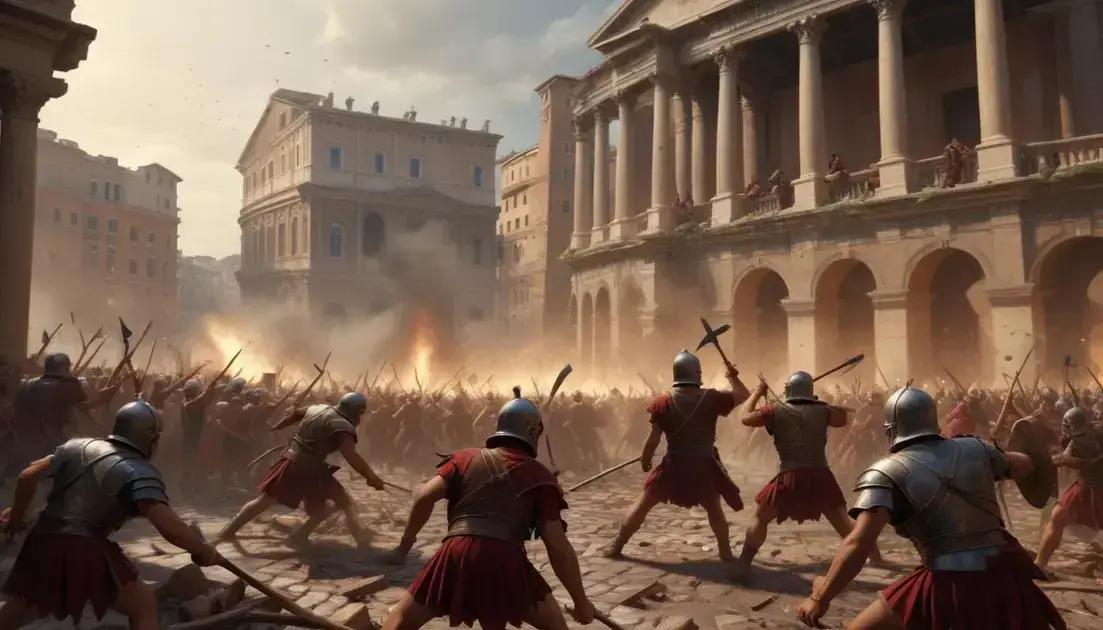
Understanding the fall of Rome requires looking at several key factors. The empire faced many challenges that led to its decline. One major factor was the constant invasions from outside forces. Barbarian tribes, like the Goths and Vandals, attacked Roman territories.
Invasions and Their Impact
These invasions weakened Rome’s military. They caused panic and fear among the population. The empire struggled to protect its borders. As a result, people lost faith in their leaders.
Political Corruption in Rome
Political corruption made things worse. Many leaders were more interested in power than helping their people. This laziness led to poor decisions. The government was not effective in responding to the empire’s needs.
Economic Crisis and Its Effects
Economic problems played a big role too. Trade routes were disrupted. Inflation rose, making money less valuable. People struggled to find jobs and food became scarce. These issues hurt everyone and led to more unrest.
All of these factors contributed to a growing feeling of despair in Rome. The once-mighty empire could not recover from such devastating blows. Understanding this history helps us see how great powers can fall and what may cause their decline.
Invasions and Their Impact
Invasions had a huge impact on the fall of Rome. These attacks came from various groups outside the empire. The most famous among them were the Goths. They were fierce warriors who broke through Roman defenses.
The Barbarian Tribes
Many barbarian tribes saw the weakening of Rome as an opportunity. They invaded with the hope of taking land and resources. The Vandals, Huns, and others joined in these efforts. This put great pressure on Rome’s military.
Weakening Roman Defenses
As these invasions continued, Rome’s defenses grew weaker. Soldiers struggled to protect the borders. They faced not just one enemy but many at once. This confusion led to major losses in battles.
Impact on Citizens
Civilians lived in constant fear. People were scared to leave their homes. Whole communities were destroyed during attacks. Many sought refuge in cities that could defend themselves.
Economic Consequences
The invasions also hurt the economy. With constant fighting, trade routes were disrupted. Goods and food became scarce. This led to starvation and suffering among the people.
In the end, the constant invasions were a key reason for Rome’s decline. They changed the empire forever and laid the groundwork for new nations.
Political Corruption in Rome
Political corruption was a big issue during the fall of Rome. Many leaders cared more about power than their people. They made decisions that benefited themselves instead of the empire. This changed how Romans viewed their leaders.
Leadership Failures
Some emperors were more focused on luxury than governing. They spent money on personal pleasures, leaving the state weak. Poor leadership created mistrust among the citizens.
Bribes and Scandals
Bribery was common among officials. Many officers accepted money to ignore crimes or to grant favors. This breakdown of ethics made it hard for justice to be served.
Administrative Chaos
The government was chaotic. Important positions became unstable due to constant changes in leadership. This instability added to the problems that Rome faced.
Impact on Society
The effects of corruption spread throughout Roman society. Citizens felt hopeless as they watched their leaders fail. This led to protests and a general feeling of anger.
In the end, political corruption played a significant role in Rome’s decline. It weakened the trust between the leaders and the people, paving the way for disaster.
Economic Crisis and its Effects
The economic crisis in Rome was a crucial factor in the fall of the empire. The crisis affected everyone, from the wealthy to the poor. It created instability that led to widespread hardship.
Trade Disruptions
One major issue was the disruption of trade routes. Invasions and conflicts made it hard for merchants to travel. Goods became scarce, leading to higher prices.
Inflation Rises
As inflation rose, the value of money dropped. People struggled to buy even basic items. Markets became filled with uncertainty, and many lost their jobs.
Food Shortages
Food shortages were common during this time. With trade hurt, finding enough to eat became difficult. Starvation affected many families, leading to social unrest.
Social Unrest
All these economic issues caused anger and frustration. Citizens protested against the government. They demanded change and support but often received little.
The economic crisis truly weakened Rome. It played a role in the empire’s overall decline, affecting daily life and trust in leadership.
Legacy of the Empire’s Collapse
The legacy of the empire’s collapse is felt even today. When Rome fell, it changed the course of history. Many regions faced uncertainty and chaos.
Formation of New Kingdoms
As Rome lost control, new kingdoms and tribes rose. The chaos opened doors for emerging powers. These new groups began to reshape Europe.
Cultural Changes
The fall also affected culture. With the empire gone, different customs started to emerge. People blended Roman ideas with their own traditions.
Decline of Urban Life
Urban centers saw a decline in population. Many people moved away, seeking safety in rural areas. This led to the fall of cities that once thrived.
Feudalism Emerges
In the absence of a strong central government, feudalism began to take hold. Lords and vassals formed new social structures. This change shaped medieval society for centuries.
The collapse of Rome left a mixed legacy. It brought both challenges and new beginnings, influencing how life evolved in Europe.
Conclusion
In conclusion, the fall of the Roman Empire teaches us important lessons about power and stability. The combination of invasions, corruption, and economic issues created a perfect storm for failure. Each factor played a significant role in leading to the empire’s decline.
Furthermore, the legacy of this fall shaped the future for many generations. New kingdoms emerged, cultures mixed, and feudalism rose to power. Understanding this history helps us see how societies can change rapidly and how they are often influenced by their leaders and circumstances.
Ultimately, the story of Rome reminds us that no empire lasts forever. The effects of its collapse continue to impact our world today, showing the importance of good governance and unity.