Polynesians: the navigators of the vast Pacific
Polynesian navigators significantly impacted the cultures of the Pacific Islands through their exploration, connecting communities and facilitating the exchange of resources. Their expert navigational techniques used the stars, ocean currents, and natural signs, enabling them to settle diverse islands. They enriched local cultures by introducing new crops, stories, and art forms, which are still celebrated today, illustrating the lasting legacy of their journeys.
Polynesian Navigators have fascinated historians and travelers for centuries. Their mastery of the vast Pacific Ocean reveals stories of adventure and skill.
Historical significance of Polynesian navigators
The historical significance of Polynesian navigators is truly remarkable. These skilled sailors traversed the vast Pacific Ocean long before modern navigation tools existed. They used the stars, ocean currents, and wind patterns to guide their journeys. This know-how was passed down through generations, showcasing their deep connection to the sea.
Polynesian navigators were pioneers. They discovered and settled islands across the Pacific, from Hawaii to New Zealand. Their voyages covered thousands of miles, often taking weeks. These journeys were not only about survival but also about adventure and exploration.
The navigators had great knowledge of the ocean. They understood the behavior of birds and waves, which guided them to land. Their ability to find islands without modern instruments is impressive and shows their exceptional skills.
Moreover, their expeditions shaped the cultures of the islands they reached. They brought seeds, animals, and ideas from one island to another, mixing and enriching cultures. Today, we celebrate their legacy through stories and traditions that live on in Polynesian communities.
Ultimately, the achievements of Polynesian navigators remind us of the spirit of exploration and the importance of preserving this heritage for future generations. They laid the foundations for navigation and oceanic cultures around the world, inspiring people to look beyond the horizon.
Navigational techniques used by Polynesians
The navigational techniques used by Polynesians are fascinating and innovative. They did not have compasses or maps like we do today. Instead, they relied on the stars to guide them at night. By observing the celestial bodies, they could find their way across vast oceans.
During the day, Polynesian navigators looked for clues in nature. They studied the ocean waves and currents closely. These natural signs helped them determine the direction and distance to their destination. They could even predict weather changes by observing cloud patterns.
Birds were important navigational aids too. Polynesians noticed which birds flew in which direction. When they saw certain birds, it often meant land was nearby. This deep understanding of their environment was key to their success.
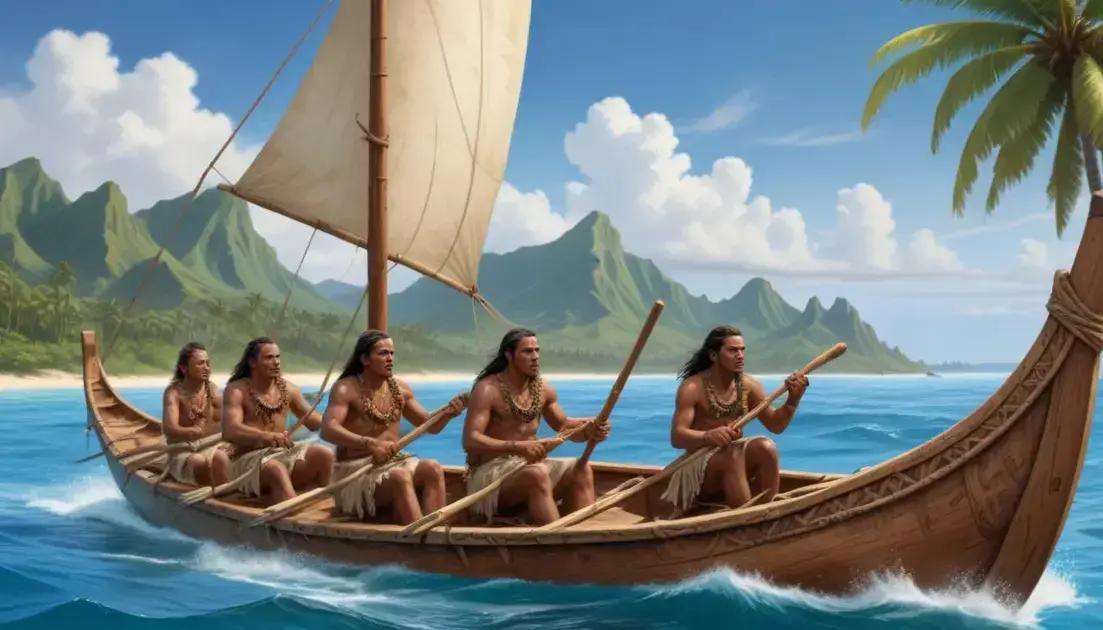
They also used their own canoes, designed for speed and stability, to travel long distances. With their outrigger canoes, they could sail efficiently on the open sea. This design helped them explore and settle on many islands in the Pacific.
Every voyage was a learning experience. Navigators gathered knowledge as they traveled and shared it with others. This sharing of information ensured that future generations could continue the tradition. Their navigational skills show how cleverly they adapted to their oceanic surroundings, paving the way for remarkable journeys.
Impact on the cultures of the Pacific Islands
The impact on the cultures of the Pacific Islands from Polynesian navigators is significant. Their journeys connected various islands and communities. This sharing of knowledge and resources enriched each culture they touched.
When Polynesian navigators settled on different islands, they brought new plants and animals. This exchange helped local diets diversify. Crops like taro and sweet potatoes became staples in many places.
The navigators also brought their stories and traditions. Oral history was a vital part of their culture. They shared tales of gods, creation, and heroic journeys. These stories still shape identities today and strengthen community bonds.
Language evolved too, influenced by the interactions between different groups. Many Pacific Island languages share roots, showcasing their shared heritage. This linguistic diversity reflects a rich cultural tapestry across the region.
Crafts and art styles also developed through contact with navigators. Skills in carving and weaving were shared among islands. Each island added its unique flair, making the art more vibrant and varied.
Furthermore, the navigators’ deep respect for the ocean shaped cultural beliefs. Many islanders view the sea as sacred, a provider of life. This connection influences customs, celebrations, and environmental stewardship today.
Conclusion
In conclusion, the skills of Polynesian navigators significantly shaped the cultures of the Pacific Islands. Their journeys and explorations connected communities and promoted the exchange of ideas, resources, and traditions. As navigators introduced new crops, stories, and art forms, they enriched the lives of islanders.
The legacy of their navigation techniques continues to inspire pride in culture today. The understanding and respect for the ocean they passed down are still central to many Pacific Island communities. Recognizing this impact helps us appreciate the rich tapestry of cultures that thrive in the Pacific today.