Vikings in America: the first Europeans on the continent
The Vikings were the first Europeans to reach America, arriving around the year 1000. Their exploration significantly impacted Native populations through trade and conflict. Archaeological sites like L’Anse aux Meadows reveal their advanced navigation skills, everyday life, and social interactions. Modern interpretations showcase the Vikings as more than just raiders; they were also traders and craftsmen. Understanding their history highlights their adventurous nature and complex legacy in shaping cultural exchanges in early America.
The history of Vikings in America is a captivating tale of exploration and discovery that predates Columbus by centuries. This article delves into their fascinating journey.
The Arrival of the Vikings
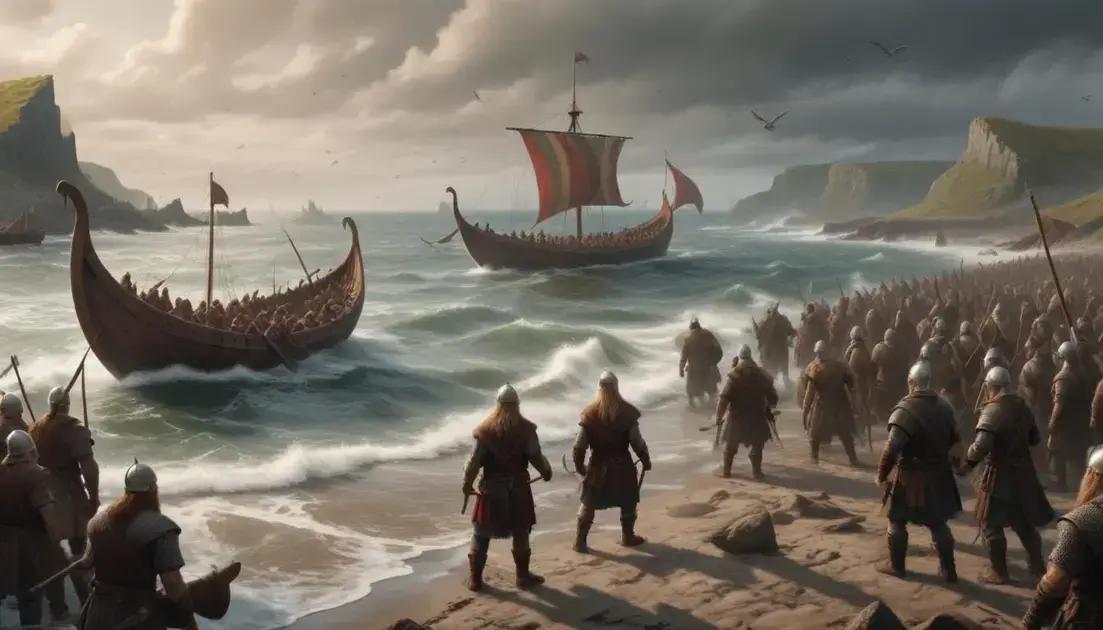
The arrival of the Vikings in America is an exciting chapter in history. These Norse explorers sailed across the Atlantic Ocean long before Columbus ever thought of it. Around the year 1000, they landed in what is now known as Newfoundland, Canada, at a site called L’Anse aux Meadows.
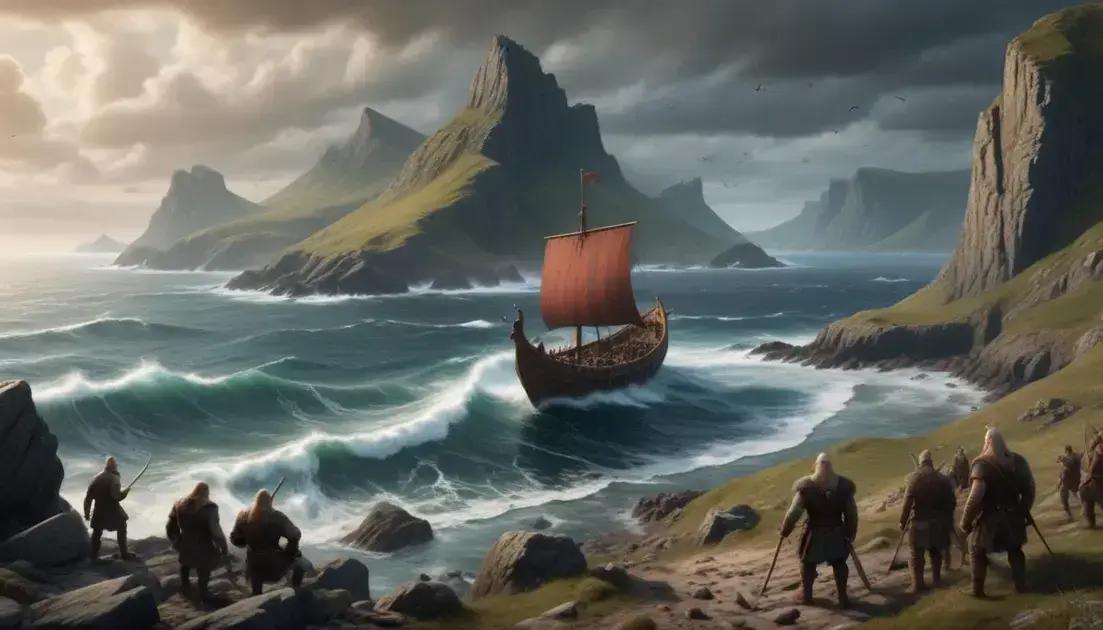
This landing was not just a simple visit. The Vikings established a settlement there, showing they planned to stay and explore. Their ships were made for the open sea, which made their journey possible. The longships were swift and could navigate various waters, both deep and shallow.
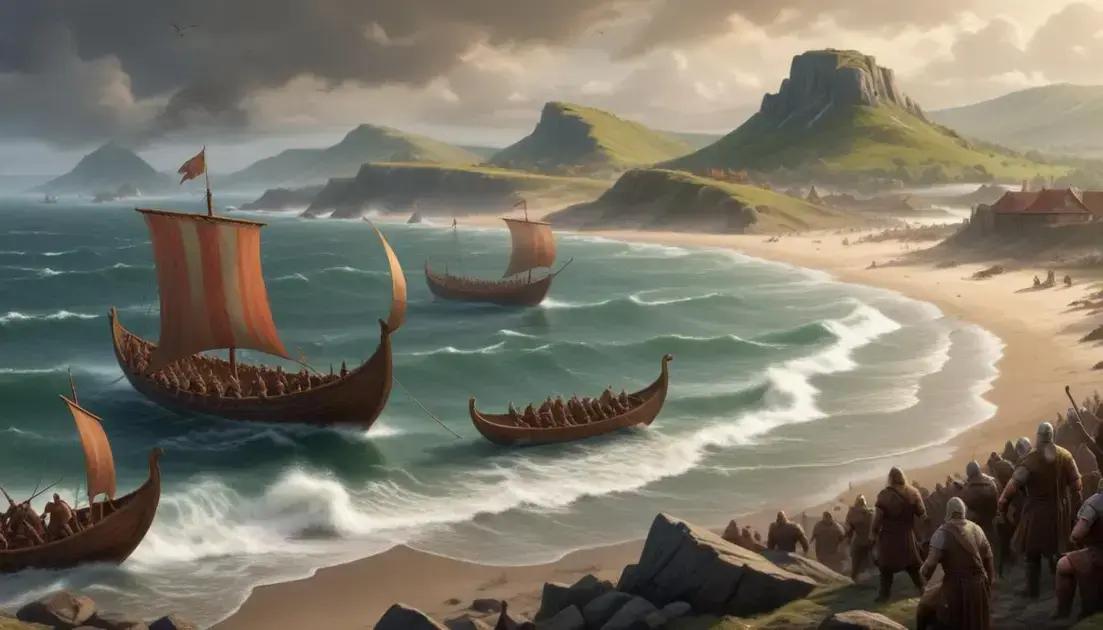
Upon landing, the Vikings saw lush landscapes, new animals, and different peoples. They were curious and brave, eager to explore what lay beyond their known world. But it wasn’t just discovery that drove them; they were also seeking resources like timber and furs.
The Vikings had to adapt quickly. They encountered Native American groups, which led to trade and conflict. These interactions changed both cultures significantly. Interestingly, artifacts found at L’Anse aux Meadows show that the Vikings lived and worked on this land.
Current research on Viking history highlights their daring spirit and adventurous nature. Understanding their arrival helps us see how connected ancient worlds were. The Vikings remind us that history is filled with explorers and that we all share a story of discovery.
Norse Navigation Techniques
The Vikings were master navigators. They used several clever techniques to sail across the vast Atlantic Ocean. One of their key tools was the sun compasses. This tool helped them determine direction on cloudy days.
Another method was reading the stars. The Vikings could find their way by night using the North Star. This skill was vital when sailing far from land.
They also had a unique way of finding land. The Vikings used birds as guides. If they saw a bird return to the shore, it often meant land was nearby. This was a smart way to make sure they were close to safety.
Weather patterns played a big role, too. The Vikings observed the wind and waves to decide when to set sail. They knew that certain winds would help them travel faster or safer.
Additionally, they relied on their experience and stories passed down through generations. These tales included details about currents, tides, and landforms. This knowledge was crucial for their many journeys across the sea.
Today, we admire the Vikings for their advanced navigation skills. Their ability to explore new lands shows their adventurous spirit and deep understanding of the ocean.
Impact on Native Populations
The arrival of the Vikings had a significant impact on Native populations in North America. When they arrived, they encountered various Indigenous groups. These interactions changed both cultures in many ways.
Initially, the Vikings traded with the Native people. They exchanged goods like tools and furs. This trade opened new paths for resources. However, it also brought challenges.
Conflict became common as both groups competed for land and resources. The Vikings often needed more supplies for their growing settlements. This led to tensions that affected local tribes.
Native populations also faced changes due to diseases. The Vikings brought illnesses that the Native people hadn’t experienced before. Sadly, these diseases spread quickly and had devastating effects on communities.
Despite these challenges, some stories show different outcomes. In certain areas, Vikings and Indigenous peoples formed alliances. They learned from each other’s ways, blending cultures in unique ways.
Today, we recognize that the interactions between Vikings and Native populations were complex. Understanding these effects is crucial to grasping the full history of exploration and settlement in America.
Archaeological Evidence
Archaeological evidence reveals a lot about the Vikings in America. This evidence helps us understand their presence and activities in the New World. One important site is L’Anse aux Meadows, located in Newfoundland, Canada. Here, archaeologists found remains of Viking-style buildings.
These structures include longhouses, which were typical homes for Vikings. The artifacts discovered at the site show their daily life and activities. Tools, pottery, and even remnants of large wooden boats were found, proving the Vikings lived and worked there.
Artifacts like spindle whorls suggest they made textiles. This shows they not only hunted but also engaged in crafts and trade. Other findings include iron nails and items used for fishing and farming.
Research shows a mix of Norse and Native American artifacts in some areas. This suggests that both cultures interacted in various ways. Such evidence indicates trade, shared knowledge, and sometimes conflict.
Overall, archaeological discoveries help piece together the story of Vikings in America. They provide valuable insights into how these explorers impacted the land and its people.
Modern Interpretations
Modern interpretations of the Vikings reveal a lot about how they lived and explored. Today, we see them differently than in the past. Many people think of Vikings as fierce warriors, but they were much more than that.
Historians and scholars now focus on their culture, trade, and crafts. The Vikings were skilled sailors and navigators. They created advanced ships that allowed them to travel huge distances.
Often, we see Vikings as traders rather than just raiders. They traded goods like furs, timber, and silver with different cultures. These interactions helped spread their influence throughout Europe.
Modern media also plays a big role in shaping our view. Movies and TV shows present Vikings in various ways, sometimes accurately and sometimes not. These interpretations can spark interest in Viking history and culture.
People today are also keen to learn about their everyday lives. Archaeological findings help fill in gaps. For instance, discovering tools and household items shows how they cooked, crafted, and built their communities.
Ultimately, modern interpretations help us appreciate the Vikings’ complex legacy. They remind us that their story is rich and continues to inspire curiosity.
Conclusion
In conclusion, the story of the Vikings in America is fascinating and complex. Their arrival changed the lives of Native populations and shaped interactions between cultures. Archaeological evidence shows us how they lived and navigated. Modern interpretations help us appreciate their skills beyond raiding.
Today, we recognize them not only as warriors but also as traders, explorers, and craftsmen. Understanding their rich history helps us connect with the past in meaningful ways. The Vikings’ legacy continues to inspire curiosity and respect for the adventurous spirit in all of us.