Missouri Compromise: balancing slavery and freedom
The Missouri Compromise was a significant agreement made in 1820 to balance the interests of free and slave states. It allowed Missouri to enter as a slave state while Maine joined as a free state, maintaining a fragile equilibrium. The compromise introduced the 36°30′ line, which designated areas where slavery was permitted or prohibited in the Louisiana Territory. Despite its short-term success, the agreement revealed deep national divides and led to greater tensions, setting the stage for future conflicts over slavery in the United States.
The Missouri Compromise was a crucial moment in American history, seeking to strike a balance between freedom and slavery. But what were its true implications for the nation?
Overview of the Missouri Compromise
The Missouri Compromise was a key agreement made in 1820. It was created to ease tensions between free and slave states. At that time, Missouri wanted to join the Union as a slave state, which worried many. The compromise allowed Missouri in as a slave state while Maine entered as a free state. This kept the balance between the two sides.
One of the major parts of the compromise was the 36°30′ line. This was a horizontal line set across the Louisiana Territory. States below this line could allow slavery, while those above it had to be free. This was an important decision for future states.
The Missouri Compromise showed how divided the country had become. Many saw it as a temporary fix, not a real solution. Even so, it did help prevent conflict for a time.
Key Figures in the Compromise
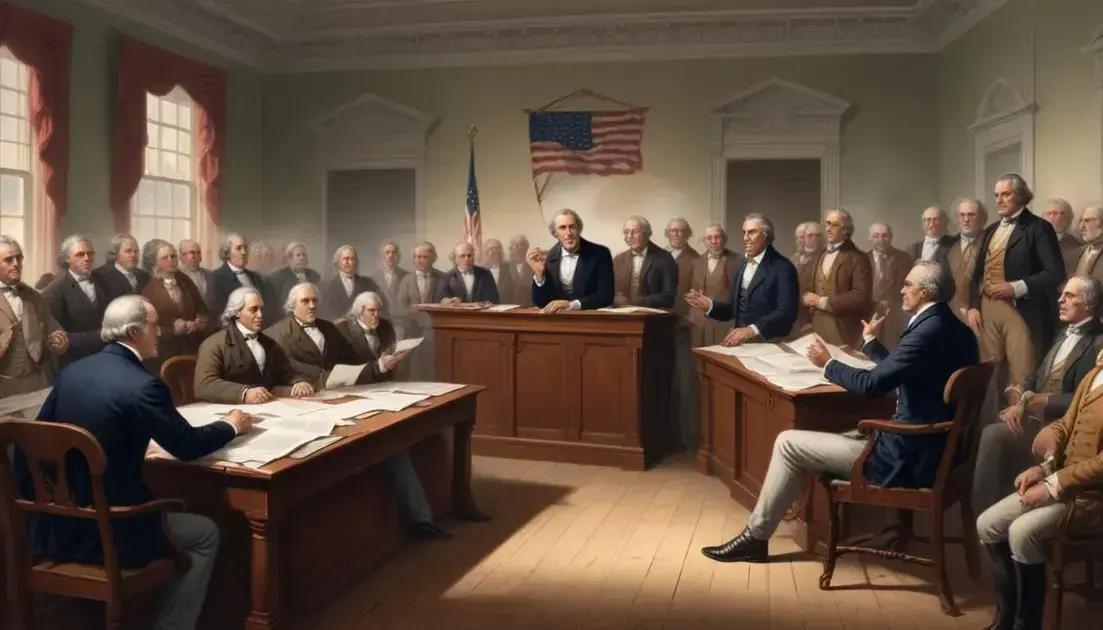
Several key figures played important roles in the Missouri Compromise. Each of them had different views on slavery and statehood. One of the most notable figures was Henry Clay. He was known as the “Great Compromiser.” Clay worked hard to find a solution that would satisfy both sides.
Another significant person was Senator Jesse B. Thomas. He proposed the 36°30′ line, which divided the territories. This line helped to maintain a balance between free and slave states.
Lastly, there was John Quincy Adams, who later became President. Adams opposed slavery and fought for abolition. His efforts were vital in shaping the political debate of the time.
These men made sacrifices and compromises to keep the peace. Their actions still impact America today, showing the challenges of balancing freedom and slavery.
Consequences of the Compromise on National Politics
The Missouri Compromise had major consequences for national politics in the United States. It temporarily eased tensions between free and slave states. However, it also highlighted the growing divide over slavery.
One key outcome was the emergence of new political parties. The divide over slavery led to the formation of the Republican Party. This party was created to oppose the spread of slavery into new territories.
The compromise also set a precedent for future discussions about slavery. It showed how difficult it would be to find a lasting solution. Many leaders continued to push for more compromises, but this only masked deep tensions.
As time passed, the issues surrounding the compromise grew more complicated. Ultimately, it failed to prevent the Civil War, showing its limitations in addressing the slavery debate.
Legacy of the Missouri Compromise
The Missouri Compromise left a lasting legacy on American history. It was an early attempt to manage the conflict between free and slave states. While it brought temporary peace, its effects lasted long after it was enacted.
One significant legacy was the idea of compromise itself. It showed that lawmakers could come together to find solutions, even if those solutions were not perfect. This set a pattern for future negotiations, like the Compromise of 1850.
However, the compromise also laid the groundwork for increased tension. It highlighted the deep divisions in the country, indicating that slavery would remain a heated issue.
As time went on, the Missouri Compromise was ultimately declared unconstitutional by the Supreme Court in 1857. This decision further fueled debates over slavery and heightened the push for civil rights.
Conclusion
In conclusion, the Missouri Compromise played a crucial role in shaping American history. It aimed to balance the needs of both free and slave states. While it temporarily eased tensions, it also set the stage for future conflicts.
The legacy of the compromise reminds us how difficult it was to address the issue of slavery. It showed that even small agreements could have lasting impacts on the nation. Understanding this history helps us see the importance of compromise and communication in our own lives today.
As we reflect on this important chapter, we realize the ongoing struggle for equality and justice continues. The Missouri Compromise teaches us valuable lessons about working together, even when opinions vary.