Alexander the Great: the conqueror of the world
Alexander the Great was a formidable leader known for his military genius and cultural impact. His strategic campaigns reshaped the ancient world, promoting the spread of Greek culture through Hellenization. Alexander’s ability to unite diverse peoples and inspire loyalty set him apart. His legacy includes significant advances in military tactics, cultural exchanges, and guidance for future leaders.
Have you ever wondered how Alexander the Great became one of history’s most formidable leaders? His conquests reshaped not just nations but entire continents, creating a legacy that still fascinates us today.
Early Life of Alexander
Alexander the Great was born in 356 BC in Pella, the ancient capital of Macedonia. His parents were King Philip II and Queen Olympias. From a young age, Alexander showed great promise. He learned to read and write early and was taught by the famous philosopher Aristotle.
Childhood and Education
As a boy, Alexander was curious and loved learning about the world. His education included subjects like philosophy, science, and literature. Aristotle inspired him, and Alexander quickly absorbed his teachings.
Early Influences
Alexander also learned about leadership and the art of war. He watched his father lead campaigns and understood strategy and bravery. By the time he was a teenager, Alexander was already familiar with the responsibilities of a king.
Proving His Worth
At just 16 years old, Alexander proved his skills. He led a successful campaign against a rebellious city-state. This victory showcased his abilities and made him a hero in Macedonia.
Alexander’s early life set the stage for his future as a conqueror. The lessons he learned and the influences he had shaped him into one of history’s greatest leaders.
Military Campaigns
Alexander the Great is famous for his incredible military campaigns. He started his journey at a young age and never looked back. His first big challenge was against the Persian Empire, one of the largest empires of the time.
The Battle of Granicus
In 334 BC, he fought the Battle of Granicus. It was a tough fight, but Alexander’s skills helped him win. This victory opened the door to Asia Minor for him.
The Battle of Issus
Next came the Battle of Issus in 333 BC. Here, he faced King Darius III of Persia. Alexander’s clever tactics and bravery led him to another victory. This battle showed that he was not just a king but a true leader.
The Siege of Tyre
In 332 BC, Alexander laid siege to Tyre. This city was well-fortified and posed a real threat. Yet, Alexander’s determination paid off. After months of hard work, he finally conquered Tyre, adding to his growing empire.
The Battle of Gaugamela
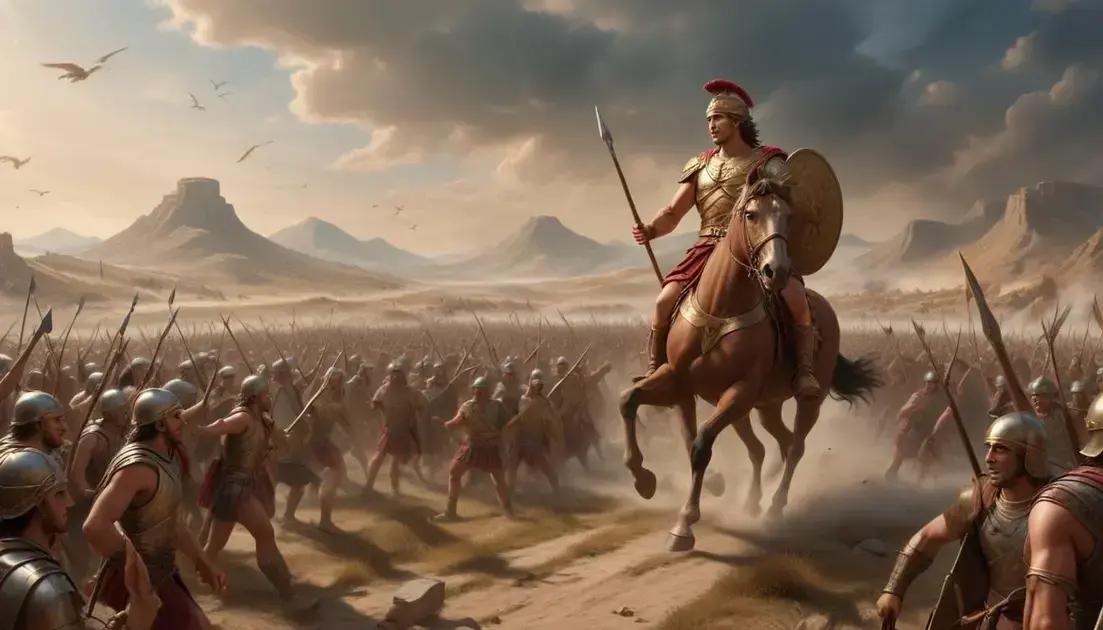
The Battle of Gaugamela in 331 BC was one of Alexander’s greatest achievements. He faced a larger army but used smart strategies to win. This battle secured his control over Persia and marked a turning point in history.
Alexander’s military campaigns changed the world. He inspired generations with his tactics and fearless spirit, proving that with the right strategy, anything is possible.
Effective Leadership
Effective leadership is one of the keys to Alexander the Great’s success. He led by example and inspired his troops. Alexander was not just a king; he was a true leader who knew how to connect with his men.
Building Trust
To build trust, Alexander fought alongside his soldiers. This made them feel valued and respected. They believed in him because he shared their struggles.
Clear Vision
A strong leader needs a clear vision. Alexander had one. He wanted to unite different cultures and create a vast empire. His goals motivated his troops to follow him into battle.
Encouraging Innovation
Alexander always encouraged his men to think creatively. He listened to their ideas and found new strategies. This helped him win battles and gain respect from his followers.
Adapting to Change
Another important aspect of Alexander’s leadership was adaptability. He faced many challenges, yet he changed his plans when needed. This flexibility allowed him to seize opportunities and overcome obstacles.
His approach to leadership serves as a model for future generations. By leading with strength and integrity, Alexander the Great showed how effective leadership can inspire greatness.
Cultural Impact
Alexander the Great had a significant cultural impact on the world. His conquests spread Greek culture far and wide. This blending of cultures is known as Hellenization.
Spread of Greek Culture
As Alexander conquered new lands, he introduced Greek language, art, and philosophy. Cities like Alexandria became centers of learning. People from different backgrounds gathered there to share ideas.
Promoting Tolerance
Alexander encouraged acceptance among different cultures. He often married local women to promote unity. This practice helped to merge Greek and local traditions, creating a rich, diverse culture.
Influence on Future Empires
The cultural exchanges started by Alexander influenced many future empires. Roman culture, for instance, adopted many Greek ideas in art and politics. This blend shaped Western culture for centuries.
Legacy of Artistic Expression
Art from this period reflects the blend of cultures. Sculptures, pottery, and literature from Alexander’s time show both Greek and local influences. This artistic legacy inspired many later movements across Europe and beyond.
Alexander’s cultural impact is felt even today. His actions fostered a spirit of inquiry and creativity. This legacy continues to shape our understanding of different cultures and civilizations.
Legacy of Alexander
The legacy of Alexander the Great is immense and far-reaching. His influence shaped history in many ways. Even today, many people study his life and achievements.
Strategic Military Tactics
Alexander’s military strategies are still taught in military schools around the world. His tactics, like using the phalanx formation, revolutionized warfare. Many generals have borrowed from his playbook in their own battles.
Cultural Exchange
His conquests led to a rich cultural exchange. The blend of Greek and Eastern cultures laid the foundation for the Hellenistic era. This period saw great advancements in art, science, and philosophy.
Inspiration for Leaders
Alexander is an icon for many leaders. Politicians and rulers have looked to him for inspiration. His vision and ambition serve as examples of effective leadership.
Enduring Symbols
Symbols associated with Alexander also endure. Statues, coins, and stories celebrate his life and accomplishments. These artifacts are reminders of his impact and hold significant historical value.
Alexander’s legacy continues to inspire generations. His extraordinary life and achievements invite admiration and study. Understanding his story helps us appreciate the complexities of history.
Conclusion
In conclusion, the legacy of Alexander the Great is truly remarkable. His military tactics changed the way wars were fought. The spread of Greek culture reshaped many regions and ideas. Leaders today can still learn from his vision and determination.
Alexander’s life continues to inspire us. His ability to unite different cultures reminds us of the importance of understanding others. By studying his story, we can reflect on our own actions and ambitions. Let his legacy guide us as we face our challenges and strive for greatness.