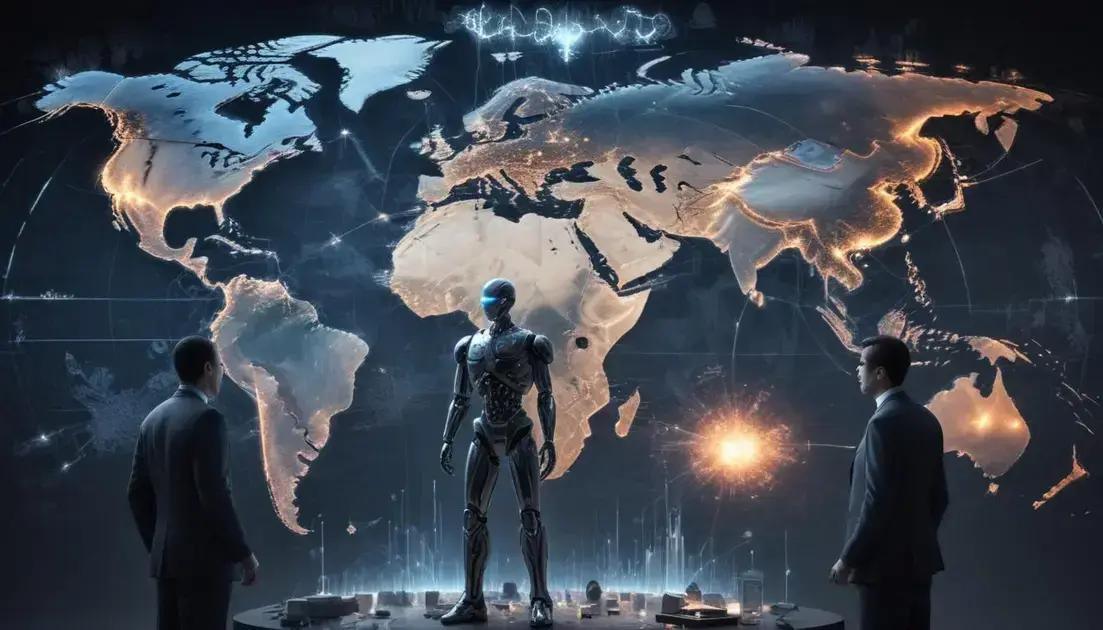
Artificial Intelligence: The New Weapon of the Digital Cold War
The emergence of Artificial Intelligence (AI) has significant implications for global security, reshaping military strategies and posing new cybersecurity threats. Key players in the Digital Cold War include powerful nations and tech giants, each striving for technological dominance. Case studies highlight AI’s role in warfare, enhancing capabilities like drone technology and predictive analytics. As AI technology progresses, understanding its influence on geopolitics and security is crucial for staying informed in a rapidly changing landscape.
In today’s world, Artificial Intelligence is not just a tool; it’s the battleground of a new kind of conflict. With countries racing to harness its power, the question is—who will come out on top?
1. Introduction to the Digital Cold War
The Digital Cold War is a new kind of struggle where technology plays a key role. Countries are competing not only for military power but also for tech dominance. This competition affects how nations interact with each other. It’s like an invisible battleground where information is as valuable as weapons.
What is the Digital Cold War?
At its core, the Digital Cold War is about who controls technology. Major nations, like the United States and China, are racing to lead in areas like artificial intelligence and cybersecurity. These technologies can influence politics, economy, and social life. It’s crucial for national security.
Why Should We Care?
As individuals, understanding this war can help us grasp why certain technologies are developed. They shape our daily lives, from the apps we use to our data privacy. Being informed means we can make better choices about how we engage with these technologies.
The Players Involved
Different nations and companies play various roles. Governments create policies, while tech companies develop cutting-edge solutions. Together, they drive the competition forward. It’s a complex mix that impacts everyone.
Keeping track of the Digital Cold War can help us recognize the challenges ahead. From privacy issues to tech regulations, these elements are all interconnected, shaping the future we live in.
2. The Role of Artificial Intelligence
Artificial Intelligence (AI) plays a huge role in the Digital Cold War. It’s not just a fancy tech term; it impacts our lives daily. AI helps nations improve their efficiency in various fields. It’s being used for everything from national security to economic strategies.
How AI Affects National Security
AI can analyze vast amounts of data quickly. This ability allows governments to predict problems before they arise. For example, AI tools can detect cyber threats early, enhancing safety measures. This proactive approach is crucial during a digital conflict.
AI in Economic Strategy
Countries are investing heavily in AI because it drives economic growth. Businesses using AI can operate more efficiently and creatively. This advantage means better products and services for consumers. It’s a race to see who can innovate the fastest.
AI’s Influence on Everyday Life
We encounter AI in many forms. From the voice assistants in our phones to personalized advertisements, AI shapes our online experience. These tools make our lives easier while collecting data to enhance their performance.
As we move forward, the role of AI will only grow. Understanding its influence helps us see why countries are competing so fiercely for technological dominance. This wave of AI innovations is not just changing industries; it’s redefining how we think about technology.
3. Key Players in Technological Supremacy
In the race for technological supremacy, key players are emerging from around the globe. These include nations, large corporations, and innovative startups. Each of them plays a unique role in shaping the future of technology.
Major Nations Involved
Countries like the United States and China lead the pack. The U.S. has a strong focus on AI and cybersecurity. On the other hand, China is investing heavily in tech development to catch up. This rivalry drives advancements and creates a competitive atmosphere.
Tech Giants at the Forefront
Big companies like Google, Microsoft, and Amazon are crucial players. They have vast resources and talent to push boundaries in AI and machine learning. These firms develop technologies that can influence various industries. Their innovations often set trends that others follow.
Innovative Startups
Don’t overlook the impact of startups. They bring fresh ideas and agility to the tech scene. Many startups focus on niche areas within AI, solving specific problems. Their creativity can lead to breakthroughs that change industries.
Understanding these key players helps us see the bigger picture. Each has its strategies and goals, which shape the global tech landscape. As competition heats up, we can expect exciting developments that will affect everyone.
4. Case Studies of AI in Warfare
Artificial Intelligence (AI) is changing the face of warfare. Many countries are using AI to enhance their military strategies. Let’s look at some case studies that highlight its impact.
AI in Drone Technology
One major advancement is in drone technology. Drones equipped with AI can analyze areas quickly and accurately. They help in surveillance and targeted operations. This reduces risks for soldiers on the ground.
Predictive Analytics for Strategy
AI also plays a role in predictive analytics. Military experts use AI to foresee possible threats. By analyzing data patterns, they identify potential conflicts before they arise. This proactive approach can save lives and resources.
Robotics on the Battlefield
Another exciting application is robotics. Robots can perform tasks that are too dangerous for humans. They can defuse bombs or conduct search missions. Their use in combat scenarios is growing rapidly.
These case studies show that AI’s influence in warfare is significant. As technology evolves, so will military strategies. Understanding these changes helps us see how warfare might look in the future.
5. Implications for Global Security
The rise of Artificial Intelligence has serious implications for global security. With more countries investing in AI, the landscape of international relations is shifting rapidly. Understanding these changes is crucial for everyone.
AI and Military Enhancements
AI improves military capabilities like never before. Countries are developing smarter weapons and surveillance systems. This can lead to an arms race, as nations try to outdo each other.
Cybersecurity Risks
AI also brings new cybersecurity challenges. Hackers use AI to create more sophisticated attacks. This makes it essential for governments to invest in stronger defenses.
Global Power Shifts
As nations develop their AI technologies, power dynamics are changing. Countries with advanced AI could dominate economic and military sectors. This could lead to tensions and conflicts between nations striving for supremacy.
AI’s role in spreading misinformation is another concern. Deepfakes and other AI-generated content can mislead people and influence public opinion. This effect can destabilize societies and create distrust among nations.
Overall, the implications of AI on global security are profound. As technology evolves, so do the challenges it brings. Staying informed and prepared is the best way to navigate this new world.
Conclusion
In conclusion, the role of Artificial Intelligence in today’s world is huge and ever-changing. From enhancing military strategies to influencing global security, AI impacts many aspects of our lives. As countries race for technological supremacy, understanding these developments is essential.
AI not only helps in defense and surveillance but also poses new risks, like cybersecurity threats and misinformation. Governments and businesses must adapt to these challenges to ensure safety and stability. By staying aware of how AI shapes our world, we can better prepare for the future.
Ultimately, embracing the benefits of AI while addressing its risks will be key. This balance is crucial for creating a safer, more secure global environment as technology continues to evolve.