Babylon: the empire that shaped early civilization
Babylon, a pivotal city in ancient Mesopotamia, significantly influenced early civilization through its advancements in law, astronomy, and culture. Known for Hammurabi’s Code, one of the first written legal systems, and for its rich contributions to literature, like the Epic of Gilgamesh, Babylon set the stage for many modern practices. Its innovations in mathematics, such as the base-60 number system, still affect our daily lives today.
Did you know that Babylon was not just a city, but a powerhouse in shaping early civilization? Let’s dive into the fascinating history of this ancient metropolis!
Introduction to Babylon
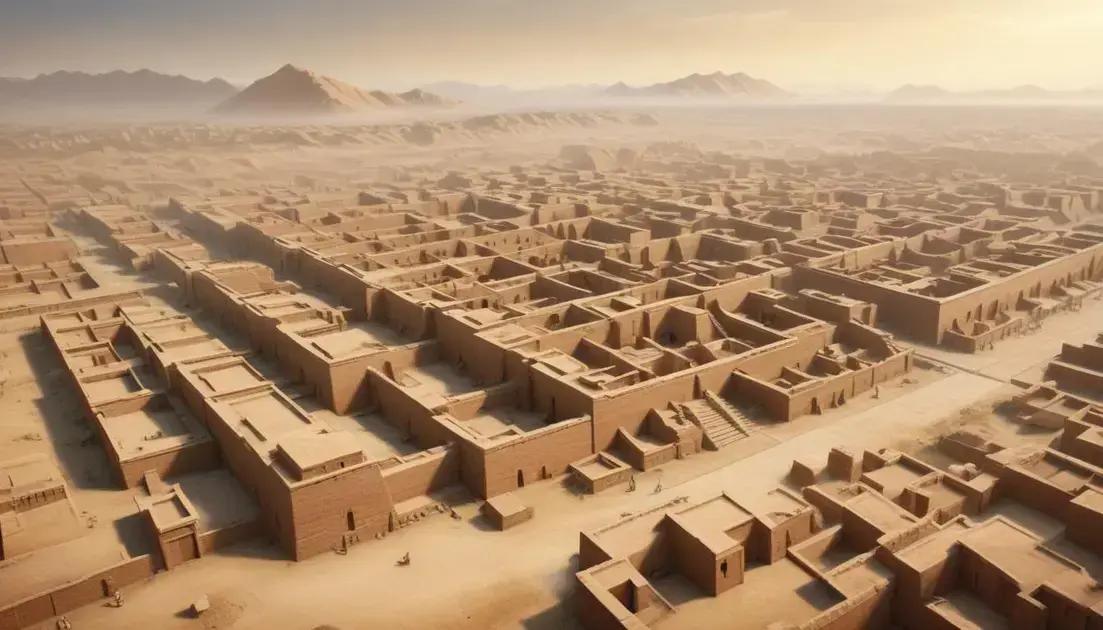
Babylon was a city located in ancient Mesopotamia. It became one of the world’s first great cities. The history of Babylon is rich and full of fascinating events. It played a key role in early civilization, especially around 2000 BC.
Babylon was known for its incredible buildings and advanced systems. The famous Hanging Gardens, one of the Seven Wonders, was said to be here. Though many researchers debate its existence, the beauty of Babylon is still famous.
The city was also a center of learning. Scholars studied law, astronomy, and mathematics. They wrote texts that influenced later generations. Babylon’s advancements laid the groundwork for modern science.
Its location near the Euphrates River made it vital for trade. This helped Babylon grow and thrive. Merchants came from far away to sell goods. The economy was diverse and strong, allowing it to support a large population.
Moreover, Babylon was known for its culture. Religion played a big part in everyday life. The people worshiped many gods, believing they influenced everything from farming to war. Festivals and rituals filled the calendar, showcasing their rich traditions.
In its height, Babylon represented power and innovation. Its rulers, like Hammurabi, were known for their laws and governing skills. Hammurabi’s code introduced a system of justice that influenced many future societies.
Today, Babylon’s legacy lives on. Archaeological sites attract visitors and researchers interested in ancient history. They continue to uncover the secrets of Babylon, enriching our understanding of early human civilization.
Historical Significance
Babylon holds a special place in history. It was a major center of civilization in ancient times. Its significance goes beyond its size. Babylon influenced culture, law, and science across many regions.
One key contribution was the development of written language. The Babylonians used cuneiform, one of the earliest writing systems. This allowed them to record laws, stories, and trade transactions. It shaped communication for generations.
Babylon also developed one of the first legal codes. Hammurabi’s Code was a collection of rules that governed daily life. It focused on justice and fairness, impacting many later laws.
Moreover, Babylon was a hub for astronomy. Babylonian astronomers tracked stars and planets. They created calendars based on their observations. This work laid the foundation for modern astronomy.
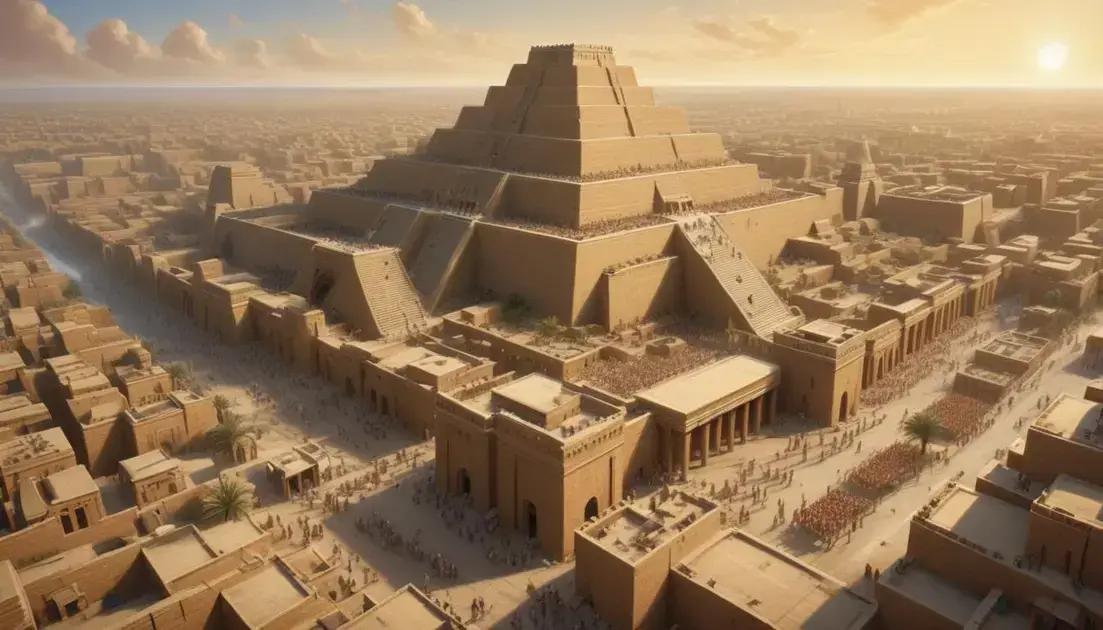
Another significant area was architecture. Babylon’s buildings, like the ziggurat, showcased their engineering skills. The ziggurat was a massive stepped structure that served religious purposes. Its design inspired later civilizations.
Trade routes passed through Babylon, linking different cultures. This made it a melting pot of ideas and traditions. Merchants exchanged goods, spreading innovations and knowledge.
Even its art and literature left a mark. Babylonian myths and stories influenced later works. The Epic of Gilgamesh is one example. This tale is one of the oldest known stories and offers insights into ancient beliefs.
In conclusion, Babylon’s historical significance is vast. Its contributions shaped many areas of human life, from law to science, making it a cornerstone of early civilization.
Cultural Contributions
Babylon was not just a city; it was a vibrant hub of culture. Its cultural contributions were vast and influential. People from various backgrounds lived and worked here. This diversity fostered a unique blend of ideas and traditions.
One major aspect of Babylonian culture was their religion. They believed in many gods, each linked to different aspects of life. Temples were built to honor these gods and serve the community. Festivals filled the calendar, celebrating gods and agricultural cycles.
Art and architecture flourished in Babylon. They crafted stunning sculptures and crafted intricate jewelry. The famous Ishtar Gate, with its blue tiles and colorful reliefs, showcased their artistic abilities. This gate was not just functional; it was beautiful and filled with symbolism.
Literature also thrived in Babylon. Scribes wrote epic poems and stories, passing down knowledge through generations. The Epic of Gilgamesh is a prime example. It tells the tale of a hero seeking immortality and explores themes of friendship and human experience.
Music played an important role too. Babylonian musicians used various instruments like lyres and drums. Music was part of religious ceremonies and celebrations, bringing joy and unity.
The Babylonians also made significant advances in mathematics. They developed a base-60 number system. This unique system influenced timekeeping, dividing an hour into 60 minutes and a circle into 360 degrees.
Trade helped spread Babylonian culture. Their merchants traveled to distant lands, sharing ideas and products. This exchange enriched their cultural landscape and influenced others.
Overall, the cultural contributions of Babylon laid the groundwork for many practices we still see today. Their impact can be felt in religion, art, literature, and sciences.
Legacy and Influence
Babylon left a profound legacy that still influences us today. Its impact can be seen across various fields such as law, astronomy, and literature. Many of these innovations shaped future civilizations.
One of Babylon’s greatest legacies is Hammurabi’s Code. This was one of the first sets of written laws. It emphasized justice and the idea that laws should apply to everyone. This concept influenced many later legal systems around the world.
In astronomy, Babylonian scholars made spectacular contributions. They created early star charts and calendars. Their methods of tracking celestial bodies laid the groundwork for modern astronomy. Today, we still use elements of their work in our understanding of the universe.
Furthermore, Babylonian literature, especially the Epic of Gilgamesh, has had a lasting impact. This epic poem explores themes of friendship, mortality, and the human journey. It has inspired countless writers and storytellers throughout history.
Their artistic techniques also influenced cultures. The intricate designs of Babylonian art can be traced in later civilizations. Their ziggurats and grand architecture sparked innovation in building styles around the world.
Babylon’s contributions to mathematics were significant too. They developed a base-60 number system. This system is the reason we have 60 minutes in an hour and 360 degrees in a circle. Such concepts are an essential part of our daily lives.
Additionally, the exchange of ideas in Babylon fostered cultural diversity. As a trading hub, it welcomed merchants and travelers from many regions. This led to a blend of traditions and customs that enriched many societies.
Today, Babylon is often remembered as a symbol of human achievement. Its legacy lives on, reminding us of the power of innovation and cultural exchange.
Conclusion
Through history, Babylon stands out as a significant part of early civilization. Its advancements in law, science, and culture have shaped our world greatly. The echoes of Babylon can still be felt in many areas today.
From Hammurabi’s Code to the wonders of astronomy, Babylon set the stage for future achievements. Their rich culture encouraged creativity and innovation. Writers and artists continue to draw inspiration from their stories and art.
Furthermore, the legacy of Babylon teaches us the importance of cultural exchange. The city was a bustling hub for trade and ideas. Such interactions are crucial for growth and understanding among nations.
Today, we celebrate Babylon not just for what it was but for its lasting influence. Its history is a reminder of how civilizations can thrive through innovation and connection with others. The lessons learned from Babylon are vital as we continue to develop and grow in our modern world.
Conclusion
In conclusion, Babylon played a vital role in shaping ancient civilization. Its contributions to law, astronomy, and culture have left a lasting impact on our world. The legacy of Babylon continues to inspire us today in many areas of life.
From the early codes of law to advancements in science, Babylon showcased the power of human innovation. Their rich traditions and cultural exchanges remind us of the importance of learning from one another. As we reflect on Babylon’s history, we recognize that sharing ideas and creativity can lead to great progress.
Therefore, exploring Babylon’s achievements encourages us to appreciate our own history and strive for continuous growth. The lessons learned from this ancient city are essential for understanding how civilization can thrive through collaboration and shared knowledge.