Christianity: from persecuted faith to global power
The rise of Christianity transformed from a small movement into a major global religion, influenced significantly by key figures like Jesus, Peter, and Paul. The Roman Empire’s infrastructure aided its spread, while modern-day Christianity is characterized by its emphasis on social justice, education, and community service. Today, it continues to adapt to technological changes, fostering interfaith dialogues and promoting values of love and acceptance among diverse cultures.
Christianity has evolved remarkably, starting as a little-known sect to becoming one of the world’s largest faiths. Curious how this transformation shaped our world?
The Rise of Early Christianity
The Rise of Early Christianity was a fascinating time. It began in the first century, around the time of Jesus Christ. His teachings inspired many people and started a movement.
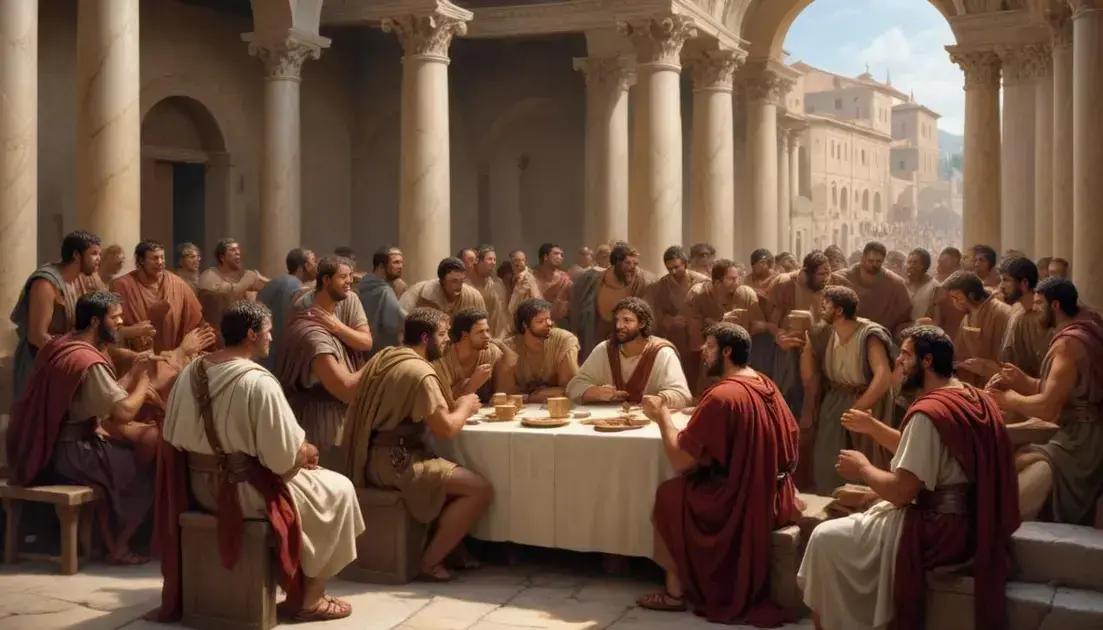
At first, early followers faced a lot of challenges. They were often persecuted for their beliefs. Despite this, they kept spreading Jesus’ message. They gathered in small groups to share their faith and support each other.
Key figures like Peter and Paul played important roles. Peter was one of Jesus’ closest friends and a leader among the disciples. Paul, once a persecutor of Christians, became a devoted follower. He traveled widely, spreading the message to Gentiles.
As more people joined, Christianity began to grow. This growth attracted attention from the Roman Empire, which saw it as a threat. However, even under pressure, the faith continued to flourish. Communities formed, and people began to find strength in their beliefs.
By the end of the first century, Christianity had spread beyond its Jewish roots. It reached many cultures, becoming more diverse. The teachings were adapted to different languages and customs, which helped them resonate with more people.
Through all these struggles and triumphs, early Christianity laid a foundation that would shape the future of the religion. This period showed how faith can unite people, no matter the obstacles.
The Roman Empire’s Influence
The Roman Empire’s Influence on early Christianity was huge. The empire provided a common language and trade routes that helped spread the faith. This made it easier for missionaries to travel and share their messages.
During this time, roads built by the Romans connected different parts of the empire. These roads helped Christians move quickly between cities. They could reach more people and spread their teachings effectively.
The Roman Empire was a complex society. It included many cultures and religions. This diversity allowed early Christians to share their beliefs with various groups. As they interacted, they found new followers.
However, not all interactions were positive. Early Christians often faced persecution. The government saw Christianity as a threat to traditional Roman beliefs. This led to many Christians being arrested or punished.
Despite the danger, the faith continued to grow. Many saw the bravery of Christians during persecution as a sign of their strong beliefs. It inspired others to join the movement.
Over time, as the empire began to change, so did its stance on Christianity. Eventually, it moved from persecution to acceptance, paving the way for Christianity’s rise as a major religion.
Key Figures in Christian History
Key Figures in Christian History played vital roles in shaping the faith. These individuals helped spread Christianity and influence its development.
One of the most important figures is Jesus Christ. His teachings are the foundation of Christianity. He taught love, forgiveness, and compassion. Many people were drawn to his message.
Apostle Peter is another key figure. He was one of Jesus’ first disciples and later became a leader in the early church. Peter traveled widely to share Jesus’ message and build communities of believers.
Apostle Paul greatly impacted Christianity as well. He started off as a persecutor of Christians but later had a life-changing experience. Paul became a dedicated follower and traveled thousands of miles to spread Christianity, especially to non-Jews.
Another significant figure is Constantine the Great. He was the first Roman emperor to adopt Christianity. In the early 4th century, he made it the official religion of the Roman Empire. This change helped Christianity grow rapidly.
These figures, along with many others, helped shape the beliefs and practices of Christianity. Their contributions laid the groundwork for the faith we see today.
The Spread of Christianity Globally
The Spread of Christianity Globally happened over many centuries. It started small but grew into one of the world’s largest religions. This growth was due to various factors.
Initially, missionaries traveled to share their faith. They visited key cities in the Roman Empire, spreading teachings in places like Rome, Antioch, and Alexandria. These cities were important for trade and culture, making them ideal spots for sharing ideas.
As time went on, foreign missionaries reached different parts of the world. In Africa, Asia, and Europe, they introduced Christianity to new cultures. They often learned local languages and customs. This helped them connect with the people.
Colonialism also played a role in spreading Christianity. European powers took their religion to the lands they colonized. This often changed local traditions and beliefs.
The invention of the printing press in the 15th century was another big factor. It allowed the Bible to be printed in many languages. More people could read the scriptures. This fueled further growth and understanding of Christian teachings.
Today, Christianity is practiced all over the globe. Different cultures have created their unique ways of worship. Yet, the core message of love and community remains strong.
Modern-Day Christianity and Its Impact
Modern-Day Christianity and Its Impact is a fascinating topic. Today, Christianity has millions of followers worldwide. It continues to shape societies and cultures in many ways.
One major impact is on social justice. Many Christians work for equality and human rights. They advocate for the poor, the oppressed, and those who feel marginalized. Many churches support local communities through outreach programs.
Education is another area where Christianity has made a difference. Many schools and universities are founded on Christian values. They aim to provide quality education while promoting moral and ethical development.
In addition, modern Christianity often emphasizes global harmony. Many Christians participate in interfaith dialogues. They believe that mutual respect can lead to peace among different religions.
Technology has also played a role. Many churches now use social media and online platforms. This helps them reach younger audiences and share messages broadly.
Despite facing challenges, Christianity remains resilient. Issues like secularism and varying beliefs sometimes create tension. Nonetheless, the core values of love, acceptance, and community keep the faith strong.
Conclusion
In conclusion, the journey of Christianity from a small movement to its impact today reveals its significance in many lives. Modern-day Christianity continues to inspire people through social justice, education, and community outreach. Its ability to adapt to changes, like technology, helps it reach new audiences and create stronger connections.
Even when faced with challenges, the core teachings of love, compassion, and acceptance remain steady. By engaging in meaningful ways within communities and fostering interfaith dialogues, Christians contribute positively to the world. Thus, Christianity’s lasting influence shows how faith can unite people and promote progress in society.