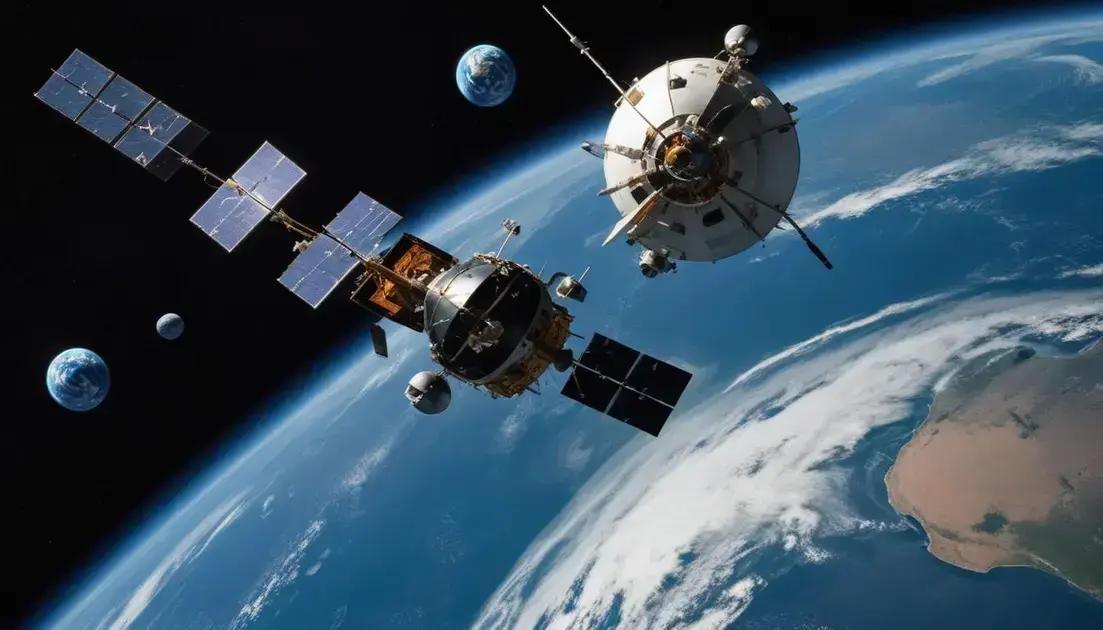
Cold War Satellites: Space as Espionage Field
During the Cold War, space espionage became crucial for military strategies, enabling countries to gather vital intelligence through advanced satellites. These technologies transformed the way nations monitored enemy activities and communicated securely, leading to significant changes in military planning. As nations focused on developing space capabilities, it became evident that the control and understanding of space were essential for national security in modern conflicts.
Cold War satellites have forever changed the landscape of military surveillance. Did you know that the race to space was also a race to outsmart the enemy? Let’s dive into this fascinating chapter of history!
Introduction to Cold War espionage in space
During the Cold War, countries raced to gather intelligence in new ways. One major method was using satellites. These technological marvels orbited the Earth, helping nations keep an eye on each other from above.
The United States and the Soviet Union launched many satellites. They used them to take pictures, listen to communications, and gather vital data. This space race changed how countries viewed warfare.
Imagine having the ability to see what your enemy is doing without being seen! That’s what satellites allowed, making space a key player in espionage.
Many of these satellites were designed to fly high above the Earth. Some could spot vehicles from miles away, while others focused on electronic signals. This wealth of information was crucial in planning military strategies.
The Cold War’s tension pushed technology to new heights. Countries realized that whoever had the best intel often had the upper hand in conflicts. Satellites became a vital tool for ensuring national security.
Key satellites and their purposes
Key satellites played a big role during the Cold War. They were not just flying machines; they had important jobs. Some of these satellites took high-resolution photographs from space. They helped countries keep an eye on military bases and troop movements.
One famous satellite was the Corona. Launched in the early 1960s, it took detailed images of the Soviet Union. Its photos were crucial for understanding enemy activity. This satellite showed just how powerful aerial surveillance could be.
Another important satellite was Keyhole, also known as KH. It used advanced technology to capture sharp images. These satellites were so good that they could spot a car on the ground from space!
Some satellites focused on listening. They picked up electronic signals from enemy communications. This helped countries understand each other’s plans. The ability to listen from above added another layer to espionage.
Lastly, there were weather satellites. These were vital during the Cold War too. They provided information about weather conditions, which often affected military operations. Knowing the weather gave countries an edge in planning attacks and defense.
Technological advancements during the Cold War
The Cold War was a time of amazing technological advancements. Governments poured money into developing new tools and weapons. This race for technology changed how warfare was seen. It wasn’t just about soldiers on the ground anymore.
One major focus was on satellites. These machines helped countries gather intelligence from space. They improved a lot over the years. Early satellites were simple and limited. But by the end of the Cold War, they could take high-resolution photos and listen for signals.
Another area of progress was in computer technology. Computers became faster and more capable. This change allowed for better data processing. Countries could analyze large amounts of information quickly, leading to smarter decisions.
Missile technology also saw huge leaps forward. Intercontinental Ballistic Missiles (ICBMs) became more accurate. They could travel thousands of miles and hit targets with great precision. This made nations more cautious, as they knew the threat was real.
Communication technologies were key too. Advances in communication made it easier to transmit data securely. This was vital for military strategies and planning. Countries used encrypted messages to share sensitive information.
Overall, these advancements reshaped military strategies and the global landscape. Nations learned that technology could give them the upper hand in conflicts.
The impact of space espionage on military strategies
Space espionage had a big impact on military strategies during the Cold War. Countries learned that they could gather crucial intelligence from above. This changed how they planned and executed military operations.
With satellites, nations could monitor their enemies without being detected. They gained valuable information about troop movements and missile launches. This helped in making informed decisions during conflicts.
Knowing what the enemy was up to allowed for better preparations. Military leaders could adjust their strategies based on real-time data. For example, if a country spotted missile sites through satellite images, they could react quickly.
Space-based intelligence also changed communication. Secure satellite links ensured military commanders could talk and share info instantly. This improved coordination among forces, making attacks and defenses more effective.
The fear of being spied on from space led to some new tactics. Nations had to consider the possibility that their plans could be known before they even made a move. This made secrecy crucial in military operations.
Overall, space espionage made military strategies more advanced and complex. It forced nations to rethink their approaches and increased the focus on technology in warfare.
Conclusion and reflections on space as a battleground
Space has become an important battleground in modern warfare. Countries now see it as essential for national security. The advancements in space technology have changed how conflicts are approached.
With satellites and other tools, nations gather intelligence easily. These systems provide data that can influence military actions. Each country must consider the threats from above, making space a critical area of focus.
Moreover, space isn’t just about monitoring. It can also be a platform for new technologies. Developing space-related military capabilities is becoming common. This includes missile defense systems and space-based communication.
As nations invest more in space, the competition grows. Collaborative efforts might help reduce tensions, but the race for dominance continues. Trust is hard to come by when each side fears the unknown.
In the end, the importance of space in military strategy can’t be ignored. It offers both opportunities and challenges. Understanding these dynamics will be crucial for future peace and stability.
Conclusion
In conclusion, the Cold War showed us how important space espionage is in military strategy. Countries learned to gather valuable information from satellites, changing how they approach conflicts. These advancements made space a new battlefield where nations compete for dominance.
As technology continues to evolve, nations must be aware of the threats from above. Investing in space capabilities is crucial for ensuring national security. The challenges faced are significant, but understanding them is key to maintaining peace.
Ultimately, the future of warfare will hinge on how countries manage their resources in space. By recognizing the importance of this domain, nations can navigate the complexities of modern conflicts more effectively. Space is no longer just a frontier. It is a vital part of national defense and strategy.
Tags: