Dreamtime: the spiritual origins of Aboriginal Australia
Dreamtime holds significant cultural value in Aboriginal Australia, representing creation stories that connect land, ancestors, and contemporary art. These narratives influence modern artistic expression and promote respect for nature and community identity. By learning about Dreamtime, individuals can deepen their appreciation for Aboriginal heritage and its teachings, which continue to resonate in today’s society.
Dreamtime is not just a concept; it’s a profound worldview of Aboriginal Australia, intertwining land, ancestors, and the very essence of creation. Curious to discover how this ancient belief shapes modern lives?
Understanding the concept of Dreamtime
Understanding the concept of Dreamtime is essential to grasp the rich spiritual culture of Aboriginal Australians. Dreamtime, or “The Dreaming,” is much more than just a myth. It represents the time when ancestral spirits created the world, shaping both the land and its people.
In Dreamtime stories, everything has a purpose. Animals, plants, and landscapes are linked to the actions of these ancestral beings. For example, a river might be seen as a pathway taken by a spirit, making it sacred. Understanding these connections helps us appreciate the deep respect Aboriginal people have for nature.
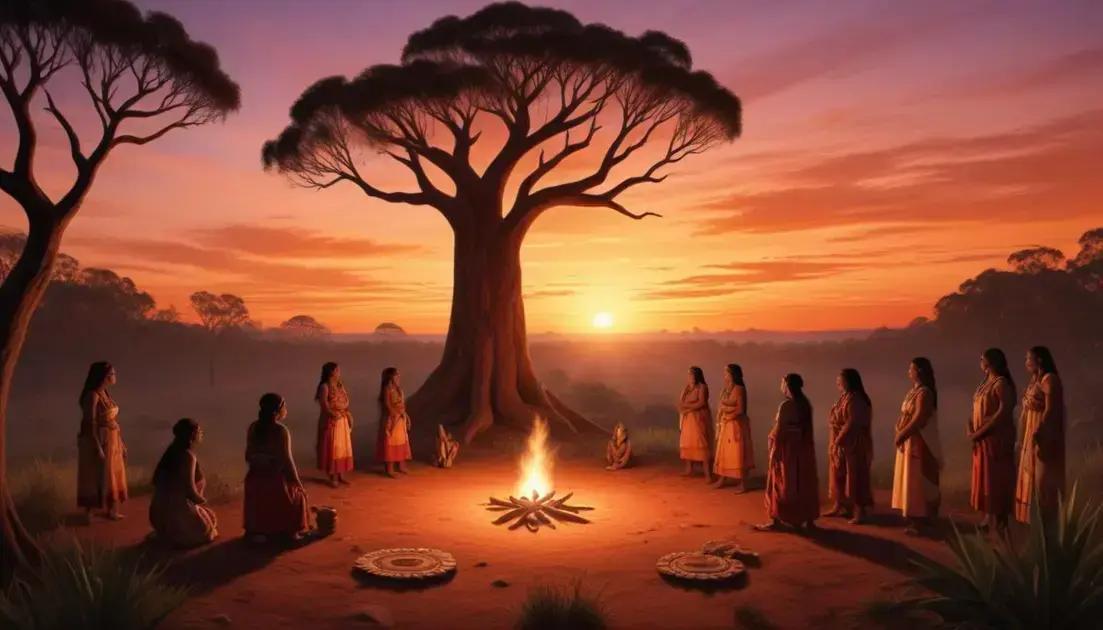
These stories are shared through oral tradition. Elders pass them down to younger generations. This keeps the culture alive and teaches lessons about respect, community, and the environment. It’s a way to understand one’s place in the world.
Through art, music, and dance, these stories are expressed vividly. Aboriginal artists use symbols to represent Dreamtime narratives. When you see these artworks, you are looking at ancient stories told in a contemporary way.
Learning about Dreamtime invites us to consider how different cultures view creation and existence. It reminds us that our connection to the land is essential, a viewpoint that resonates in many societies.
The connection between land and ancestors
The connection between land and ancestors is a fundamental part of Aboriginal culture. For Aboriginal people, the land is not just dirt and rocks. It’s a living connection to their ancestors and their stories.
Every piece of land has a history. It holds the footprints of spirits who walked it long ago. Those spirits are often tied to family groups or clans. This connection shapes a person’s identity and beliefs.
In Dreamtime stories, land features heavily. Mountains, rivers, and trees are all important. They tell stories about how the world was created. For example, a mountain might represent a great hero who shaped the landscape.
Respecting the land is essential. Aboriginal people believe they have a duty to care for it. This includes practicing traditional land management techniques. These practices can promote the health of ecosystems and help preserve biodiversity.
Through ceremonies and rituals, people honor their ancestors and the land. These events strengthen community bonds and pass on important teachings. They remind everyone of their roots and their responsibility to the earth.
Understanding this deep connection helps us see the value of preserving these cultures. It encourages respect for the land and its significance to all people.
Creation stories in Aboriginal culture
Creation stories in Aboriginal culture are rich and varied. They explain how the world came to be and the connections between people, animals, and the land. These stories are essential to understanding Aboriginal beliefs and values.
The stories often feature ancestral beings. These beings may take the form of humans, animals, or even plants. They move across the land, creating places and things. For instance, a turtle might create a river by making a path through the earth.
Each Aboriginal nation has its own unique stories. However, they often share common themes. Respect for nature, community, and family is at the heart of many tales. These themes teach important lessons about life and relationships.
Creation stories are passed down orally. Elders tell these tales during important ceremonies. This keeps the culture alive and strengthens community bonds. It also ensures younger generations learn their heritage and identity.
Art plays an important role in sharing these stories. Aboriginal artists depict creation tales through paintings, carvings, and dance. These artworks are not only beautiful but also tell stories that connect people to their history.
Listening to these creation stories invites everyone to consider their own beliefs about life and the environment. They can inspire a deeper appreciation for the world around us.
The significance of Dreamtime today
The significance of Dreamtime today is still very relevant in modern Aboriginal culture. While the world has changed, these ancient beliefs continue to shape identities and communities.
Many Aboriginal people see Dreamtime as a living tradition. It influences their daily lives, guiding their actions and thoughts. For instance, respect for nature comes directly from Dreamtime teachings. This respect is vital for environmental conservation.
Dreamtime stories are shared in schools and community events. This helps younger generations connect with their heritage. Understanding these stories fosters a sense of pride and belonging, which is essential for cultural identity.
Art and music today often draw from Dreamtime themes. Contemporary artists express their cultural stories through paintings and performances. This creativity not only preserves the past but also celebrates it in new ways.
Moreover, Dreamtime plays a role in social activism. Many Aboriginal leaders use these stories to advocate for land rights and cultural recognition. They remind us of the deep connections between people and their land.
Even people outside the Aboriginal community can learn from Dreamtime. It teaches lessons about harmony, respect, and belonging. These universal values can enrich everyone’s understanding of life and our role within nature.
How Dreamtime influences contemporary art
How Dreamtime influences contemporary art can be seen in many artistic forms. Artists today draw inspiration from ancient Dreamtime stories. These stories are visualized in paintings, sculptures, and performances.
Many Aboriginal artists use traditional symbols in their work. These symbols often represent animals, landscapes, and ancestral beings from Dreamtime. For example, a circle might symbolize a meeting place, while waves could represent rivers or seas. This connection to the past gives their art deeper meaning.
Contemporary art also reflects modern issues. Artists may explore themes like connection to land and cultural survival. By combining traditional elements with modern techniques, they create a unique dialogue between past and present.
Exhibitions and galleries often showcase this work. This not only honors the artists but also educates viewers about Aboriginal culture. Many people leave with a better understanding of Dreamtime and its relevance today.
Art markets provide a platform for these contemporary artists. Selling their art allows them to sustain their culture while reaching a wider audience. It helps keep Dreamtime alive as an active part of Aboriginal identity.
Through art, Dreamtime themes resonate with many audiences, not just within Aboriginal communities. Everyone can find value in these stories and reflect on their own connections to nature and identity.
Conclusion
In conclusion, Dreamtime plays a vital role in Aboriginal culture today. It deeply influences identity, art, and community values. Understanding these stories helps everyone appreciate their meaning and significance. By seeing how Dreamtime connects to contemporary art, we find a bridge between the past and present.
Not only does this connection enrich Aboriginal identity, but it also allows people from all backgrounds to learn and grow. Dreamtime stories promote respect for nature and cultural heritage. Embracing these lessons can lead to a richer understanding of our own lives and communities.
Ultimately, the influence of Dreamtime reminds us that every culture has valuable lessons to share. Let’s continue to explore and celebrate these connections to create a more inclusive world.