Falklands War: British-Argentine Dispute
The Falklands War was a significant conflict between Argentina and the UK in 1982, triggered by Argentina’s invasion of the disputed islands. The war led to military engagements, notably the battles of Goose Green and San Carlos, ultimately resulting in British control of the islands. The conflict has lasting implications on diplomatic relations, national identities, and the sovereignty debate, with the Falkland Islanders expressing a desire to remain British. Both nations continue to grapple with the war’s legacy, making it a crucial aspect of their histories and interactions.
Falklands War is a historic conflict that still captivates many today. What led to this military showdown between Britain and Argentina? Let’s dive in!
Background of the Falklands War
The Falklands War began in 1982 when Argentina invaded the Falkland Islands, a British overseas territory. These islands had been a point of contention between the two nations for years. Argentina claimed the islands as their own, calling them Islas Malvinas. The British, however, maintained their sovereignty over the territory.
Historical Context
In the early 1800s, Britain first claimed the Falkland Islands. Argentina later established a settlement on the islands in 1820. However, the British reasserted control in 1833, leading to ongoing disputes. These historical roots fueled national pride and emotions on both sides.
Political Tensions
In Argentina, a military junta was in power during the 1982 invasion. They used the conflict to distract the public from economic issues at home. For Britain, the islands represented not just territory but also national honor and pride. The British government felt the need to respond decisively.
Invasion and Conflict
The conflict escalated quickly after the invasion. British troops were sent to reclaim the islands. The two nations clashed at sea and on land, with many soldiers losing their lives. The war lasted just over two months, with the British ultimately regaining control.
This brief but intense conflict had lasting effects on both nations, shaping their relations for years to come. It also stirred nationalistic feelings and discussions about sovereignty that continue today.
Key Events and Battles
The Falklands War was marked by several key events and battles that shaped its course. Understanding these events helps us see how the conflict developed.
Invasion of the Falklands
On April 2, 1982, Argentina invaded the Falklands, taking British forces by surprise. This bold move escalated the long-standing dispute over the islands.
British Response
In response, Britain swiftly sent a task force to reclaim the islands. The mission aimed not only to regain territory but also to restore national pride.
Major Battles
Several important battles followed. The Battle of Goose Green took place from May 28 to June 1. This battle ended with British victory, boosting morale for British troops.
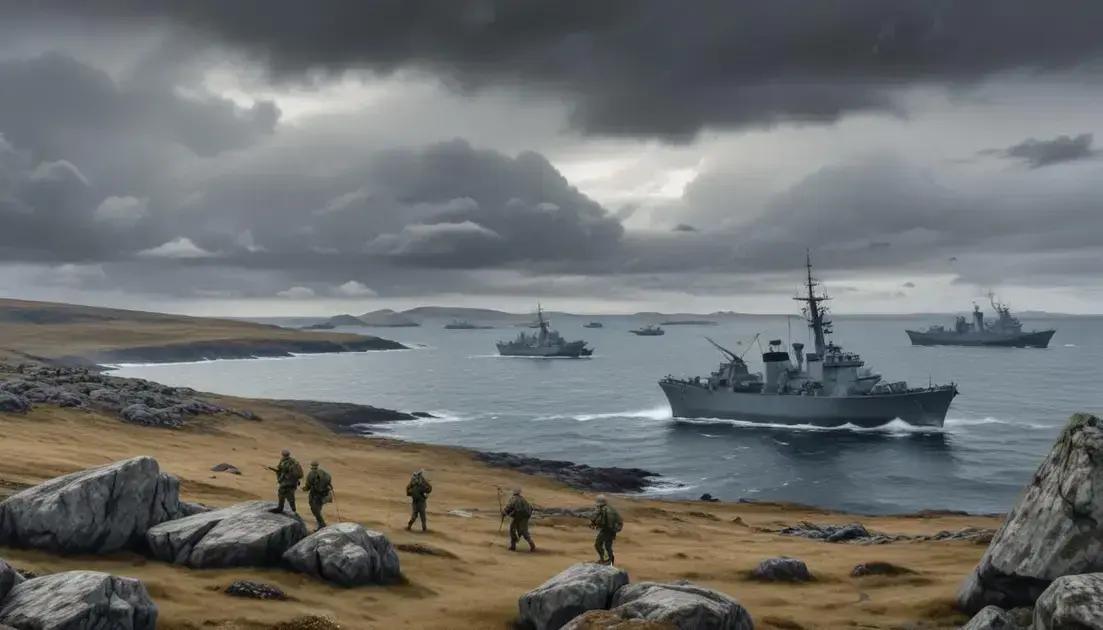
Another significant clash was the Battle of San Carlos Bay, where British ships faced air attacks from Argentina. Despite the challenges, British forces managed to land troops on the islands.
Final Assault
The final assault occurred from June 11 to June 14. British forces advanced towards Port Stanley, the capital of the Falklands. On June 14, Argentina surrendered, ending the war.
These battles were critical in determining the outcome of the war. They showed bravery on both sides and left a lasting impact on the countries involved.
Consequences of the Conflict
The Falklands War had several important consequences for both Argentina and the United Kingdom. These effects were not just immediate but lasted for years.
Impact on Argentina
In Argentina, the war led to the downfall of the military junta. Many people blamed the leaders for the defeat. This changed the political landscape in the country.
After the war, Argentina transitioned to democracy. This shift brought hope for many citizens but also left lingering feelings about the lost war.
Effects on the UK
The UK saw a boost in national pride after winning the war. The success was a moment of unity for the British public. It reinforced Britain’s position on the world stage.
Additionally, it increased military spending in the UK. Britain focused on modernizing its armed forces and improving its defense strategies.
Ongoing Diplomatic Strains
The conflict continued to affect UK-Argentina relations. Diplomatic tensions rose, especially regarding the islands’ sovereignty. Both nations still hold strong views on the matter.
The war also sparked discussions about colonialism and self-determination. Many advocated for the rights of the Falkland Islanders to decide their own fate.
Lasting Legacy
The legacy of the Falklands War influences both countries today. It serves as a reminder of national identity, pride, and the costs of conflict.
Even decades later, the memories of the war remain, impacting the lives of those involved.
Ongoing Implications and Relations
The Falklands War still affects relations between Argentina and the UK today. The conflict brought deep cultural and political changes to both nations.
Diplomatic Relations
After the war, diplomacy between Argentina and the UK was strained. Both countries often clash over the Falkland Islands’ sovereignty. Argentina claims the islands, while the UK stands firm on its control.
Falkland Islanders’ Voice
The people living in the Falklands have a strong voice. They largely wish to remain British. Their opinions play a significant role in the dialogue regarding sovereignty.
Military Presence
Britain maintains a military presence on the islands. This ensures protection and peace. Argentina often views this as an unnecessary provocation, which adds to tensions.
Trade and Economy
Trade relations between the two countries have varied. Political tensions can affect trade. However, there are efforts to improve economic ties, especially in fishing and oil exploration.
Public Sentiment
Both nations carry strong sentiments about the conflict. In Argentina, the war is a point of national pride and loss. In the UK, it represents resilience and strategic success.
Overall, the implications of the Falklands War continue to be felt. The relationship between Argentina and the UK is complex, involving history, pride, and a struggle for identity.
Conclusion
In conclusion, the Falklands War had a lasting impact on both Argentina and the UK. The war shaped national identities and affected diplomatic relations that continue today. The people of the Falkland Islands play a crucial role in these discussions, expressing their desire to remain British.
Moreover, the ongoing tensions remind us of the deep emotions tied to this conflict. Both countries still wrestle with their history, pride, and sovereignty issues. Understanding these aspects helps us grasp the complexities of international relationships and the importance of dialogue.
Ultimately, the lessons of the Falklands War guide us in promoting peace and understanding, showing how important it is to learn from the past while looking toward the future.