Hundred Years’ War: the long feud of England and France
The Hundred Years’ War was a significant conflict between England and France from 1337 to 1453, marked by famous battles like Crécy and Agincourt. Key figures, including Joan of Arc and King Henry V, played pivotal roles in shaping national identities. The war introduced new military tactics and had lasting impacts on social structures, leading to greater respect for common soldiers and significant changes in leadership. Ultimately, it forged a legacy that influenced both nations’ histories and their views on warfare and nationalism.
Welcome to the captivating tale of the Hundred Years’ War. This astonishing conflict between England and France not only shaped nations but also turned ordinary soldiers into heroes. Curious about how these battles unfolded? Let’s dive in!
Introduction to the Hundred Years’ War
The Hundred Years’ War was a series of conflicts fought between England and France from 1337 to 1453. This war changed history in many ways. It was not just one battle but a long struggle for power and land.
At first, it started due to a dispute over the French throne. The English kings claimed they had the right to be king of France. This claim led to many battles. Each side had heroes who fought bravely for their country.
Some of the most famous battles include the Battle of Crécy and the Battle of Agincourt. These battles showed the skill of English archers. They helped England win important victories.
Many brave figures emerged during this time. Notably, Joan of Arc became a hero for France. Her story is one of courage and determination.
The war also changed how battles were fought. New weapons and tactics came into play. The longbow became a key weapon for the English. These changes had a lasting impact on warfare.
Throughout the war, alliances shifted. Both countries faced internal problems as well. The struggle affected not just soldiers but common people, too. Towns were destroyed, and lives were changed forever.
Key Battles and Events
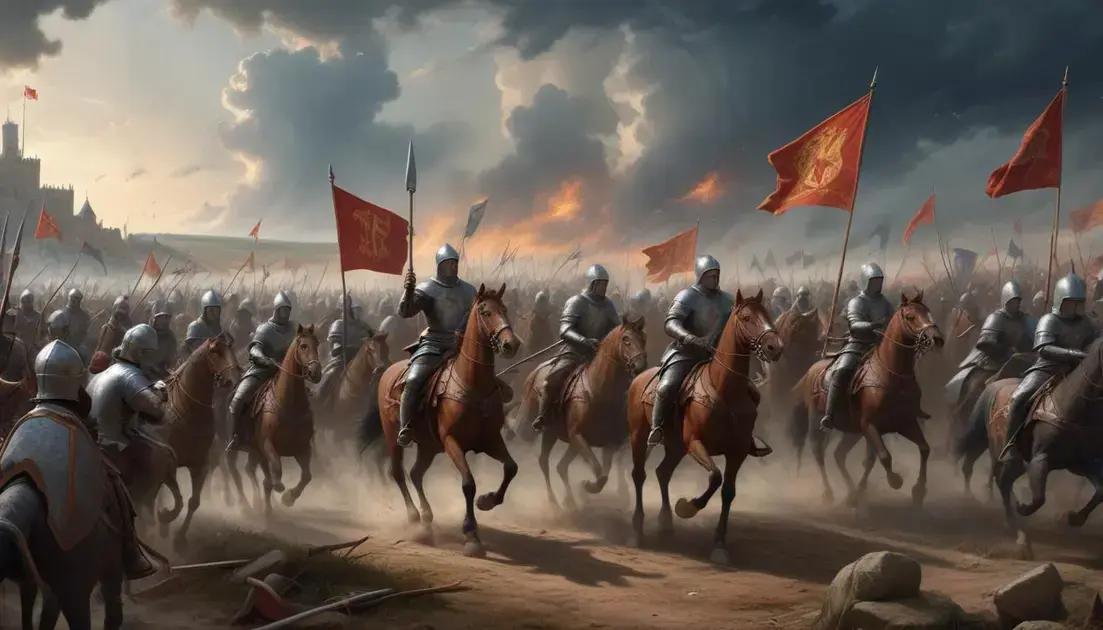
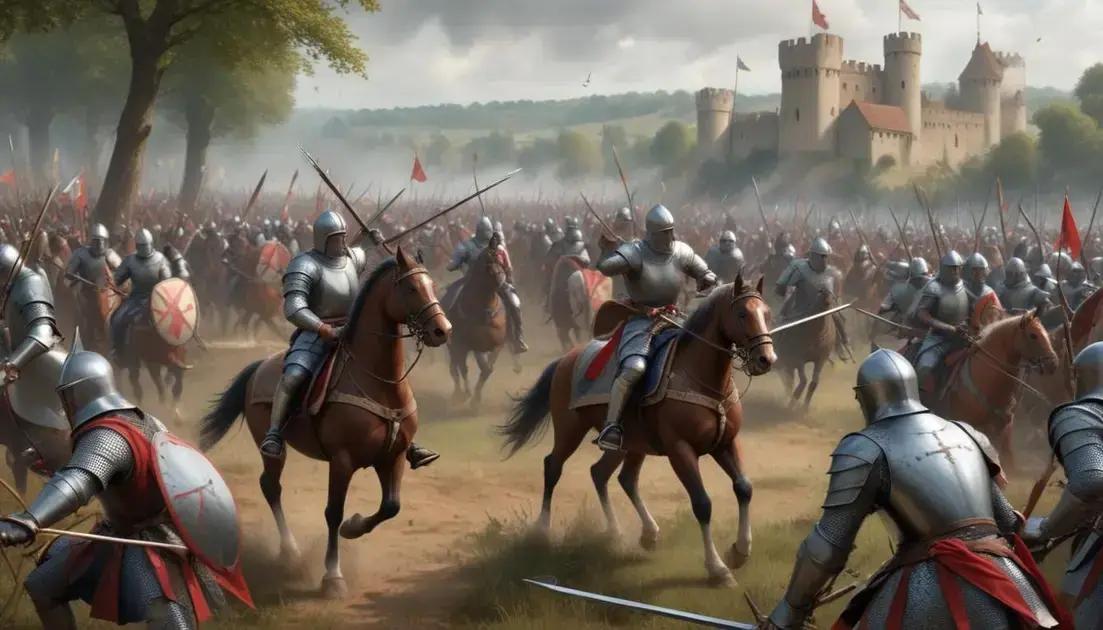
The Hundred Years’ War was marked by many key battles and events that shaped its course. The first major battle was the Battle of Crécy in 1346. This battle showed how effective the English longbow was. The English defeated a larger French army with clever tactics.
Another significant fight was the Battle of Poitiers in 1356. Here, the English captured the French king, John II. This victory was a big deal for England!
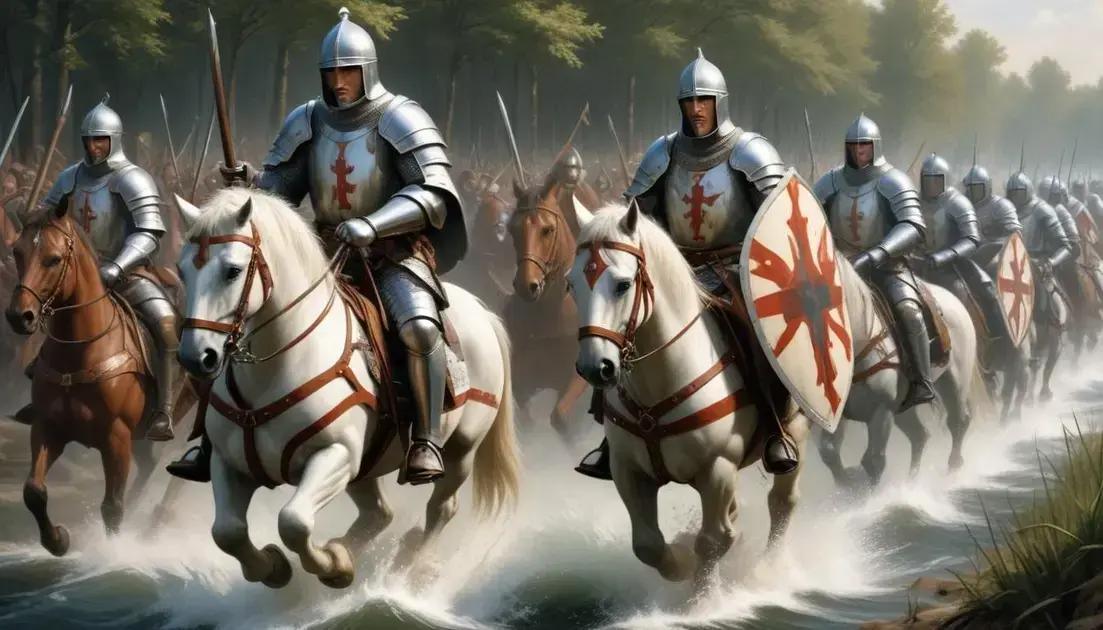
In 1415, the well-known Battle of Agincourt took place. The English army, led by Henry V, faced many odds. But they won again, showcasing the power of the longbow and their military skills.
Aside from battles, many events changed the war. The Treaty of Brétigny in 1360 brought a pause in the fighting, giving England some land. However, this peace did not last.
As the war went on, Joan of Arc emerged. In the early 1400s, she helped inspire the French to fight back. Her leadership led to the lifting of the Siege of Orléans in 1429. This event was a turning point for France.
Eventually, the war ended in 1453 after many battles and changes. The conflicts shaped the future for both England and France, leading to new ideas about warfare and national identity.
Impact on England and France
The Hundred Years’ War had a huge impact on both England and France. It changed the way people viewed their countries. Before the war, national identities were not as strong. Afterward, both nations began to see themselves as proud and united.
In England, the war brought a sense of national pride. Soldiers fought for their country, and heroes emerged. The longbowmen became famous for their skills. This war shaped the English military traditions for years to come.
On the other hand, France faced many hardships. The war destroyed farms, towns, and lives. People suffered greatly during this time. However, it also led to a strong resolve among the French. They united to fight back after defeats, especially after the rise of Joan of Arc.
This conflict also influenced politics. In England, the war led to the rise of the common people. Soldiers gained respect and recognition, altering the class system. Meanwhile, in France, the monarchy grew stronger as they rallied their forces.
The Hundred Years’ War also changed how wars were fought. New tactics emerged, and armies began to see the value of organized troops. The nature of warfare evolved during these years, leading to more structured battles.
Both countries learned from the war’s devastation. They realized the importance of unity and strategy. Although it was a time of suffering, it laid the groundwork for future changes and development in both England and France.
Famous Figures of the War
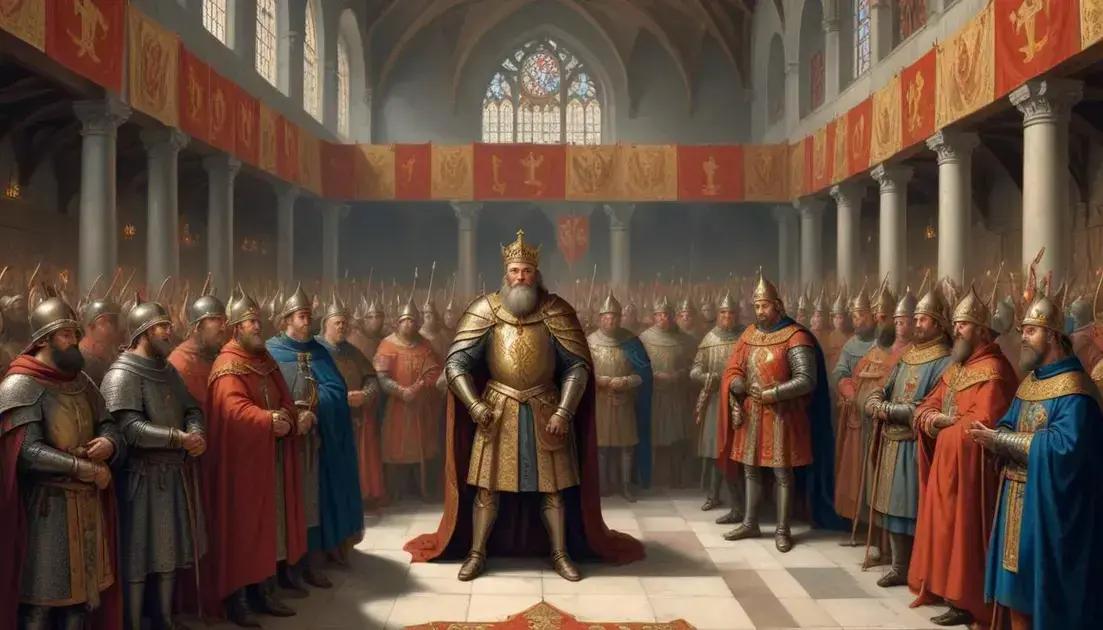
The Hundred Years’ War had many famous figures who played key roles. One of the most well-known is King Henry V of England. He led his troops to important victories, especially at the Battle of Agincourt. His bravery and leadership made him a legendary king.
Another notable figure is Joan of Arc. She emerged as a hero for France. At a young age, she claimed to receive visions from God guiding her to help France. Her role was crucial in lifting the Siege of Orléans in 1429. Because of her efforts, Joan inspired many French soldiers.
King Charles VII of France also made a significant impact. He became king during the war and relied on Joan to unite the country. His leadership helped secure victory for France and restore the monarchy.
On the English side, Edward, the Black Prince, was a skilled military leader. He fought many battles and won respect for his tactics. His victories helped secure English control over parts of France.
Another key figure was Philip VI of France. He was the first king of France during the war. His decisions led to the initial conflict between England and France. Many battles happened under his reign, impacting the land and its people.
These figures show how individuals influenced the course of the Hundred Years’ War. Their bravery and actions shaped history, making this conflict memorable.
Conclusion: Legacy of the Hundred Years’ War
The Hundred Years’ War left a lasting legacy for both England and France. It shaped national identities and changed the way countries viewed themselves. After the war, the feeling of nationalism grew stronger.
The military tactics developed during this time also influenced future conflicts. Innovations in weaponry, like the longbow, changed how battles were fought. Armies began to organize differently, paving the way for modern warfare.
Social structures shifted, too. In England, common soldiers gained respect and recognition. This helped change attitudes towards the lower classes.
In France, leaders emerged who would unite the nation and restore the monarchy. Joan of Arc became a symbol of hope and courage, inspiring generations.
Overall, the war’s effects went far beyond the battlefield. It was a time of hardship but also of growth. Both nations learned valuable lessons that shaped their futures.
Conclusion
In conclusion, the Hundred Years’ War was more than just a long conflict between England and France. It shaped both countries in many ways. The war created strong national identities and changed military tactics, influencing how battles would be fought in the future.
The heroes and events that emerged, like Joan of Arc’s bravery, became symbols of hope and inspiration. The lessons learned during this time affected societies for generations, leading to changes in class structures and the rise of ordinary soldiers.
Both nations endured hardship, but they also grew stronger. Understanding this conflict helps us see how history continues to shape our world today. The legacy of the Hundred Years’ War reminds us of the importance of resilience and unity in the face of struggles.