Iranian Revolution: the fall of the Shah
The Iranian Revolution, which occurred in 1979, significantly changed Iran’s political landscape, leading to the establishment of a theocratic government. Key events, such as protests against the Shah and the return of Ayatollah Khomeini, catalyzed this revolutionary change. The impact of the revolution extended beyond Iran, inspiring movements across the Middle East, altering power dynamics, and affecting U.S. relations in the region. Important lessons from this revolution include the value of unity, the importance of strong leadership, and the need for awareness about political rights and influences.
The Iranian Revolution sparked an unexpected shift from monarchy to theocracy, reshaping society and politics in Iran forever. Curious how this transformation unfolded? Read on!
The causes of the Iranian Revolution
The Iranian Revolution was influenced by many factors. Economic struggles, political oppression, and social inequality played key roles. People were unhappy with the Shah’s rule. Corruption was rampant, and many felt left out of a growing economy.
Economic Struggles
During the 1970s, Iran’s economy was a mixed bag. While oil wealth grew, ordinary citizens didn’t see the benefits. Many faced high prices and low wages. This created anger and frustration among the people.
Political Oppression
The Shah ruled with an iron fist. He used secret police to silence critics and opponents. Political freedom was almost nonexistent, which upset many. The desire for democracy and freedom motivated more people to join the revolution.
Social Inequality
Deep social divisions existed in Iran. The wealthy lived in luxury, while the poor struggled daily. Religious leaders and groups who sought change began to speak out. They brought attention to these issues, uniting various segments of society.
The Role of Religion
Religion also played a powerful role in the revolution. Many saw the Shah’s government as corrupt and un-Islamic. Religious leaders began to oppose the Shah openly. They offered an alternative vision for Iran, one based on Islamic values.
These causes created a perfect storm for the Iranian Revolution. Citizens wanted change and were willing to fight for it. Their voices grew louder as they demanded an end to the Shah’s regime.
Key events leading to the fall of the Shah
Several key events led to the fall of the Shah in Iran. Each event added fuel to the growing discontent. Many Iranians were tired of the Shah’s oppressive rule, and these events mobilized them.
Protests Begin
In 1977, protests erupted after a newspaper insulted an important religious leader. Many people expressed their anger in the streets. These protests grew larger over time, bringing people together.
Rise of Opposition Groups
Opposition groups formed rapidly. They included students, workers, and religious leaders. These groups united to challenge the Shah’s power. They shared a common goal: to end his regime.
1980 and the Crackdown
In 1980, the Shah ordered a harsh crackdown on protestors. His police arrested many, hoping to silence opposition. However, this only made people angrier and more determined to fight back.
Return of Khomeini
The return of Ayatollah Khomeini in 1979 stirred excitement and hope. Khomeini’s presence galvanized many to join the push against the Shah. He became a symbol of resistance.
Shah Leaves Iran
Finally, in January 1979, the Shah left Iran for good. He claimed it was a temporary trip for health reasons. Many saw this as a victory. People celebrated in the streets, hoping for a new era.
These events showed how unified and passionate people were. They played a crucial role in pushing Iran toward revolution.
The rise of theocracy in Iran
The rise of theocracy in Iran changed the country’s government and society. After years of unrest, many people wanted a new system. They turned to religious leaders for guidance and support.
Khomeini’s Influence
Ayatollah Khomeini became the face of the revolution. He spoke about justice and social change. His ideas connected with many Iranians who felt ignored and oppressed. Khomeini’s leadership inspired hope and unity among the people.
Formation of the Islamic Republic
In 1979, Iran officially changed to an Islamic Republic. This new government based its laws on Islamic principles. Many saw this as a fresh start for the nation. The constitution reflected the ideals of the revolution.
Support from the Masses
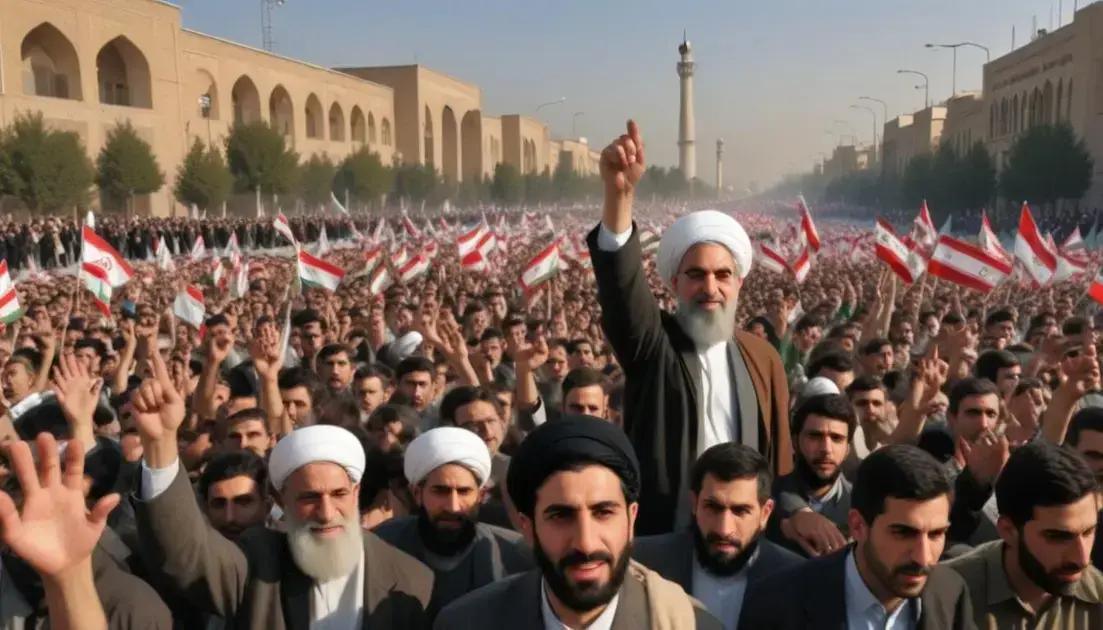
The theocracy gained much support from different groups. Many believed this new leadership could solve Iran’s problems. Religious ceremonies and events drew large crowds, reinforcing support for Khomeini.
Suppression of Dissent
However, the new theocracy also suppressed dissent. Critics faced harsh punishments. Many feared speaking out against the government. This created an environment where only approved ideas were shared.
The Impact on Society
This rise of theocracy changed daily life in Iran. Laws impacted women, education, and cultural practices. Society faced strict rules based on Islamic beliefs. Many people struggled to adapt to the changes.
The rise of theocracy in Iran reshaped the nation. It fostered a unique identity but also challenged many aspects of life.
Impact of the Iranian Revolution on the Middle East
The Iranian Revolution had a big impact on the Middle East and beyond. It changed political landscapes and influenced many countries. The revolution sparked both hope and fear among various groups.
Shift in Power Dynamics
After the revolution, Iran emerged as a powerful player. This shift in power changed relationships among neighbors. Many nations felt uncertain about Iran’s new role.
Inspiration for Other Movements
The revolution inspired other groups seeking change. People in neighboring countries looked to Iran as a model. Many began to push for rights and freedoms similar to those fought for in Iran.
Rise of Islamic Political Movements
The success of the revolution gave rise to Islamic political movements. These groups gained popularity, promoting religious governance. Such movements reshaped politics in countries like Iraq and Lebanon.
Impact on U.S. Relations
The Iranian Revolution severely strained U.S. relations. America lost a key ally in the region. The shift created tensions that influenced U.S. policies and military presence in the area.
Regional Conflicts
Post-revolution, conflicts erupted in the region, fueled by new ideologies. The Iran-Iraq War is a prime example, showcasing the tensions between different factions.
The impact of the Iranian Revolution continues to be felt. It transformed not only Iran but the entire Middle East landscape.
Lessons learned from the revolution
The Iranian Revolution taught many important lessons that still matter today. These lessons can help us understand political change and social movements.
The Power of Unity
One key lesson is the power of unity. Various groups came together for a common cause. When people unite, they can challenge even the strongest leaders.
Importance of Leadership
Strong and charismatic leadership was crucial during the revolution. Ayatollah Khomeini inspired many people. Leaders can shape a movement’s direction and rally support.
Role of Social Media
Although social media wasn’t prevalent then, the revolution highlighted the importance of communication. In today’s world, social media spreads information quickly and mobilizes supporters.
Impact of External Influences
The revolution showed how outside forces can affect a nation’s fate. Countries must consider global politics and alliances that can lead to unexpected changes.
Need for Awareness and Education
Finally, education and awareness are vital. Understanding political systems and rights helps people advocate for change. Knowledge empowers citizens to demand their rights responsibly.
These lessons from the Iranian Revolution continue to resonate. They remind us of the ongoing struggle for justice and rights around the world.
Conclusion
In conclusion, the Iranian Revolution shows us vital lessons about unity, leadership, and awareness. When people come together for a common cause, they can create change. Strong leaders, like Ayatollah Khomeini, can inspire movements and shape their direction.
Additionally, communication plays a crucial role in mobilizing supporters. Today, social media can amplify voices and spread important messages quickly. Understanding global influences is also essential, as outside forces can impact a nation’s path.
Finally, being educated about rights and political systems empowers individuals. The struggle for justice and rights continues. Learning from the past can help guide future generations toward a better world.
Tags: