Liberation Theology: Faith, Poverty, and Revolution
Liberation Theology is a movement that intertwines faith with social justice, emerging in Latin America during the 1960s amidst political unrest and inequality. Key figures like Gustavo Gutiérrez and Oscar Romero have been influential in advocating for the poor and marginalized. Despite facing criticism and challenges, such as accusations of mixing politics with religion and backlash from conservative groups, the movement continues to inspire grassroots activism and influence contemporary politics, emphasizing a commitment to justice and empowerment for those in need.
Let’s dive into the world of Liberation Theology and see how faith intertwines with social justice, inspiring movements across Latin America and beyond.
The intersection of faith and social justice
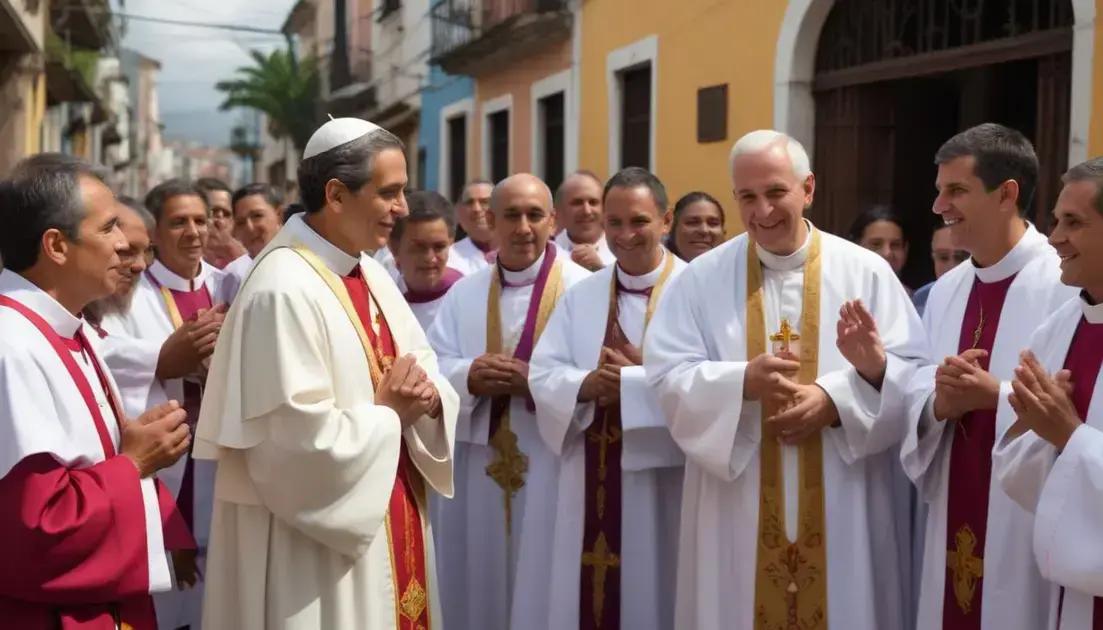
The intersection of faith and social justice is a powerful concept. Many believe that faith should guide us to help those in need. In Latin America, priests have taken this idea seriously. They’ve used their faith as a reason to stand up against poverty and injustice.
Faith Inspiring Action
When people see injustices happening, faith can inspire them to act. Priests and religious leaders often speak out against social issues. They focus on helping the poor and marginalized communities. This connection between faith and action encourages many to join the cause.
Examples in Action
For instance, many churches run food banks or shelters. They are places where people can find support. These actions show how faith can translate into social services, bridging the gap between spirituality and the community’s needs.
Challenges Faced
However, this relationship isn’t always easy. Some face criticism from those who don’t agree with mixing faith and politics. But many believe the fight for justice is a moral duty.
Faith leaders often remind us that caring for the poor is a core teaching. This message resonates with many, leading to a stronger commitment to social justice.
Historical context of Liberation Theology
Understanding the historical context of Liberation Theology is crucial. This movement began in the 1960s in Latin America. It arose during a time of great social unrest and political turmoil.
Many countries were dealing with poverty and inequality. Dictatorships ruled in several nations. People felt powerless in their daily lives. This was when many priests began to see the need for change.
They combined their religious beliefs with the struggles of the poor. This led to a new way of thinking about faith. Instead of just personal salvation, they focused on social justice.
Influential figures like Gustavo Gutiérrez emerged. He wrote important texts that outlined these ideas. His work helped to spread the message of Liberation Theology.
Churches became community hubs. They offered support and guidance to those struggling. This shift changed how many viewed religion. It wasn’t just about worship, but also about taking action against injustice.
The historical background shows how deep these roots go. Liberation Theology reminds us that faith can drive meaningful change in society.
Key figures in the movement
There are several key figures in the Liberation Theology movement. These leaders shaped its ideas and spread its message. One of the most notable is Gustavo Gutiérrez. He is often called the father of Liberation Theology.
Gutiérrez wrote the influential book “A Theology of Liberation.” In it, he emphasized the need for faith to address social issues. His work inspired many others to think about faith and justice together.
Another important figure is Oscar Romero. He was the Archbishop of San Salvador. Romero spoke out against poverty and violence. His sermons challenged the government and empowered people to stand up for their rights.
There’s also Leonardo Boff, a Brazilian theologian. He wrote extensively about the connection between faith and ecology. Boff pushed for a holistic view of social justice that includes caring for the Earth.
These leaders faced criticism and even danger. Yet, their commitment to justice fueled the movement. They showed how faith can inspire real change in society.
Impact on contemporary politics
The impact of Liberation Theology on contemporary politics is significant. This movement has inspired many leaders and activists. It encourages them to focus on social justice and human rights.
In many Latin American countries, Liberation Theology has influenced political policies. Leaders in these nations often cite its teachings when addressing poverty and inequality. They strive to create programs that support the marginalized.
Moreover, the principles of this theology encourage grassroots movements. Citizens feel empowered to speak out against injustice. They often organize protests and campaigns that challenge the status quo.
For example, movements for land reform have ties to Liberation Theology. Many advocate for the rights of those without land or resources. This connection shows how faith can drive political change.
Critics argue about the political role of religion. Yet, for many, the mission is clear. They see the call to act on behalf of the poor as a sacred duty.
This ongoing influence demonstrates how religious movements can shape politics. Liberation Theology reminds us that faith and justice can work hand in hand.
Criticism and challenges faced
Despite its impact, Liberation Theology faces criticism and challenges. Some argue it mixes politics with religion too much. Critics believe this can lead to bias in spiritual teachings.
Another challenge is the backlash from conservative groups. These groups often see Liberation Theology as a threat. They worry about the focus on social justice over traditional beliefs.
In some countries, religious leaders have faced persecution. Speaking out against government policies can put their lives at risk. This fear sometimes discourages others from joining the movement.
Financial support is also an issue. Many grassroots organizations rely on donations. When funds are low, it limits their ability to help those in need.
Additionally, the movement struggles with unifying diverse opinions. People interpret the core messages in different ways. This can create divisions among followers and slow down progress.
Despite these challenges, many still believe in the movement’s mission. They see the need for change and continue to fight for social justice.
Conclusion
In conclusion, Liberation Theology has played a vital role in shaping social justice movements in Latin America. Its focus on faith and justice inspires many people to take action against inequality. Despite facing criticism and challenges, the movement continues to impact contemporary politics and empower communities.
Key figures have fought for justice, showing how faith can drive change. While there are obstacles to overcome, the commitment to social justice remains strong. By connecting faith with the fight for equality, Liberation Theology inspires hope and motivates individuals to work toward a better future.