Mesopotamia: where cities and writing were born
Mesopotamia, known as the cradle of civilization, introduced key advancements in urban life, writing, law, and culture. The innovations such as the cuneiform script and the Code of Hammurabi shaped societal structures and governance. Mesopotamian art, literature, and scientific knowledge have a lasting legacy that continues to influence modern society, making it a fundamental area of study in history.
Mesopotamia—the birthplace of urban life—is a fascinating journey back in time. Have you ever wondered how this ancient land shaped our modern world? Let’s dive in!
The Birth of Cities
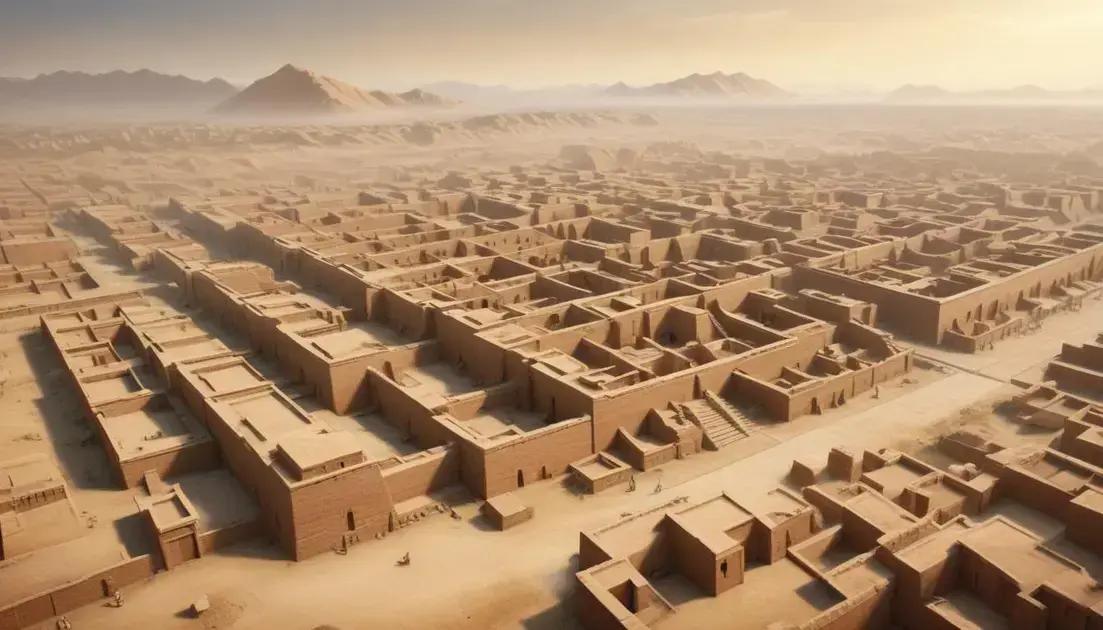
Imagine bustling streets and tall buildings rising from the ground. This is what marked the birth of cities in ancient Mesopotamia. People started to gather in large groups. They wanted to trade, share ideas, and live together. Cities like Ur and Babylon became centers of culture and commerce.
The First Urban Centers
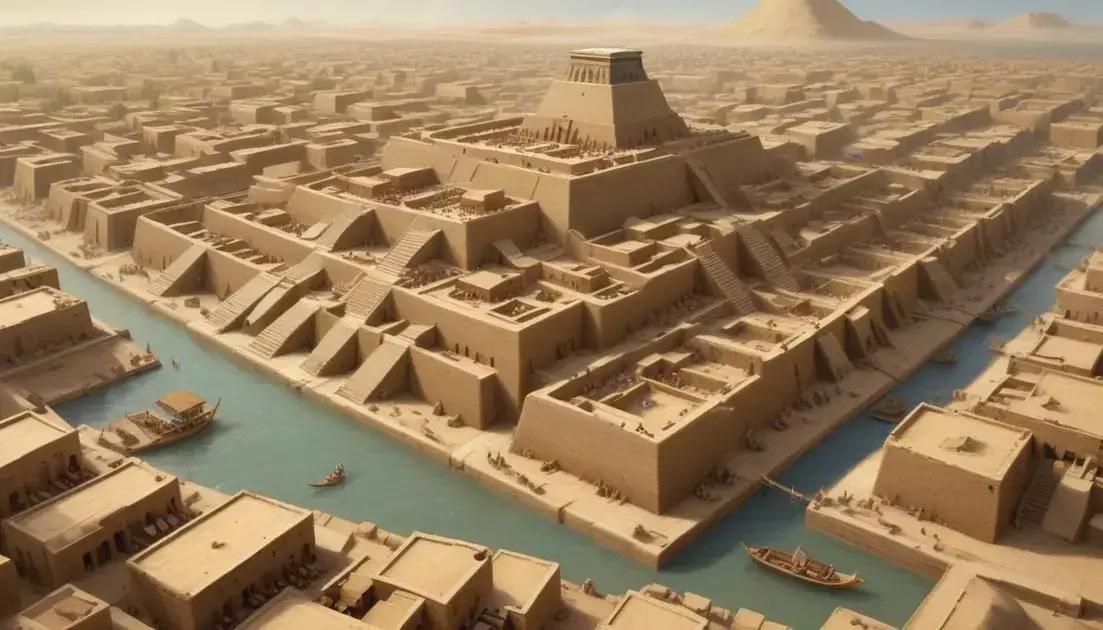
Ur, one of the earliest cities, had impressive structures. It was home to temples and houses made from mud bricks. The layout was planned, with streets that kept traffic organized. This setup made daily life easier for everyone.
Why Cities Formed
Farmers settled near rivers to grow crops. With enough food, people didn’t have to wander anymore. They could form communities. As populations grew, so did the need for organization. This led to the development of leadership and laws.
Trade and Economy
Trading foods and goods became vital. People traveled to exchange items like pottery and textiles. Cities became hubs for commerce. Goods flowed in and out, promoting wealth and innovation.
Cultural Growth
As cities thrived, so did culture. Art, music, and writing flourished. The cuneiform script was created to keep records. This writing system changed how people communicated and shared knowledge.
The birth of cities in Mesopotamia was a game changer. It set the stage for how civilizations would grow and function in years to come. Through trade, culture, and community, the foundations of modern society began to take shape.
Innovations in Writing
Writing has come a long way since its early days. In ancient Mesopotamia, innovations in writing changed everything. The cuneiform script was one of the first writing systems. It used wedge-shaped marks on clay tablets. This method made record-keeping possible.
Types of Writing
Cuneiform began as simple symbols. Over time, it grew more complex. It included various signs to express sounds and ideas. This helped people communicate better, especially for trade.
Uses of Writing
Writing served many purposes. It recorded laws, trades, and stories. Important kings used it to send messages. Everyday people used it for keeping accounts and marking sales.
The Impact on Knowledge
With writing, knowledge could be shared widely. Schools began to teach writing skills. Students copied texts to learn. This spread ideas and culture across regions.
Legacy of Innovations
The innovations in writing laid the groundwork for future systems. They influenced many cultures after Mesopotamia. Today, writing remains a key way to share thoughts and information.
Legal Systems and Governance
Legal systems are important for any society. In ancient Mesopotamia, they shaped how people lived. The first known law code was the Code of Hammurabi. It set clear rules and punishments. This helped people understand what was acceptable.
Structure of Governance
Governance in Mesopotamia was organized. Kings ruled cities and made laws. They also oversaw trade and agriculture. Officials helped manage daily tasks and ensure laws were followed.
Importance of Laws
Laws provided order. They protected citizens and their property. If someone broke a law, there were consequences. This created a sense of security within the community.
Role of the Judiciary
Judges played a key role in the legal system. They were responsible for resolving disputes. People could bring cases to them for fair judgment. This system allowed for peaceful solutions instead of violence.
The Legacy of Legal Systems
The legal systems of Mesopotamia influenced future societies. They laid the foundation for laws we use today. Understanding fairness and justice helped shape modern governance.
Cultural Contributions
Mesopotamia was a cultural melting pot. It gave us many contributions that shaped human history. The ancient people produced stunning art, literature, and scientific knowledge.
Art and Architecture
Art was an important part of Mesopotamian culture. They created beautiful sculptures and intricate pottery. Temples and ziggurats showcased their stunning architecture. These structures were not just practical but also held religious significance.
Literature and Writing
One of the greatest contributions is literature. The Epic of Gilgamesh is one of the first stories ever written. It explores friendship, heroism, and the quest for immortality. This epic influenced many other cultures.
Mathematics and Science
Mesopotamians made significant strides in math and science. They developed a base-60 number system. This is why we have 60 seconds in a minute and 360 degrees in a circle. Their work in astronomy helped them track celestial movements.
Religion and Mythology
Religion was central to life in Mesopotamia. They worshipped many gods, each with unique roles. Myths explained natural phenomena and moral lessons. These stories influenced later religious traditions.
Overall, the cultural contributions from Mesopotamia laid the groundwork for future civilizations. Their creativity and innovation still affect our world today.
Legacy of Mesopotamia
The legacy of Mesopotamia is immense and far-reaching. Its influence can be seen in many modern aspects of life. This ancient civilization laid the groundwork for future societies around the world.
Foundation of Civilization
Mesopotamia was one of the first cradles of civilization. It established key elements like agriculture, cities, and writing. These developments shaped how people lived and interacted.
Advancements in Knowledge
The innovations in math and science from Mesopotamia are remarkable. They created a system for measuring time and space. This laid the foundation for future scientific exploration and learning.
Influence on Law and Governance
The legal systems developed in Mesopotamia influenced many later cultures. The Code of Hammurabi set a standard for justice and governance. This created a template for laws that many societies still follow today.
Cultural Impact
Mesopotamian art, literature, and religion impacted many cultures that followed. The stories and myths from their time have echoed through history. They continue to inspire writers and artists today.
Overall, the legacy of Mesopotamia shapes our world in countless ways. Its contributions to civilization are still felt in our societies.
Conclusion
In conclusion, the rich history and contributions of Mesopotamia have shaped our world in many ways. From the birth of cities to innovations in writing and governance, their influence remains strong. The cultural achievements in art, literature, and science laid the groundwork for future civilizations.
Understanding Mesopotamia helps us appreciate how far human society has come. Their advancements in law and trade set standards that we still follow today. By learning about this ancient civilization, we can see the lasting impact it has on our lives. Therefore, remembering the legacy of Mesopotamia is essential as we continue to build our future.