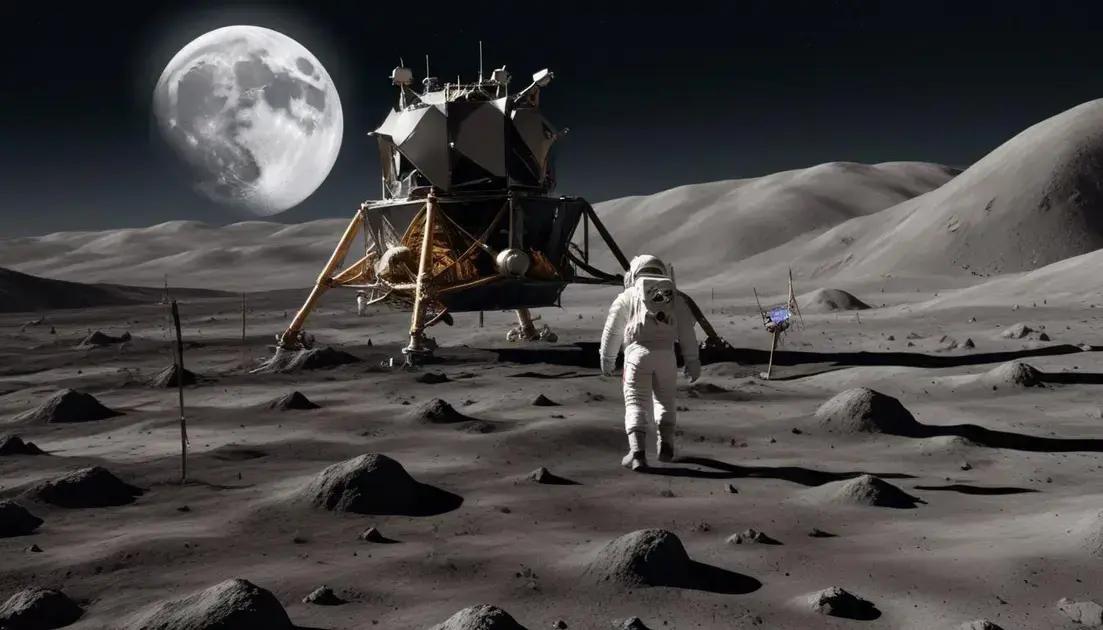
NASA and the quest for new worlds
Collaboration in space exploration is essential for successful missions, enabling countries to share resources and expertise. Initiatives like the International Space Station highlight how joint efforts lead to significant discoveries. As we plan future missions to Mars and beyond, international partnerships will be crucial for overcoming challenges and enhancing scientific breakthroughs, ultimately inspiring the next generation of explorers.
Welcome to the world of NASA, where the quest for new worlds pushes the boundaries of our understanding. Are we alone in the universe? Let’s explore this adventure!
The Journey to Mars
The Journey to Mars is an exciting adventure for NASA and humanity. After years of planning, NASA aims to send astronauts to the Red Planet. This mission will not only push the limits of science but also inspire future generations.
Why Mars?
Mars is similar to Earth in many ways. It has seasons, weather, and even polar ice caps. Scientists believe that studying Mars can help us learn more about our own planet and the possibility of life beyond Earth.
The Exciting Goals
Nasa’s plans include exploring the Martian surface. Astronauts will gather samples, study rocks, and look for signs of ancient life. They will also test new technologies that could help us live on Mars one day.
Preparing for the Trip
The journey to Mars won’t be easy. It will take several months to get there. Astronauts will face many challenges, like radiation and limited resources. That’s why it’s important to train them well and prepare for the unexpected.
The Importance of Collaboration
International collaboration plays a big role in this mission. Countries around the world are working together to share knowledge and technology. This teamwork will help us overcome challenges and achieve our goals faster.
Exploring Mars is more than just a mission. It’s a chance to learn about our universe and our place in it. With each step, we get closer to understanding if life exists beyond Earth and what it takes to live on another planet.
Exploring Exoplanets
Exploring Exoplanets is one of the most exciting areas in astronomy today. An exoplanet is a planet that orbits a star outside our solar system. Scientists have discovered thousands of these worlds, and each one tells us something unique about the universe.
Why Study Exoplanets?
Studying exoplanets helps us learn more about our own planet. It gives us clues about how planets form and evolve. Some exoplanets are similar to Earth, which raises questions about the possibility of life.
How Are Exoplanets Found?
NASA and other space agencies use different methods to find exoplanets. One popular way is called the transit method. This involves watching for tiny dips in a star’s brightness caused by a planet passing in front of it.
What Have We Learned?
We’ve learned that exoplanets come in many sizes and types. Some are gas giants like Jupiter, while others are rocky like Earth. Some exoplanets orbit very close to their stars, making them too hot for life, while others are in a habitable zone.
The Future of Exoplanet Research
Future missions will focus on analyzing the atmospheres of these distant worlds. Scientists hope to find signs of water and even potential biosignatures—indicators of life. Each discovery adds pieces to the puzzle of what makes a planet capable of supporting life.
By exploring exoplanets, we expand our understanding of the universe and our place in it. The quest to find other worlds is just beginning, and the excitement continues to grow.
The Future of Space Travel
The Future of Space Travel is bright and full of possibilities. Scientists and engineers are working hard to make travel to space safer and more affordable. With new technologies on the rise, we might soon be able to explore Mars, the Moon, and beyond.
Advancements in Technology
New rocket technologies are changing the way we travel into space. Reusable rockets, like those from SpaceX, help cut costs. This means more missions can happen, leading to exciting discoveries and adventures.
Commercial Space Travel
More companies are getting involved in space travel. Private companies are now offering space tourism. Soon, everyday people might get a chance to fly to space for fun and adventure.
Exploring Beyond Earth
Future missions will focus on colonizing other planets. Mars is a primary target, and NASA plans to send astronauts there in the coming years. Scientists believe that establishing a settlement on Mars could open doors for further exploration.
International Collaboration
Countries are working together to push the boundaries of space exploration. International partnerships help share knowledge, resources, and technology. These collaborations could lead to more successful missions and discoveries.
Advent of Space Habitats
In the near future, we may live and work in space habitats. These habitats will provide essential resources for astronauts and researchers. They will enable long-term space missions to become a reality.
The future of space travel holds thrilling possibilities. With teamwork and innovation, we will discover new worlds and explore the unknown together.
Significant Discoveries
Significant discoveries in space exploration have changed how we view the universe. Each discovery opens new doors and answers age-old questions. Scientists are constantly learning more about planets, stars, and galaxies.
Finding Water on Mars
One major discovery is that water exists on Mars. Scientists found signs of ice and salty water. This is important because water is essential for life as we know it.
Exoplanets and Their Potential
Another exciting find is exoplanets. These are planets outside our solar system. Some are similar to Earth and may support life. Discovering exoplanets helps us understand our own place in the universe.
Black Holes and Their Mysteries
Scientists have also captured images of black holes. These mysterious areas in space have enormous gravity. Studying black holes helps us learn about the laws of physics and the nature of space.
Insights from Space Telescopes
Space telescopes like Hubble have provided amazing views of the cosmos. They have revealed distant galaxies, nebulae, and cosmic events. Each image teaches us more about how the universe works.
The Impact of AI in Discoveries
Artificial intelligence (AI) also plays a role in space discoveries. AI can analyze data faster and find patterns that humans might miss. This technology helps scientists make breakthroughs more quickly.
These significant discoveries inspire us to keep exploring. Each finding brings more questions and more excitement about what lies beyond our planet.
Collaboration in Space Exploration
Collaboration in Space Exploration is crucial for successful missions. Countries and organizations around the world work together to achieve common goals in space. This teamwork brings together different skills, knowledge, and resources.
The Importance of Partnerships
Partnerships create opportunities for sharing technology and expertise. They help reduce costs and improve the chances of success. For instance, NASA collaborates with the European Space Agency to share data and resources.
International Space Station (ISS)
The ISS is a great example of collaboration. It is sponsored by multiple countries. Scientists from the US, Russia, Europe, Japan, and Canada work together on research projects. These projects benefit all humanity.
Joint Missions
Joint missions further strengthen collaboration. Missions like Mars exploration involve teams from various countries. By combining efforts, they can tackle tough challenges and achieve more.
Sharing Discoveries
Collaboration also means sharing discoveries with the world. When one team makes a breakthrough, everyone benefits. This openness promotes further exploration and research.
Future Collaborations
Looking ahead, international collaborations will grow. As we plan missions to Mars and beyond, working together will be essential. The combined skills and resources will help humanity reach new frontiers.
In summary, collaboration in space exploration enhances our ability to explore the universe. Working together is key to solving challenges and making amazing discoveries.
Conclusion
In conclusion, collaboration in space exploration plays a vital role in our understanding of the universe. Working together allows countries to share resources and expertise, making missions more successful. The cooperation seen in projects like the International Space Station shows how much can be achieved when we join forces.
As we look to the future, international partnerships will become even more important. They will help us tackle the big challenges ahead, like missions to Mars and beyond. Through collaboration, we can make exciting discoveries and expand our knowledge of space. Ultimately, teamwork not only benefits science but also inspires future generations to explore the stars.
Tags: