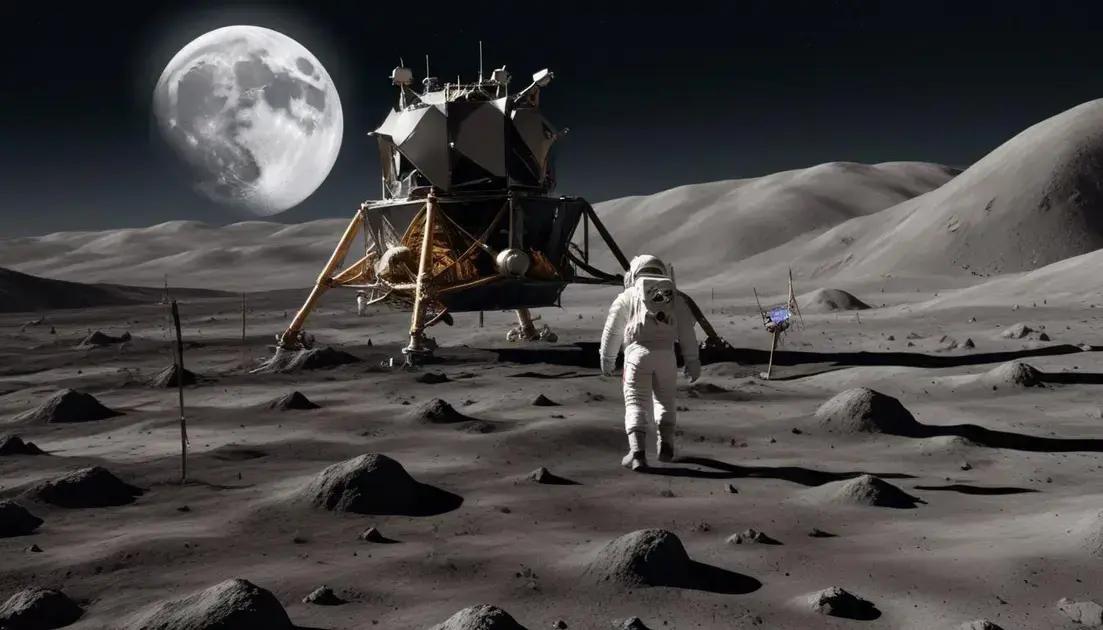
NASA: The Birth of the American Space Race
NASA has led the charge in space exploration since its founding in 1958, achieving significant milestones like the Apollo Moon landing and the development of the Space Shuttle. Through ambitious projects like Artemis, the agency aims to return humans to the Moon and explore Mars further. NASA’s legacy includes advancements in technology that benefit everyday life, alongside inspiring future generations to engage in science, technology, engineering, and math (STEM). The ongoing competition with other nations, particularly during the Space Race, has influenced American space strategy and fostered international collaborations in space exploration.
NASA has transformed the landscape of space exploration since its inception in 1958. With ambitious goals and innovative missions, this agency is a fascinating chapter in American history.
Introduction to NASA’s foundation and objectives
NASA was established in 1958 to lead America into the space age. The goal was to explore space and ensure the U.S. wasn’t left behind in the race with the Soviet Union. This agency quickly became a symbol of innovation and ambition.
From its very beginning, NASA focused on scientific research and technological advancements. The Space Race aimed to put humans on the Moon and explore beyond it. NASA engaged with scientists, engineers, and the public to build a strong foundation.
The first major mission was Project Mercury, which flew the first American astronauts into space. This program helped NASA learn how to manage human spaceflight. Following this, Project Gemini tested new techniques for space travel and paved the way for future missions.
Through its missions, NASA has achieved remarkable goals. Understanding Earth’s atmosphere and the solar system has been a priority. NASA’s goals include protecting our planet and exploring other worlds.
Today, NASA continues to serve as a leader in space exploration and technology. The agency seeks to inspire the next generation of explorers and scientists. By pushing boundaries, NASA helps improve life on Earth while discovering what lies beyond our planet.
Key missions and milestones
NASA has achieved many important missions since its founding. Each mission has brought new knowledge and technology to light. Project Apollo is one of the most famous. It landed the first humans on the Moon in 1969. Astronauts Neil Armstrong and Buzz Aldrin made history during Apollo 11.
Following Apollo, NASA launched Space Shuttle missions. These missions made space travel more routine. The Space Shuttle was used for 30 years, transporting astronauts and cargo to space.
Another major mission was the International Space Station (ISS). This ongoing project has brought countries together to study the effects of long-term space living. It helps scientists conduct experiments that benefit life on Earth.
Robotic missions also played a key role in NASA’s success. Rovers like Curiosity and Perseverance send back stunning images and data from Mars. Through these missions, we learn about the possibility of life on other planets.
NASA continues to push the boundaries. Current missions like Artemis aim to return humans to the Moon. This program sets the stage for future missions to Mars and beyond. Each mission builds on the lessons learned from past efforts, creating a path for exploration.
Impact on the American space strategy
The formation of NASA greatly impacted American space strategy. It shifted focus toward exploration and scientific research. By establishing clear goals, NASA shaped how the U.S. approached its role in space.
First, NASA aimed to beat the Soviets in the Space Race. Successes like landing on the Moon showcased American ingenuity. This victory boosted national pride and confidence.
Additionally, NASA’s work led to advances in technology. Many everyday products and innovations came from space research. Items like satellite navigation systems and weather forecasting rely on NASA’s efforts.
NASA also influenced international partnerships in space. By collaborating with other countries, the U.S. strengthened its position. Programs like the International Space Station (ISS) demonstrate teamwork across borders.
Another significant impact is on education and inspiration. NASA’s missions motivate young people to pursue careers in science and technology. This emphasis on STEM (science, technology, engineering, and math) is vital for future generations.
Overall, NASA’s influence extends beyond just space travel. It shaped American identity, advanced technology, and fostered global partnerships. These impacts continue to guide the U.S. in its future space endeavors.
Comparison with Soviet space efforts
NASA’s space efforts were shaped by competition with the Soviet Union. The Space Race began in the late 1950s and drove both nations to achieve incredible feats in space exploration.
The Soviets launched the first satellite, Sputnik, in 1957. This shocked the world and sparked U.S. fears of falling behind. In response, NASA was created to lead American efforts in space.
NASA’s early focus was on manned spaceflight. The first American in space was Alan Shepard, who flew in 1961. This was part of Project Mercury, which aimed to catch up to Soviet advancements.
The Soviets, however, had already sent the first human, Yuri Gagarin, into space in 1961. This further fueled NASA’s determination to succeed. In 1969, the U.S. achieved a significant milestone by landing on the Moon with Apollo 11.
While the U.S. focused on human spaceflight, the Soviets developed advances in robotic missions. They launched several uncrewed missions to explore the Moon and Venus. Their technological achievements were impressive, including the Luna program, which landed probes on the Moon.
Despite differences, both nations contributed to space science. The competition pushed boundaries, leading to numerous innovations. Today, we benefit from the advancements made during this intense era of exploration.
Legacy and future of space exploration
NASA’s legacy in space exploration is vast and inspiring. Since its creation, the agency has aimed to push the limits of what we can achieve beyond Earth. From the historic Moon landing to exploring Mars, NASA has set the stage for future discoveries.
One big part of NASA’s legacy is technology. Many inventions we use today stem from space research. For example, satellite technology helps with weather forecasting and GPS navigation.
Looking to the future, NASA is focusing on new missions. The Artemis program aims to return humans to the Moon. This mission will include the first woman and the next man on the lunar surface.
NASA also plans to explore Mars more thoroughly. The ongoing work with the Perseverance rover helps us learn about possible life on the Red Planet. Collecting samples now can lead to future missions that bring them back to Earth.
International collaboration is also part of the future. NASA works with other countries and private companies to advance space technology. Together, they can achieve more than one nation alone.
In addition, education remains a focus for NASA. By inspiring young people, the agency aims to foster the next generation of scientists and engineers. Programs encourage students to engage in STEM fields.
NASA’s impact on space exploration will continue for years to come. Our curiosity about the universe fuels the desire to explore, discover, and innovate.
Conclusion
In conclusion, NASA’s journey in space exploration has left a remarkable legacy. From landing on the Moon to sending rovers to Mars, these achievements inspire us all. The technology developed through these missions has changed our everyday lives, from GPS systems to weather forecasts.
Looking ahead, NASA is set to continue its groundbreaking work with new missions like Artemis. This program will not only return humans to the Moon but also prepare us for exploring Mars in greater depth. By collaborating with international partners and encouraging students in STEM, NASA aims to build a brighter future in space.
Every step of the way, NASA invites us to dream big and explore the unknown. The quest for knowledge and discovery is far from over, and it encourages everyone to imagine what lies beyond our planet. Ultimately, the future of space exploration holds endless possibilities that can benefit humanity as a whole.
Tags: