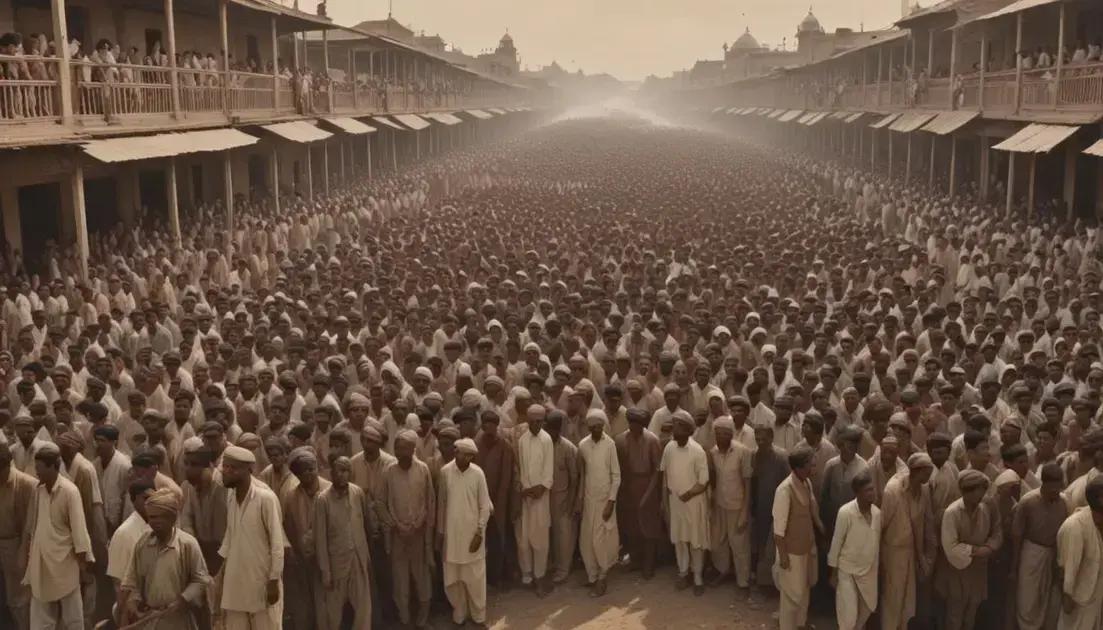
Partition of India: birth of nations, river of sorrow
The Partition of India in 1947 was a significant historical event that resulted in the division of the country into India and Pakistan. This led to widespread migration, violence, and profound societal changes, as millions of people moved across newly formed borders. The lasting impact includes heightened religious tensions, demographic shifts, and emotional scars on families. Understanding the personal stories of migration and loss is crucial for grasping the human side of this pivotal moment, as it shaped the identities and futures of both nations.
The Partition of India was a monumental event that reshaped the subcontinent forever. It sparked a wave of migration filled with tales of sorrow and hope. Dive in to discover more!
Introduction to the Partition of India
The Partition of India took place in 1947. It was a time of great change and upheaval. India was divided into two separate nations: India and Pakistan. This decision was made to resolve religious tensions between Hindus and Muslims. People were hopeful for a brighter future, but the reality was quite different.
During the partition, millions of people moved across new borders. They left their homes, seeking safety and belonging. Sadly, many faced violence and loss during this migration. Families were torn apart, and communities were disrupted.
This event forever changed the landscape of South Asia. It affected millions of lives and created ongoing conflicts that we still see today. Learning about the partition helps us understand the struggles and resilience of those who lived through it.
Historical Context: The Lead-up to Partition
Before the Partition of India, the country was home to many religions and cultures. Hindus and Muslims lived together but often faced tensions. These tensions grew in the 20th century. Political leaders saw the need for change.
In the 1930s, India struggled for independence from British rule. The Indian National Congress pushed for a united India. However, the All-India Muslim League wanted a separate nation for Muslims. This disagreement set the stage for what was to come.
As World War II ended, British control weakened. The British decided to leave India. Leaders debated how to create new boundaries. Some pushed for a united India, while others insisted on separation.
This division was not just political. It was also deeply personal. Families worried about their safety and future. Tensions rose as communities began to prepare for what lay ahead. The atmosphere was charged and uncertain.
Immediate Effects of the Partition
The Partition of India had immediate and dramatic effects. As soon as the borders were drawn, chaos erupted. Millions of people found themselves on the wrong side of the new lines. This led to massive migrations that sparked fear and uncertainty.
People rushed to leave their homes, looking for safety. Many experienced violence during this period. Families were separated, and communities were torn apart. Loved ones were lost amid the chaos. Histories and memories went with them too.
Additionally, there was an urgent need for resources like food and shelter. Refugee camps sprang up across the region. These camps were overcrowded and often lacked proper care and sanitation. People had to adapt quickly to their new realities.
The trauma from the partition left deep scars. The impact of this event is still felt today. Both India and Pakistan have been shaped by these experiences. Understanding them is crucial for grasping the history of the subcontinent.
Personal Stories of Migration and Loss
During the Partition of India, many personal stories emerged. These tales of migration and loss show the human side of history. Families were forced to leave their homes, seeking safety in a new land. Many left behind everything they knew.
For some, the journey was filled with hope. They dreamed of a better life in a new country. However, for others, it turned into a nightmare. Scenes of violence and chaos marked their path. Innocent lives were impacted by hatred and fear.
People recalled the moments when they had to say goodbye to friends and family. Some never saw their loved ones again. This deep loss created emotional scars. These stories remind us of the pain faced by many during this time.
Not everyone reached their destinations safely. Refugees often struggled without food or shelter. Despite the difficulties, many chose to keep moving forward. Their resilience is inspiring and showcases the strength of the human spirit.
Long-term Impacts on Indian Society
The Partition of India left lasting impacts on Indian society. Even decades later, the effects are felt. Communities were forever changed as people adapted to new identities. Families were separated, leading to generations of loss.
Socially, the divide created tensions between communities. Religious differences became more pronounced. Trust diminished, leading to ongoing conflicts. These issues still play a role in politics today.
The migration also affected demographics. Many regions saw shifts in population. Cities grew rapidly as people moved in. This urbanization brought new challenges, like housing and jobs.
Economically, the partition disrupted trade patterns. Some regions thrived while others struggled. New borders changed how businesses operated. This led to economic disparities that continue today.
Emotionally, the trauma from the partition has left scars. Many families carry the weight of their history. Sharing stories of loss and survival helps keep memories alive. Understanding these impacts is key to addressing the past.
Conclusion: Lessons Learned from the Partition
The Partition of India teaches us valuable lessons. It shows how divisions can lead to suffering and chaos. Understanding history helps prevent similar mistakes in the future. Compassion and dialogue are key to resolving conflicts.
We learn the importance of unity in diversity. Different cultures can coexist peacefully with respect and understanding. It reminds us that intolerance can have serious consequences.
Moreover, sharing stories of those affected is vital. Personal experiences bring history to life. They can help foster empathy and awareness in future generations. Remembering the past is crucial for shaping a better future.
Ultimately, the partition highlights the need for healing. Nations and communities should focus on reconciliation and healing. By learning from the past, we can build a more inclusive society.
Conclusion
In conclusion, the Partition of India is a significant event that teaches us many lessons. It reminds us that division can lead to pain and suffering for many people. By understanding the past, we can work towards preventing similar conflicts in the future.
Our experiences show us that embracing diversity is essential. Different cultures can enrich our society when we respect and learn from each other. Tolerance and openness to dialogue can help build strong, united communities.
Sharing stories of those who lived through the partition helps us connect with history. These personal accounts foster empathy and understanding among different generations. Remembering these lessons is crucial for creating a safer and more inclusive world.
Ultimately, the path to healing and reconciliation is vital. As we move forward, let’s focus on building bridges, not walls, and learn to work together for a brighter future.