Phoenicians: the sailors who connected the ancient world
The Phoenicians were ancient traders known for their vast trade networks and cultural influence throughout the Mediterranean. They contributed significantly to navigation, shipbuilding, and the development of the alphabet, which impacted many languages. Their rich exchanges of goods and ideas fostered connections between diverse cultures, leaving a lasting legacy that shaped the ancient world and contributed to the growth of cities like Carthage.
If you’ve ever wondered about the impact of the Phoenicians on the ancient world, you’re in for a treat! These remarkable sailors and traders were not just navigating the seas, but also weaving a rich tapestry of culture and commerce that still resonates today.
The Origins of the Phoenicians
The origins of the Phoenicians are quite fascinating. These ancient sailors lived in the region we now know as Lebanon. They spoke a unique language and had a culture rich in trade and exploration.
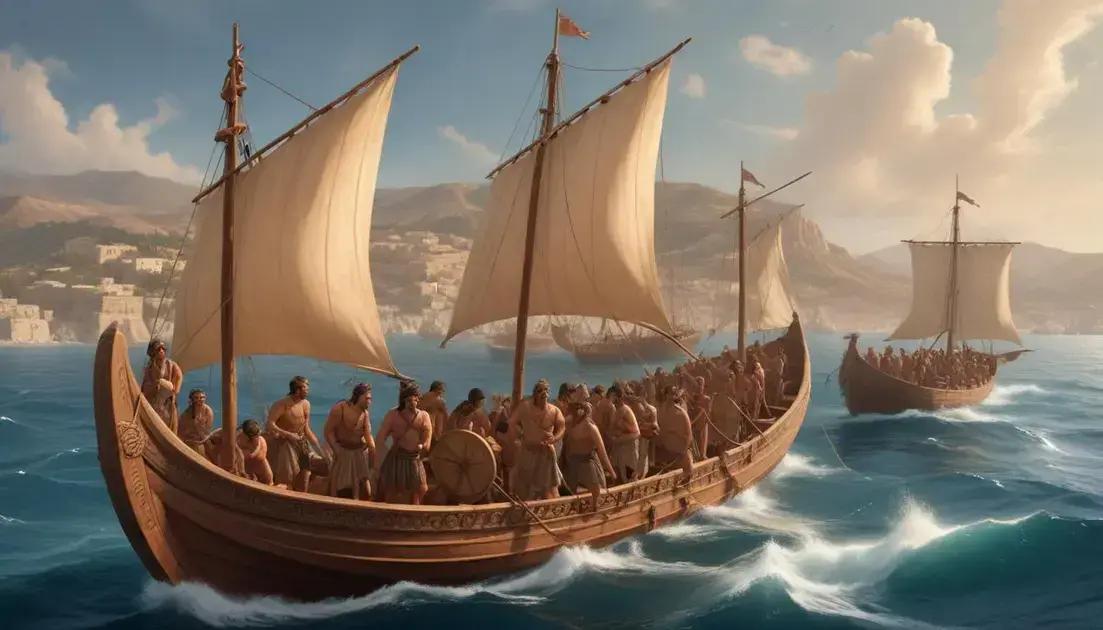
The Phoenicians were skilled shipbuilders. They created strong vessels that could sail far and wide. This helped them establish trade routes across the Mediterranean Sea. They interacted with many different cultures, sharing ideas and goods.
By living near the coastline, they took advantage of the sea for fishing and trade. They were among the first to develop the alphabet, making writing simpler and more accessible.
Another interesting fact is that the Phoenicians were also known for their dyeing skills. They produced a famous purple dye from shellfish, which was highly valued in ancient times.
The Phoenicians influenced many surrounding civilizations, including the Greeks and Romans. Their legacy continues in modern language and culture, illustrating how they shaped the ancient world.
Trade Networks Established by the Phoenicians
The trade networks established by the Phoenicians were impressive. These ancient traders connected many different regions around the Mediterranean. They sailed to places like Egypt, Greece, and even as far as Britain.
Phoenicians were masters at navigating the seas. They used the stars and their knowledge of the winds to travel far distances. Their ships were built for speed and cargo capacity.
They traded in valuable goods, including textiles, glass, and metals. One of their most famous products was purple dye, made from shellfish. This dye was highly prized and often used by royalty.
Through their trading activities, the Phoenicians helped spread ideas and culture. They introduced new goods to different lands. This exchange connected diverse peoples and fostered mutual understanding.
The Phoenicians also set up trading posts, which acted like mini-cities. These posts became bustling hubs where people exchanged goods and shared news. Their network not only supported commerce but also cultural exchange.
Cultural Exchange and Influence
The cultural exchange and influence of the Phoenicians played a huge role in shaping the ancient world. As they traveled and traded, they brought new ideas and customs to different regions. This helped create a rich tapestry of cultures across the Mediterranean.
Phoenicians shared their alphabet with others. This simplified writing and made communication easier. Their system influenced many languages, including Greek and Latin.
Along with writing, they exchanged art and religious beliefs. Phoenician designs can be seen in various artifacts around the Mediterranean. They blended ideas from various cultures, creating unique and vibrant works.
Their trade routes also allowed for the sharing of food and fashion. Ingredients and cooking methods spread from one culture to another. This led to diverse culinary practices that still exist today.
Through their connections, the Phoenicians contributed to the growth of cities. Places like Carthage became centers for trade and culture. This interaction fostered cooperation and understanding among different peoples.
Legacy of the Phoenicians in the Ancient World
The legacy of the Phoenicians in the ancient world is vast and lasting. They were pioneers in trade, culture, and communication. Their influence can still be felt today.
One major aspect of their legacy is the alphabet. The Phoenician alphabet was one of the first to use letters. This system simplified writing and spread to many other cultures, including the Greeks.
The Phoenicians also made significant advances in shipbuilding. Their strong and fast vessels improved trade and exploration. This led to greater connectivity among ancient civilizations.
Their trading networks established important cultural ties. They shared ideas, art, and technology across the Mediterranean. This exchange led to a richer cultural landscape in ancient times.
Cities like Carthage showcased their success. Carthage became a powerful trade hub and military force. Its influence reached across the seas, challenging other great powers of the time.
Today, we still see their impact in language, navigation, and commerce. The Phoenicians set the stage for future generations, shaping how we trade and communicate.
Conclusion
In summary, the Phoenicians had a profound impact on the ancient world. Their innovations in trade, communication, and culture laid the groundwork for many modern practices. By developing a phonetic alphabet, they made writing accessible and set the stage for future civilizations.
Additionally, their advanced shipbuilding techniques and vast trade networks connected various cultures. This exchange of ideas and goods fostered a greater understanding among people of different backgrounds.
Today, we still feel the influence of the Phoenicians in our language, trade practices, and navigation methods. Their legacy is a testament to how one culture can shape the course of history and connect humanity. Recognizing their contributions helps us appreciate the rich tapestry of our shared past.