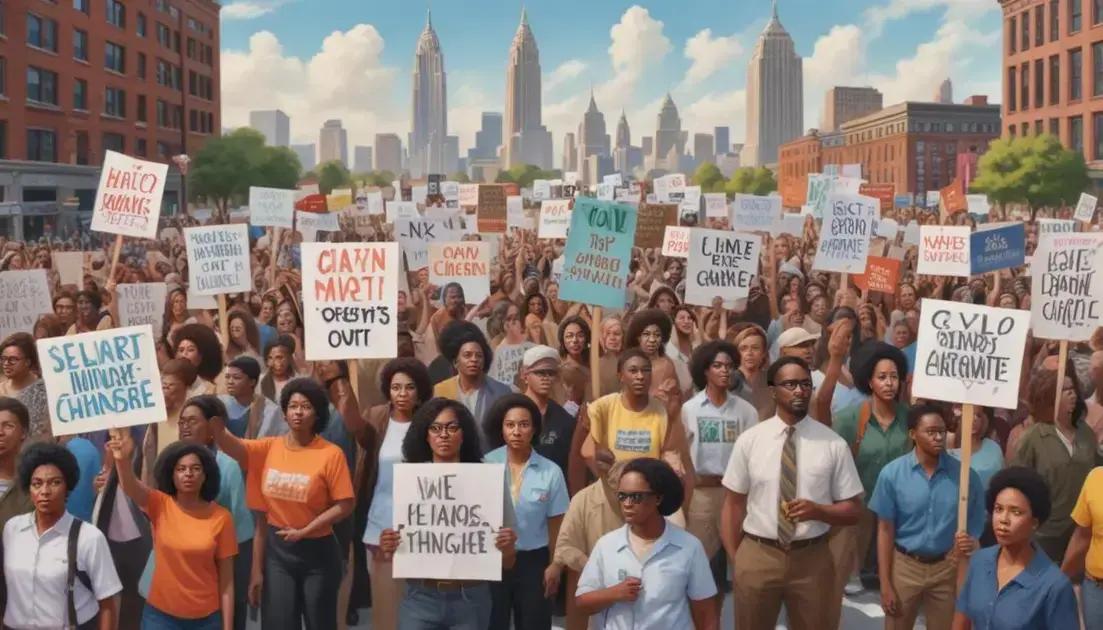
Protests that reshaped U.S. politics and identity
The future of activism in the U.S. is shaped by young leaders and modern technology. It emphasizes inclusivity, collaboration, and education, empowering diverse voices to unite for social change. Activists utilize social media to spread awareness and organize events efficiently, making their movements more impactful and engaging larger communities in the fight for equality and justice.
Activism, a vital force in shaping our world, has played a critical role in history. In fact, activism has redefined U.S. politics and identity time and again. Curious about its journey? Let’s dive in!
The impact of the Civil Rights Movement
The Civil Rights Movement was a huge part of American history. It fought against unfair laws and showed the power of peaceful protest. Protests brought attention to issues like racism and injustice. People from all walks of life joined together, demanding change.
Key Events
Some important events, like the March on Washington, helped rally support. Martin Luther King Jr. gave his famous “I Have a Dream” speech there. This moment inspired many to keep fighting for equality.
Impact on Legislation
The movement led to major laws, like the Civil Rights Act of 1964. This law made discrimination illegal in many areas, such as jobs and schools. It opened doors for many African Americans who faced barriers.
Lasting Change
Today, the Civil Rights Movement’s influence is still visible. Social justice movements continue to draw inspiration from its goals and methods. The fight for equality goes on, echoing the courage and dedication of those early activists.
People now recognize the importance of standing up for their rights, just as those before them did. Understanding this history reminds us that activism can lead to real change. It’s a call to keep the spirit of the movement alive.
Climate activism and its significance
Climate activism is becoming more important every day. It’s a way for people to demand action on climate change. Many activists believe that we must protect our planet for future generations. They raise awareness about issues related to pollution, deforestation, and rising temperatures.
Recent Movements
Groups like Fridays for Future have inspired students worldwide to join the fight. Young people are leading the way, calling for change and urging leaders to listen. Their voices matter, and they show that everyone can make a difference.
Effects of Climate Change
We see the effects of climate change all around us. Extreme weather, like heat waves and storms, is becoming more common. Activists work to educate others about these issues and encourage sustainable practices.
Taking Action
Climate activists hold rallies, write petitions, and use social media to spread their message. Many also focus on personal choices, like reducing waste or using public transport. Every small step can contribute to a larger effort to protect the Earth.
By staying informed and engaged, we can all play a part in the climate movement. Supporting local initiatives and making eco-friendly choices can help create a healthier planet.
Recent protests and their influence on policy
Recent protests have made a big impact on policy changes across the country. People are speaking up about issues that matter most to them. Protests are a powerful way to show that communities care and demand action.
Examples of Recent Protests
For instance, the Black Lives Matter protests highlighted systemic racism and police brutality. These events sparked national conversations and led to new policies in some cities. Activists are using their voices to push for change.
Influencing Legislation
Many lawmakers are paying attention to the voices of protesters. They realize that public opinion can shape the laws we live by. New bills are being proposed in response to demands for justice and equality. This connection between protests and policy is key to making real change.
Community Engagement
Protests bring together different groups of people. They encourage communities to engage in discussions and take action. Many participants feel empowered and continue their efforts through voting and grassroots organizing. This activism fosters a spirit of involvement in local issues.
More than just events, these protests create a ripple effect. They remind us that change is possible when people unite for a common cause. By staying active and raising our voices, we can keep the momentum going for important policy changes.
The role of social media in movements
Social media plays a key role in modern movements. It’s a powerful tool for sharing ideas and mobilizing support. Today, people can connect instantly, no matter where they are. This allows movements to grow quickly and reach many more people.
Spreading the Message
Platforms like Twitter, Facebook, and Instagram help spread important messages fast. Activists share stories, videos, and images to raise awareness. By using hashtags, they can unite voices and create trends that grab attention.
Organizing Events
Social media also helps in organizing events like protests or rallies. Activists can invite supporters, share details, and update them about changes. This direct communication keeps everyone informed and engaged.
Building Communities
Through social media, people find communities that share their beliefs. These online spaces let individuals connect and support one another. Participants feel less isolated and more motivated to take action.
Additionally, social media allows for questions and discussions. Supporters can share their thoughts and strategies. This helps movements refine their goals and adapt to new challenges.
Overall, social media is vital for contemporary activism. It boosts visibility, aids organization, and fosters community. By connecting people with similar goals, it strengthens movements and encourages change.
Future of activism in the U.S.
The future of activism in the U.S. looks bright and full of energy. Many young people are stepping up to lead causes they care about. From climate change to social justice, their voices are powerful. They understand the importance of getting involved.
New Tools and Technology
Activists are using new tools to spread their message. Social media and online platforms help them connect with others. This makes it easier to organize events and share information. Technology allows for quick updates, keeping everyone in the loop.
Focus on Inclusivity
The future also emphasizes inclusivity in movements. Activists work to uplift diverse voices. Everyone’s story matters, and each experience shapes the cause. By including different perspectives, movements become stronger and more effective.
Building Coalitions
Collaboration among various groups is key for future activism. Partnering can amplify efforts and reach wider audiences. These coalitions can tackle complex issues together. When united, their impact grows significantly.
Finally, education will play a big role in activism’s future. Leaders aim to inform others about important issues. Teaching people about their rights encourages participation. The more informed the public, the more effective the activism.
Conclusion
In conclusion, activism continues to evolve in the U.S., shaped by new voices and modern tools. The rise of young leaders brings fresh energy to important issues, from climate change to social justice. By using social media and technology, activists can connect and organize quickly, making their messages heard.
Inclusivity and collaboration are key for future movements. Each voice, background, and story adds strength to the cause. By working together, activists can tackle complex challenges and drive positive change. Education will also play a vital role, empowering more people to participate and understand their rights.
As we look ahead, the future of activism is bright. It promises to be dynamic and impactful, engaging more people in the fight for fairness and equality. Together, with determination and new strategies, we can build a better future for everyone.