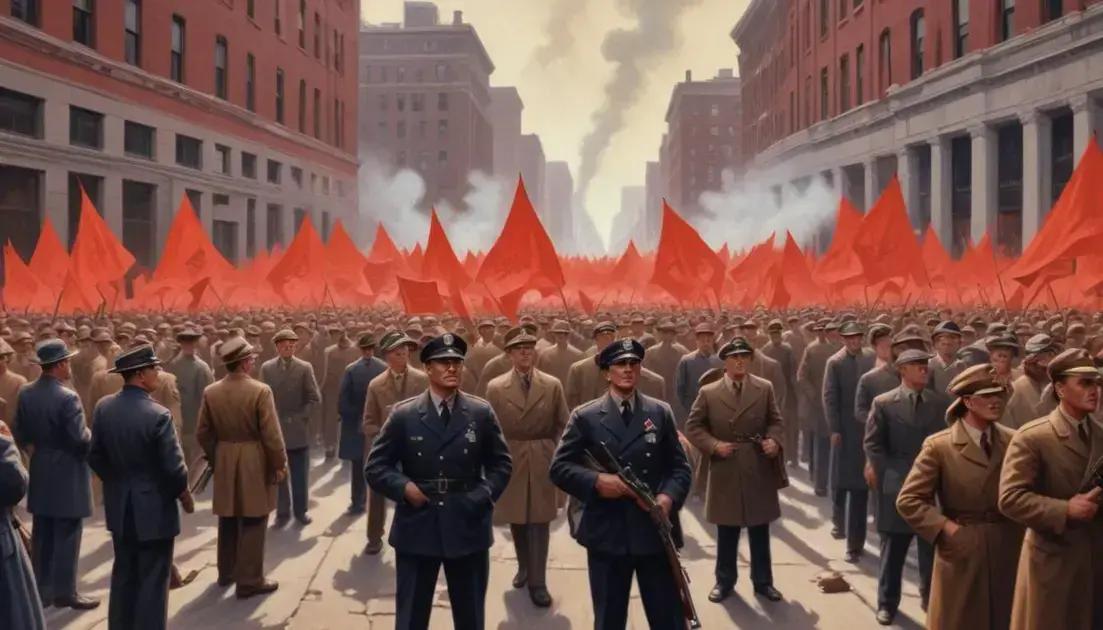
Red Scare: Fear and Paranoia in Postwar America
The Red Scare was a significant period in American history marked by intense fear of communism. This led to widespread suspicion, political repression, and drastic cultural changes. Key figures like Senator McCarthy influenced anti-communist sentiment, while legislation increased government surveillance and targeted suspected communists. The era reshaped politics, resulted in social unrest, and left a lasting legacy on American society by highlighting the dangers of fear-driven policies.
Red Scare was more than just a tension-filled period; it was a transformative era in postwar America. What were the real implications behind the fear and paranoia?
The Rise of Anti-Communism
The rise of anti-communism in America marked a significant period in history. After World War II, many people feared the spread of communism. This fear influenced politics, culture, and daily life.
Public Fear and Government Response
As communism gained popularity in other countries, many Americans worried about its impact. The government acted quickly to curb the perceived threat. This response included investigations and loyalty programs that targeted suspected communists.
Key Figures in the Anti-Communism Movement
Important figures, like Senator Joseph McCarthy, became symbols of this period. McCarthy’s aggressive tactics led to public hearings and countless accusations against people in government and entertainment.
Media’s Role in Shaping Perception
The media played a big role in spreading anti-communist sentiment. Television shows and films often portrayed communism in a negative light, reinforcing public fears.
Impact on American Society
This era created an environment of suspicion. Many people lost their jobs and reputations due to false allegations. The social fabric of America shifted as people became wary of their neighbors.
Lasting Effects of the Red Scare
The fear of communism left a lasting mark. It shaped politics and influenced laws for years to come. Today, the legacy of this era serves as a reminder of the dangers of fear-driven policies.
Key Figures and Events
During the Red Scare, several key figures shaped the events that unfolded. These individuals played significant roles in spreading fear and influencing public opinion.
Senator Joseph McCarthy
Senator McCarthy became the face of the anti-communism movement. His aggressive tactics led to numerous hearings where many were accused without proper evidence. This created a climate of fear and distrust.
Alger Hiss and the Chambers Case
Alger Hiss was a prominent government official accused of being a spy for the Soviet Union. His case drew much attention and highlighted the paranoia of the time. Whittaker Chambers, a former communist, played a crucial role in exposing Hiss.
FBI and J. Edgar Hoover
The FBI, led by J. Edgar Hoover, vigorously pursued suspected communists. Hoover’s tactics often included surveillance and intimidation. This further escalated the atmosphere of fear across the nation.
Hollywood Blacklist
Many in Hollywood faced blacklisting due to alleged communist ties. Writers, directors, and actors were unable to find work. The blacklist harmed careers and highlighted the reach of anti-communism into American culture.
Impact of McCarthyism
McCarthyism is the term used to describe the intense anti-communist sentiment during this period. It affected politics, law, and everyday life. Many innocent lives were altered due to unfounded accusations.
Impact on American Society
The impact on American society during the Red Scare was profound. Fear and suspicion changed many aspects of everyday life.
Culture of Fear
Communism became a common topic in conversations. Americans were cautious about what they said, fearing accusations. This created a culture where people did not trust one another.
Impacts on Employment
Many lost their jobs due to accusations of being communists. The Hollywood Blacklist is a prime example. Writers and actors were unable to work due to their supposed ties to communism.
Influence on Politics
Politicians used anti-communism to gain support. Many passed laws aimed at rooting out suspected communists. This led to a political climate filled with tension.
Education and Academia
Schools and universities felt the effects, too. Teachers were often questioned about their political beliefs. Some were even dismissed from their positions based on vague allegations.
Long-term Changes
The Red Scare left a lasting mark on American culture. Even decades later, the fear of communism influenced policies and attitudes. People remain aware of how fear can shape society.
Political Repercussions
The political repercussions of the Red Scare were significant and far-reaching. This period reshaped American politics in many ways.
Rise of Conservatism
Anti-communism fueled a conservative wave in politics. Many voters supported candidates who promised to fight communism. This led to a shift in political power.
Legislation Targeting Communism
Several laws were created to combat the perceived threat of communism. The Smith Act made it a crime to advocate for violent overthrow of the government. This law affected numerous activists.
Increased Government Surveillance
Government agencies expanded their powers during this time. The FBI, under J. Edgar Hoover, conducted widespread surveillance on suspected communists. Many lives were disrupted by these actions.
McCarthyism’s Legacy
McCarthyism became synonymous with political repression. It created a climate where fear stifled free speech. People feared speaking out against government actions.
Long-term Effects on Trust in Government
The Red Scare led to lasting distrust in government institutions. Many citizens became skeptical of political motives. This skepticism remains relevant in discussions about government overreach today.
Cultural Reflections
The cultural reflections during the Red Scare era were profound. Art, literature, and media all responded to the dominant fears of the time.
Film and Television
Movies and TV shows often portrayed communism as a villain. Many films featured plots about spies and government conspiracies. These stories captured public anxiety and shaped perceptions of the enemy.
Literary Works
Writers began addressing themes of paranoia and distrust. Books described the struggles of individuals facing accusations. These narratives resonated with many people in society.
Music and Art
Music from the era often reflected the chaos around. Songs about freedom and fear emerged. Artists depicted feelings of oppression and concerns about civil liberties in their work.
Public Sentiment and Activism
Many activists spoke out against the effects of anti-communism. They feared for civil rights and personal freedoms. Groups formed to challenge government actions that seemed unjust.
Legacy of Cultural Reflection
The cultural impact of the Red Scare is felt even today. Media still reflects themes of fear and paranoia in various ways. Society learns from this past, recognizing the importance of vigilance in protecting freedoms.
Conclusion
In conclusion, the Red Scare had a lasting impact on American society, politics, and culture. The fear of communism shaped how people interacted and influenced many aspects of everyday life. From movies and literature to political actions, the echoes of this period can still be seen today.
Understanding the effects of the Red Scare reminds us of the importance of protecting civil liberties. It speaks to the dangers of letting fear dictate our actions. As we reflect on this time, we should strive to ensure that such a climate never returns. Awareness and open dialogue are essential for a healthy democracy.