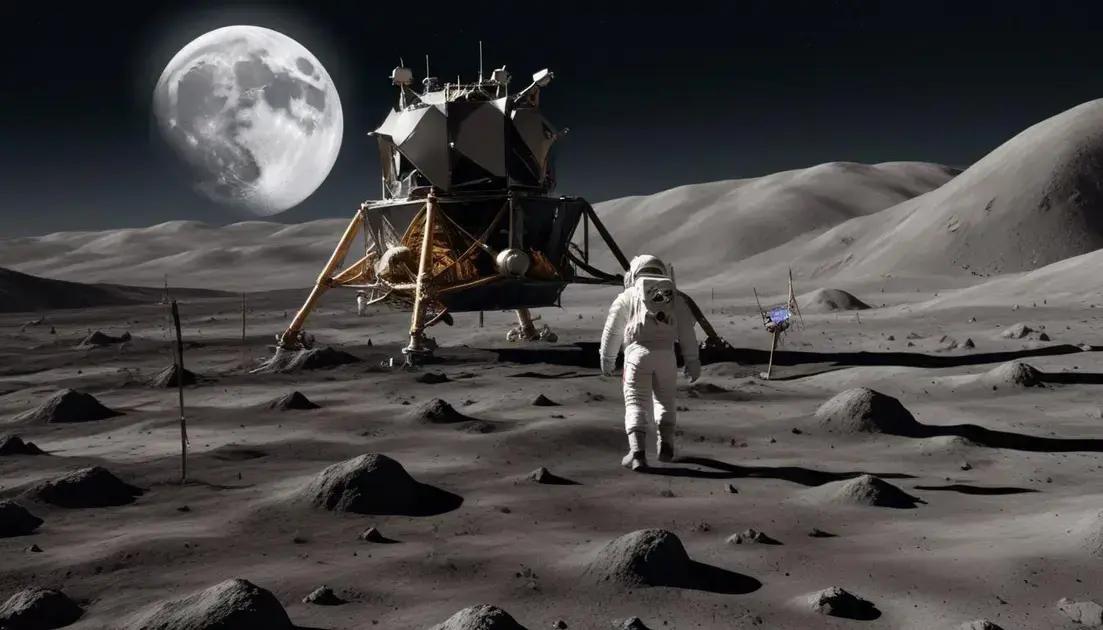
Skylab: America’s First Home in Space
Skylab was America’s first space station, launched in 1973, and played a crucial role in advancing space exploration. It demonstrated that astronauts could live and work in space for extended periods, conducting valuable scientific experiments that shaped future missions. Skylab’s technological innovations, like advanced life support systems and solar observation tools, laid the groundwork for subsequent space stations, including the International Space Station (ISS). The successes and challenges faced by Skylab crews provided essential insights into human health in microgravity and inspired generations to pursue careers in space science.
Skylab was America’s first home in space, paving the way for human habitation beyond Earth. Join us as we explore its significance and legacy!
Introduction to Skylab
Skylab was a groundbreaking project for NASA. Launched in 1973, it was the United States’ first space station. Skylab allowed astronauts to live and work in space for extended periods. They conducted various experiments and gathered vital data about life in space.
During its missions, Skylab housed three different crews. These astronauts spent up to 84 days in space! They studied everything from solar observations to medical experiments.
One of the exciting parts of Skylab was that it helped us learn how to adapt in space. Astronauts had to exercise daily and follow strict routines to stay healthy. This was crucial for future missions, like those to the International Space Station.
Skylab also faced challenges. It came close to falling back to Earth after malfunctioning solar panels. But thanks to quick thinking and hard work, teams on the ground fixed the issues. They sent astronauts on a rescue mission to help repair Skylab.
Overall, Skylab was a fantastic first step for America in space exploration. It paved the way for much of what we know about living in space today!
Historical Context
The historical context surrounding Skylab is fascinating. In the early 1960s, the space race pushed the U.S. and Soviet Union to excel in space technology. America wanted to show its strength in science and exploration. The Apollo missions made significant strides, landing astronauts on the moon.
After Apollo, NASA realized it needed a way to continue its research. That’s when the idea for Skylab emerged. It offered a unique opportunity to study life in space over longer periods. Skylab was born from this vision and ambition.
Launching Skylab symbolized a new chapter in American space efforts. It was a response to the demands for continuous human presence in space. The station also aimed to conduct scientific experiments that couldn’t be done on Earth.
Skylab’s first launch took place on May 14, 1973. It came during a time when the nation was preparing to explore and utilize space more effectively. Skylab allowed scientists to conduct experiments about Earth’s solar system.
As Skylab operated, it played a key role in shaping future missions. It showcased the potential for space stations that could support long-term human habitation. The knowledge and experience gained from Skylab laid the groundwork for later stations, including the International Space Station.
Technological Innovations
Technological innovations were a huge part of Skylab’s success. The space station introduced new tools and techniques for living in space. One key innovation was its unique design. Skylab combined the features of different spacecraft into one efficient unit.
Skylab had large solar panels that provided power. These panels helped astronauts to perform a variety of experiments and keep the station running. They were crucial for the long mission periods.
Another important tech was the airlock system. It allowed astronauts to exit and enter safely. This was essential for performing spacewalks to fix equipment or conduct research.
The station also used advanced scientific instruments. These tools helped astronauts study the sun and view Earth from space. For instance, the Apollo Telescope Mount enabled detailed solar observations.
Communications were improved too. Skylab had better systems for talking with mission control. This made it easier to share findings and receive instructions during missions.
All these innovations played a big role in making Skylab a pioneer in space exploration. They helped scientists gather valuable information about living and working in space.
Crewed Missions
Crewed missions played a vital role in Skylab’s success. Three different crews visited Skylab, and each had its unique tasks. The first group launched on May 14, 1973. They spent 28 days aboard the station, conducting important research and tests.
During these missions, astronauts focused on various experiments. For example, they studied the sun using Skylab’s solar telescope. This work helped us understand more about solar activity that affects Earth.
The second crew arrived in July 1973. They spent 59 days in space and pushed the limits of living aboard Skylab. This crew explored space food and everyday activities in microgravity.
Another interesting aspect was their exercise routine. Astronauts had to stay fit while floating in space. They used special machines to work out, which were crucial for their health.
The final crew reached Skylab in November 1973. They spent 84 days on the station, setting a record at that time. Their long stay helped scientists learn about the effects of extended weightlessness on the body.
All these crewed missions provided valuable data. They not only proved humans could live in space but also prepared us for future exploration.
Impact on Future Space Exploration
The impact on future space exploration from Skylab is significant. This space station showed that humans could live and work in space for long periods. Its successes paved the way for future projects.
Skylab’s missions provided a wealth of information. Scientists learned a lot about how the human body reacts to weightlessness. This knowledge is crucial for long-duration missions to Mars or beyond.
The experiments conducted on Skylab also helped shape future technology. Innovations in life support systems and habitats evolved from Skylab’s experiences. These advancements are now key components in designing space habitats for upcoming missions.
Moreover, Skylab set the stage for international cooperation in space. The collaboration and findings from Skylab laid a foundation for the later International Space Station (ISS). It showed the world the benefits of working together in space exploration.
Finally, Skylab inspired a generation of astronauts and scientists. Its achievements motivated people to pursue careers in aerospace and related fields. Skylab’s legacy continues to influence current and future space programs.
Conclusion
Skylab marked a pivotal moment in our quest for space exploration. It was America’s first space station, and its impact is still felt today. The lessons learned from its missions helped shape the future.
From understanding how humans adapt to living in space to developing new technologies, Skylab provided key insights. These findings were not only vital for future missions but also for international collaboration in space.
Skylab’s legacy continues to inspire and influence today’s space programs. As we look forward to new horizons, the spirit of Skylab lives on.
Conclusion
In conclusion, Skylab was a significant milestone for space exploration. It taught us valuable lessons about living and working in space. The experiments and data collected from Skylab’s missions helped shape future space projects.
Thanks to Skylab, we now understand how to support astronauts on long missions. Its innovations have inspired advancements in technology and international cooperation in space. As we continue to explore the stars, the spirit of Skylab remains strong.
Looking ahead, the knowledge gained from Skylab will influence future missions to the Moon, Mars, and beyond. Skylab truly opened the door to a new era of human space exploration.
Tags: