Soviet architecture: monumental dreams and decay
Soviet architecture is known for its bold designs and cultural significance. Key styles include constructivism, Stalinist architecture, and brutalism, all reflecting the socio-political context of the time. Famous examples, like the Seven Sisters and VDNH, showcase both grandeur and functionality. Today, many Soviet buildings are facing decay, but preservation efforts are underway to protect these historical structures. Understanding their impact helps us appreciate the rich legacy of Soviet architecture and its role in shaping modern cities.
Soviet architecture weaves a narrative of ambition and artistic expression, marking the relentless rise and fall of monumental dreams.
Introduction to Soviet Architecture
Soviet architecture is more than just buildings. It is a reflection of a unique period in history. From the grand designs of public spaces to the stark, practical housing blocks, this architecture tells a story. It reveals the ambitions and ideals of a society striving for greatness.
Many structures were designed to inspire awe. They marked the power and achievements of the Soviet state. For example, consider the iconic Palace of Soviets. Though it was never built, its design represents the dreams of Soviet leaders.
Another example is the VDNH, a massive exhibition center showcasing Soviet successes in agriculture, technology, and science. Its grand pavilions reflect both beauty and functionality.
In the urban landscape, industrial buildings also share important histories. Factories and warehouses, while less decorative, play vital roles in the economy. They show how architecture can blend purpose with style.
During the Soviet era, architects faced challenges. They were often tasked with creating functional spaces within strict guidelines. This led to a mix of styles, from neoclassical to modernist approaches. These variations add character to Soviet cities, making them unique.
Today, many buildings face change. Some are being restored, blending learning from the past with the needs of the present. Others, unfortunately, are falling into decay. Understanding this architecture helps us appreciate the bold dreams of a past era.
Key Characteristics and Styles
Key characteristics of Soviet architecture reflect its historical and cultural context. These buildings often showcase bold designs and grand scales. Large structures symbolize the ambitions of the Soviet state.
One main style is constructivism. This style emerged in the 1920s. It focused on functional designs that served social needs. Constructivist buildings often feature simple shapes and practical materials.
On the other hand, Stalinist architecture brought a different approach. This style became popular during the 1930s. It showcased opulence and grandeur, with elaborate decorations. Common features include tall structures and beautiful facades.
Another important characteristic is the use of brutalism. This style emphasizes raw concrete and imposing forms. Buildings in this style often look heavy and strong. Brutalism reflects a sense of power and stability.
Soviet architecture also includes socialist realism. This style aimed to inspire the public with themes of everyday life and heroism. Buildings often include murals and sculptures. They celebrate Soviet ideals and values.
Lastly, many Soviet buildings integrated green spaces. Parks and public squares were common, promoting community interaction. These spaces break the monotony of urban life and provide a place for relaxation.
Impact of Historical Context
The impact of historical context on Soviet architecture is significant. It shaped the design and purpose of many buildings. Each structure reflects the ideals and challenges of its time.
The Russian Revolution of 1917 sparked a wave of creativity. Architects wanted to showcase the new social order. They aimed for designs that represented equality and community. This led to the rise of constructivism, emphasizing functionality and modern materials.
During the 1920s and 30s, the focus shifted. As Stalin gained power, architecture reflected his vision. Stalinist architecture became grand and opulent. It aimed to impress and intimidate, showing the power of the state.
World War II also influenced architecture. Many cities faced destruction, leading to a need for rapid rebuilding. Architects used simple designs and durable materials to create effective housing quickly.
During the Cold War, the architectural style changed again. Buildings began to symbolize ideological battles. The West viewed these structures as representations of oppression. In contrast, the Soviets highlighted their strength and resilience.
After the collapse of the Soviet Union, attitudes shifted again. There was a renewed interest in preserving historic buildings. Many structures are now seen as cultural treasures, representing a complex history.
Famous Examples of Soviet Architecture
There are many famous examples of Soviet architecture that showcase its unique style. These buildings tell the story of a nation’s ambitions and creativity.
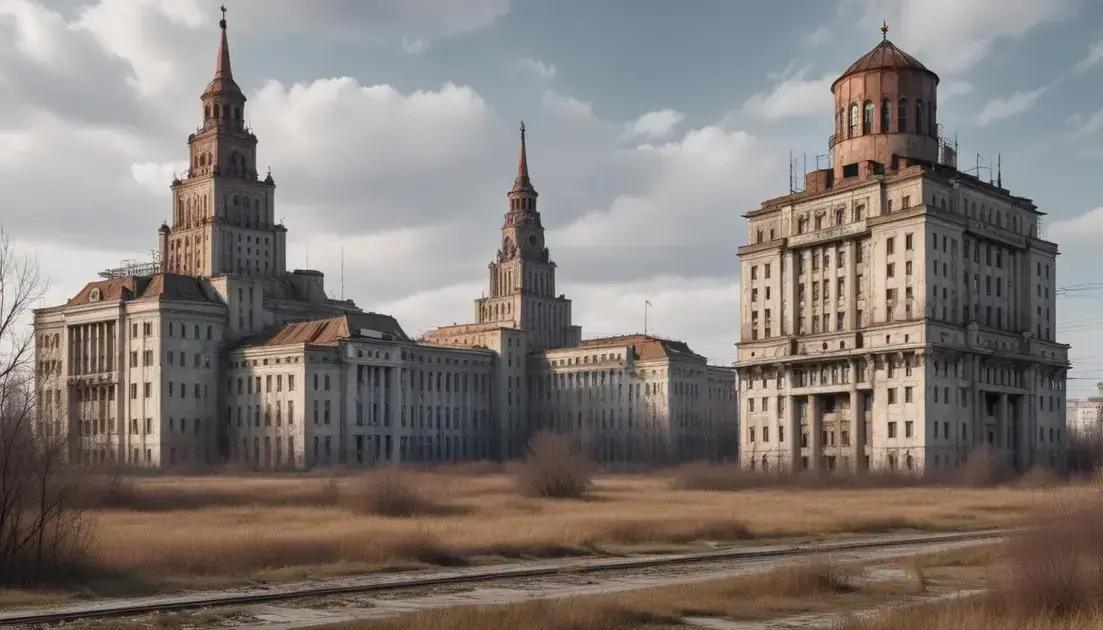
One iconic structure is the Seven Sisters, a group of skyscrapers built in Moscow. They combine Gothic and classical designs with a Soviet twist. Each building has its own unique features, but they share a majestic look.
The Palace of Soviets was another notable project, even though it was never completed. Designed to be the tallest building in the world, its concept symbolized Soviet ambition. Today, it remains a powerful image of what could have been.
Another important site is the VDNH, or the Exhibition of Achievements of National Economy. This vast exhibition center showcases many pavilions, each celebrating different aspects of Soviet life. Its architecture blends styles and reflects national pride.
The Sparrow Hills in Moscow offer stunning views and are home to Lomonosov Moscow State University. This university building is famous for its impressive height and elaborate design. It stands as a testament to Soviet educational ideals and architectural skill.
Don’t forget about Khrushchyovkas, the mass-produced apartment blocks. They symbolize Soviet efforts to provide affordable housing. While simple in design, they play an important role in the history of urban living.
Decay and Preservation Today
Decay and preservation today is a pressing issue for many Soviet-era buildings. Over time, these structures have faced neglect and damage. Weather, pollution, and lack of maintenance have taken their toll.
Many buildings show visible signs of decay. Crumbling facades and rusted metal are common sights. This reflects a broader struggle to maintain historical architecture.
However, there’s also a growing movement towards preservation. Many people recognize these buildings as cultural landmarks. They represent a unique period in history that deserves to be remembered.
Restoration projects are underway in several cities. These efforts involve cleaning, repairing, and sometimes modernizing features to keep them usable. This balance between maintaining history and ensuring functionality is crucial.
Support from local communities plays a key role in these efforts. Heritage groups often organize campaigns to raise awareness. They help educate the public about the importance of preserving Soviet architecture.
Some cities have even created laws to protect these buildings. This legal framework helps ensure that significant structures can be preserved for future generations. It encourages thoughtful restoration rather than demolition.
Overall, each restored building tells a story. It reminds us of the past and connects us to history. As more people become aware, the hope is that these legacies will continue to thrive.
Conclusion: Reflecting on the Legacy
Reflecting on the legacy of Soviet architecture reveals much about history. These buildings tell stories of ambition, creativity, and sometimes struggle. Each structure has its unique tale and meaning in the urban landscape.
Many people view Soviet architecture with mixed feelings. Some see it as a symbol of oppression, while others appreciate the artistry and scale. This dual perspective adds depth to understanding the era.
Today, preservation efforts highlight the importance of these buildings. As we restore and maintain them, we honor the past. This also helps future generations learn from history.
Moreover, visiting these sites allows us to connect with a significant period in time. They offer insights into daily life, values, and beliefs of the Soviet era.
As we appreciate these structures, it’s essential to acknowledge their cultural significance. They shape our cities and communities, reminding us of a unique story that deserves to be told.
Conclusion
In conclusion, reflecting on Soviet architecture reveals its lasting impact on our world. These buildings tell stories of ambition, dreams, and challenges. They are reminders of a unique time in history, showcasing both creativity and resilience.
Preserving these structures is crucial. It not only honors the past but also connects us to our shared cultural heritage. By valuing and maintaining them, we help future generations understand the legacies of those who came before.
As we explore these architectural wonders, we gain insight into the lives and values of people from the Soviet era. Each building carries its own significance, making our cities richer in history and meaning. Ultimately, appreciating and preserving these structures allows us to celebrate and learn from the past in a meaningful way.