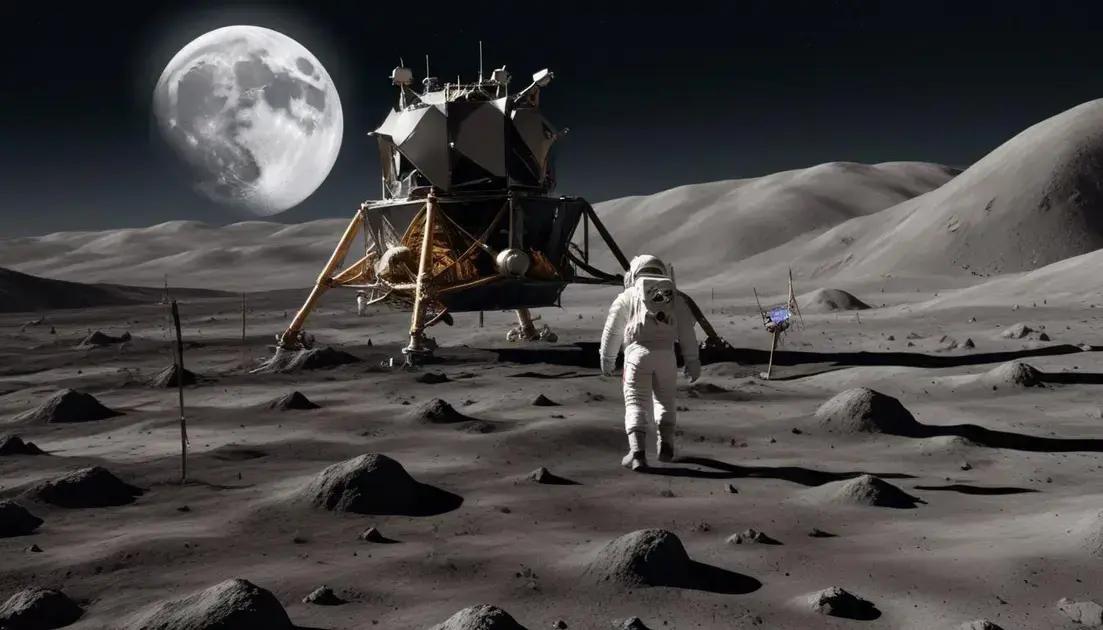
The Apollo Program: America’s greatest adventure
The Apollo Program significantly advanced technology and inspired generations through its lunar missions, showcasing the power of teamwork in exploration. It promoted interest in STEM fields, leading to countless innovations in science and engineering. The cultural impact of the Apollo missions remains evident today, as they continue to influence global cooperation in space exploration and ignite curiosity about our universe.
The Apollo Program not only defined a generation but pushed humanity to explore the unknown. Ready to relive this incredible journey? Let’s dive in!
Introduction to the Apollo Program
The Apollo Program was a series of space missions that changed how we view our universe. Launched by NASA in the 1960s, it aimed to land humans on the Moon and bring them safely back to Earth. This program not only achieved great technological feats, but also inspired millions around the world.
One of the program’s biggest moments was Apollo 11. On July 20, 1969, Neil Armstrong became the first person to walk on the Moon. He stepped onto the lunar surface and said, “That’s one small step for man, one giant leap for mankind.” This moment marked a high point in human exploration.
In total, there were six successful manned missions to the Moon. Each mission built on the lessons learned from the last, helping to improve safety and technology. The Apollo spacecraft included strong rockets and advanced navigation systems.
The program wasn’t just about landing on the Moon. It also helped advance science and technology. Many inventions we use today came from this era, like improved materials and computer technology used in everyday items.
What’s fascinating is how the Apollo Program united people. It showed what humanity can achieve when we work together. The images of astronauts on the Moon inspired generations, making people dream bigger.
Today, we still feel the Apollo Program’s impact. It opened the door for future space exploration and taught us about our place in the cosmos. Understanding where we came from can help us imagine where we’re headed next.
Key Missions and Achievements
The Apollo Program included many key missions that shaped space exploration. Each mission had unique goals and achieved amazing milestones in technology and science. Let’s take a closer look at some of the most important missions.
Apollo 1 was meant to be the first manned launch. Sadly, it ended in tragedy when a fire broke out during a test. This taught NASA important safety lessons that improved later missions.
Apollo 7, launched in 1968, was the first successful crewed flight. It orbited Earth for 11 days, testing spacecraft systems. The crew showed that humans could live and work in space.
Apollo 8 made history as the first mission to take humans to the Moon’s orbit. The crew captured stunning photos of Earth and the lunar surface. This mission helped build excitement for a lunar landing.
Apollo 11 is the most famous mission, as Neil Armstrong became the first person to walk on the Moon. This mission fulfilled President John F. Kennedy’s goal of landing a man on the Moon by the end of the 1960s.
Apollo 13 faced a serious crisis when an oxygen tank exploded. The team showed incredible bravery and teamwork to bring the astronauts back safely. They turned a potential disaster into a successful failure.
Apollo 17 was the last mission in the Apollo Program. The crew conducted extensive science experiments and brought back many lunar samples. This mission showcased what could be done with proper planning and technology.
These missions helped NASA develop critical technologies. They also inspired generations to come, highlighting the power of teamwork and perseverance in the face of challenges.
The Science Behind the Space Race
The Space Race was a thrilling time in history. It was a competition between the United States and the Soviet Union to explore space. This race led to many important scientific discoveries and technological advancements.
The desire to explore space came from the Cold War tensions. Each country wanted to prove its superiority. This drove them to invest heavily in their space programs.
Rocket Technology played a big role in space travel. The U.S. used the Saturn V rocket for Apollo missions. This massive rocket was powerful enough to send astronauts to the Moon. In contrast, the Soviet Union developed the R7 rocket, which launched the first satellite into space.
Scientific Research was another major focus. Scientists studied how space travel affected the human body. They learned about zero gravity, radiation, and other factors that affect astronauts. This research helped make space travel safer.
Satellites also became important during the Space Race. The launch of Sputnik by the Soviet Union in 1957 shocked the world. It was the first artificial satellite, and it paved the way for future space exploration. The U.S. quickly followed suit, launching its first satellite, Explorer 1.
The programs of both nations led to various innovations. For example, NASA developed new materials and technologies that are still in use today. Some of these innovations have even made their way into everyday products.
The Space Race not only advanced science but also inspired a whole generation. Kids dreamed of becoming astronauts and exploring the stars. Schools began to teach more about science and technology to prepare the next generation for future challenges.
Overall, the science behind the Space Race changed how we understand our universe. The achievements of this era still influence space exploration today.
Technological Advances from Apollo
The Apollo Program was not just about landing on the Moon. It also brought many technological advances that changed our everyday lives. NASA developed new tools and technologies during this time that we still use today.
One big area was computer technology. Apollo missions used powerful computers to navigate and control the spacecraft. These computers laid the groundwork for modern computing. They were some of the first to use integrated circuits, which is a key technology in today’s gadgets.
Materials science also saw great progress. NASA developed new materials to withstand the harsh conditions of space. For example, they created lightweight, heat-resistant materials that are now used in everything from aircraft to sports equipment.
The advances in communication technology were also impressive. During the missions, astronauts communicated with the mission control center using radio signals. This improved communication methods that we still depend on for mobile phones and satellite communications.
Nasa’s work on life support systems was another important advance. They developed systems that recycle air and water. These systems help support astronauts in space and have also influenced technology used in scuba gear and other safety equipment.
Additionally, the Apollo Program led to advances in medical technology. Researchers studied how space travel affects the human body. This research improved medical devices and health monitoring systems we rely on today.
Overall, the Apollo Program was a catalyst for many innovations. These technologies not only helped us reach the Moon but also improved life on Earth. Each of these advances showcases the spirit of exploration and human ingenuity.
Cultural Impact and Reflection
The Apollo Program had a huge cultural impact on society. It inspired people to dream big and reach for the stars. When astronauts landed on the Moon, it wasn’t just a win for science—it was a win for humanity.
One key cultural effect was on education. Schools began focusing more on science and math. Kids wanted to become astronauts, engineers, and scientists. This sparked interest in STEM fields, which are now essential for future innovation.
The photographs of the lunar landings captured the world’s imagination. Iconic images of Neil Armstrong’s first steps on the Moon inspired artists, writers, and filmmakers. Even songs and movies referenced these historic moments, showing how deeply they resonated.
Television broadcasts of the Moon landing attracted millions of viewers. Families gathered around their TVs to watch history unfold. This shared experience created a sense of unity and pride. People felt connected, as if they were part of something much bigger.
The enthusiasm for space exploration also influenced politics. Leaders recognized the value of scientific progress. Many countries began to invest in their own space programs, hoping to emulate the success of the Apollo missions.
Furthermore, the Apollo Program prompted discussions about our place in the universe. People began to think about exploration beyond Earth. What does it mean to be a part of the cosmos? These questions encouraged a broader perspective on life and our planet.
The legacy of the Apollo Program is still felt today. It showed us that through collaboration and innovation, we can achieve seemingly impossible goals. The cultural reflections from these missions continue to inspire new generations to push boundaries and explore the unknown.
Conclusion: Legacy of the Apollo Program
The legacy of the Apollo Program continues to inspire people worldwide. Its achievements remind us of what is possible when we work together. The program not only marked a significant moment in space exploration but also changed lives on Earth.
One important aspect of the Apollo Program is its impact on science and technology. The innovations created during this time paved the way for advancements in many fields. From materials science to computer technology, we still benefit today from these early efforts.
The Apollo missions also left a rich cultural legacy. These missions inspired countless works of art, literature, and films. They sparked a wave of curiosity about space and our place in the universe.
The excitement generated by these missions encouraged new generations to pursue careers in STEM fields. Teachers use the achievements of Apollo to encourage students to explore technology and science. This has created a more knowledgeable and skilled workforce.
Moreover, the Apollo Program helped shape global cooperation in space exploration. Many countries now work together on projects like the International Space Station. This collaboration highlights the importance of international unity in achieving great things.
In summary, the Apollo Program has left an enduring legacy. Its influence can be seen in science, culture, and education. As we move forward into the future of space exploration, we honor the spirit of innovation and discovery that Apollo represents.
Conclusion
In conclusion, the Apollo Program was more than just a race to the Moon. It brought about a wave of technological advancements and inspired people all over the world. Each mission taught us valuable lessons about science, teamwork, and the power of dreams.
The excitement of the lunar landings sparked interest in education, especially in STEM fields. Students inspired by the program went on to create new inventions and drive future innovations. This lasting impact shows us that exploration expands our horizons.
Moreover, Apollo highlighted the importance of global cooperation. Nations came together to achieve shared goals in space exploration. This spirit continues to guide current and future missions, reminding us that by working together, we can accomplish great things.
Overall, the legacy of the Apollo Program serves as a reminder of what humanity can achieve. As we venture into the future of space exploration, we carry forward the lessons of creativity, curiosity, and collaboration that Apollo represents.
Tags: