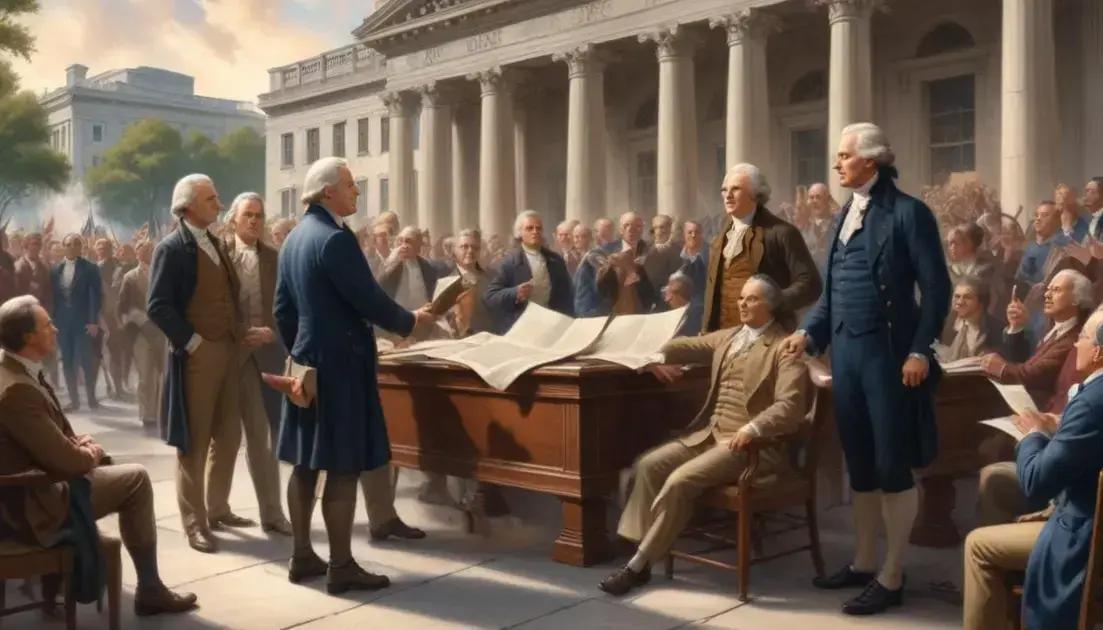
The Constitution: the living document of democracy
The Constitution plays a crucial role in modern democracy by outlining the government structure and protecting individual rights. It empowers citizens to participate actively in governance through voting and advocacy. This living document evolves over time via amendments and judicial interpretations, ensuring it remains relevant to contemporary issues. By understanding the Constitution, individuals can help uphold democratic values and influence societal changes.
Constitution—a term that defines our democratic system intricately. Did you know it’s not just historical? Dive in as we explore how this pivotal document continues to shape our lives!
Introduction to the Constitution
The Constitution is a crucial document in American history. It outlines the foundation of our government and the rights of the people. When it was created over 200 years ago, it aimed to establish justice and liberty for all.
What Is the Constitution?
The Constitution is the supreme law of the land. It defines how our government operates and protects the rights of every citizen. This document was born from the desire to create a fair and just system.
The Importance of the Constitution
This living document reflects the will of the people. It ensures that no one, not even the government, is above the law. The Constitution establishes checks and balances to keep power in check.
How the Constitution Has Evolved
Over the years, the Constitution has been amended to meet the changing needs of society. These amendments address critical issues like voting rights and equality. This adaptability shows how the Constitution remains relevant.
Key Elements of the Constitution
Some key elements include the Preamble, which states the purpose of the Constitution. Articles detail the structure of government. The Bill of Rights lists specific protections for individual freedoms.
Understanding the Constitution helps us appreciate our rights and responsibilities. It reminds us that democracy requires active participation. Every citizen has a role in shaping the future of our nation.
Historical context and significance
The historical context of the Constitution is crucial to understanding its significance. When it was created, America was a new nation. The framers faced many challenges in uniting different states and interests. They wanted to ensure freedom and avoid the tyranny they had faced under British rule.
The Colonies’ Struggle for Independence
The struggle during the American Revolution played a key role in shaping the Constitution. Colonists fought for equal rights and liberty. They desired a government that would protect their freedoms and not take them away.
The Articles of Confederation
Before the Constitution, the Articles of Confederation governed the states. However, this early system had many flaws. It gave too much power to individual states and left the central government weak.
Establishing a Stronger Government
The Constitutional Convention in 1787 addressed these issues. Delegates aimed to create a stronger federal government while balancing state rights. They debated and discussed for months to find the best solutions.
Significance of the Constitution
The Constitution’s significance lies in its enduring principles. It established a framework for governance that still exists today. The ideals of democracy, justice, and individual rights are at the heart of this document.
Today, the Constitution continues to guide American law and society. It reflects the values and beliefs of a diverse nation, reminding us of the importance of participation in democracy.
How the Constitution evolves
The Constitution evolves to meet the needs of a changing society. Since its creation, it has adapted through amendments and interpretations. This ability to change ensures that it remains relevant.
Amendments: A Key to Evolution
Amendments are formal changes to the Constitution. There are currently 27 amendments. Some, like the Bill of Rights, protect individual freedoms. Others expand voting rights and equality.
Interpreting the Constitution
The courts play a vital role in evolving the Constitution. Judges interpret its meaning based on current issues. This can adjust how laws apply today. For example, landmark cases have changed our understanding of rights.
Social Movements Influence Change
Social movements have also shaped constitutional evolution. Groups fighting for civil rights have pushed for change and greater equality. Grassroots efforts remind us that citizens can influence the Constitution.
Ongoing Discussions
The Constitution’s evolution is an ongoing discussion. It involves citizens, lawmakers, and judges. Open debates help keep our democracy strong and the Constitution alive. New issues arise, prompting questions and consideration.
Respecting its history while embracing modernity is key to its ongoing relevance. The Constitution reminds us that it is a living document, made for all.
The role of the Constitution in modern democracy
The Constitution plays a vital role in modern democracy. It serves as the foundation for government and protects individual rights. Every citizen benefits from its guiding principles.
Protecting Rights and Freedoms
The Constitution guarantees basic rights like freedom of speech and religion. These rights are essential for a healthy democracy. They empower individuals to express opinions and advocate for change.
Checks and Balances
The Constitution creates a system of checks and balances among branches of government. This way, no one branch becomes too powerful. Each branch—executive, legislative, and judicial—has specific duties and powers.
Engaging Citizens
Engagement is a big part of democracy, and the Constitution encourages it. Citizens can vote, run for office, and speak out on issues. This means everyone has a voice in shaping their government.
Adapting to New Challenges
As society changes, the Constitution adapts to meet new challenges. Courts interpret its meaning for modern issues. This ensures that it remains relevant and effective in protecting rights.
Understanding the Constitution helps citizens recognize their rights and responsibilities. It’s a living document that reflects our democracy and guides our future.
Conclusion
The Constitution remains a cornerstone of democracy. Its principles guide how we govern and live together. The rights it protects are essential for everyone.
Understanding Our Rights
Knowing the Constitution helps us understand our rights. This knowledge empowers us to speak out and participate. When citizens are educated, democracy thrives.
The Importance of Participation
Every person has a role in shaping government. Voting, advocacy, and community engagement matter. Through participation, we can influence policies and laws.
Embracing Change
As we face new challenges, the Constitution can evolve with us. It adapts to protect our freedoms in a changing world. Ongoing discussions about its interpretation keep it relevant.
By upholding the values within the Constitution, we safeguard our democracy. Together, we contribute to a better future for all.
Conclusion
In conclusion, the Constitution remains vital to our democracy and the rights of every citizen. Its principles guide our government and help protect freedoms that matter most to us. Understanding the Constitution allows us to engage actively in our communities and stand up for what we believe in.
As society evolves, so does the Constitution, ensuring it stays relevant for today’s challenges. By participating in the democratic process, whether through voting or advocacy, we can influence change and shape our future. Together, we can uphold the values of justice and equality that lie at the heart of the Constitution.