The Crusades: holy wars that reshaped East and West
The Crusades were a series of holy wars that began in the 11th century, significantly impacting both Eastern and Western societies. These conflicts led to cultural exchanges, political changes, and ongoing religious tensions. Key events like the Siege of Jerusalem and the Battle of Hattin highlight the intense struggles between Christians and Muslims. The outcomes of these wars shaped trade routes and influenced art, knowledge, and religious dialogues that resonate in modern society.
Uncover how the Crusades reshaped the world through conflict and cultural interchange. Dive into a telling of religious fervor that led to centuries of change!
The Origins of the Crusades
The Crusades began in the late 11th century. Many people were driven by religious passion. They aimed to reclaim the Holy Land from Muslim control. This period was marked by deep religious feelings and a strong belief that holy wars were justified.
Religious Context
Christianity was very important in Europe. The Pope had significant influence over people’s lives. His call for war resonated with many. The idea of serving God through battle was appealing. It offered a chance for adventure and spiritual rewards.
Political Factors
Besides religion, there were political reasons for the Crusades. European countries wanted to gain power and land. The Byzantine Empire faced threats from the Seljuk Turks. They asked for help. This request sparked initial interest from Western Europe.
Key Events Leading to the First Crusade
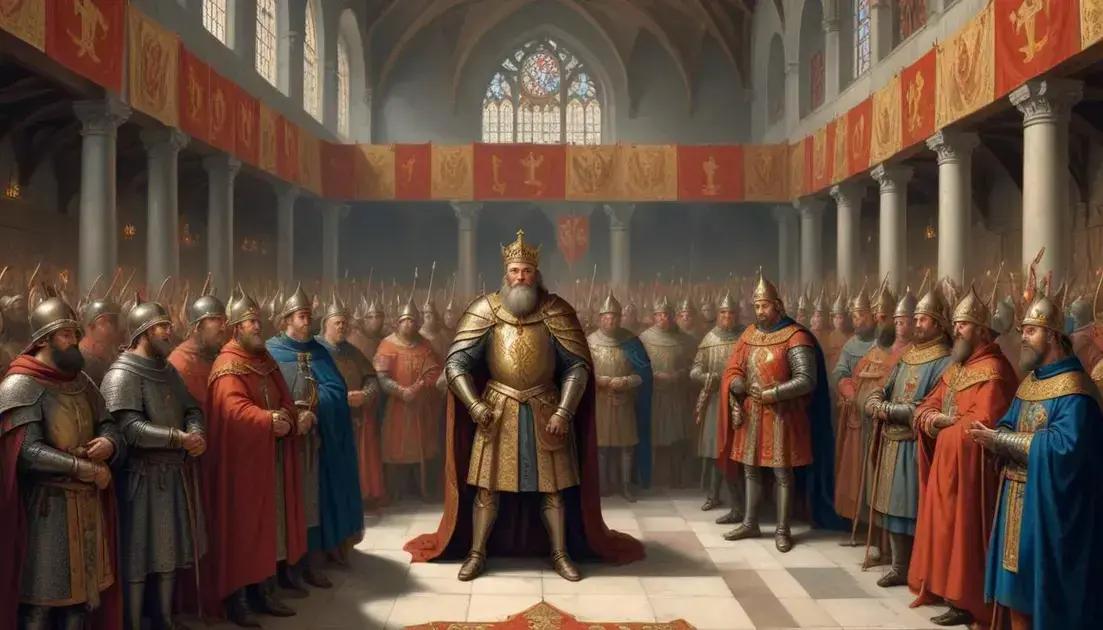
A major event was the Council of Clermont in 1095. Here, Pope Urban II encouraged knights to join the fight. He promised forgiveness of sins for those who participated. This message inspired thousands to take up arms.
As news spread, many people from different backgrounds joined. Not only knights but also peasants and common folks felt called to join the effort.
This religious fervor created a wave of excitement and hope. People believed they were on a mission to bring justice and restore the Holy City.
Key Events and Battles
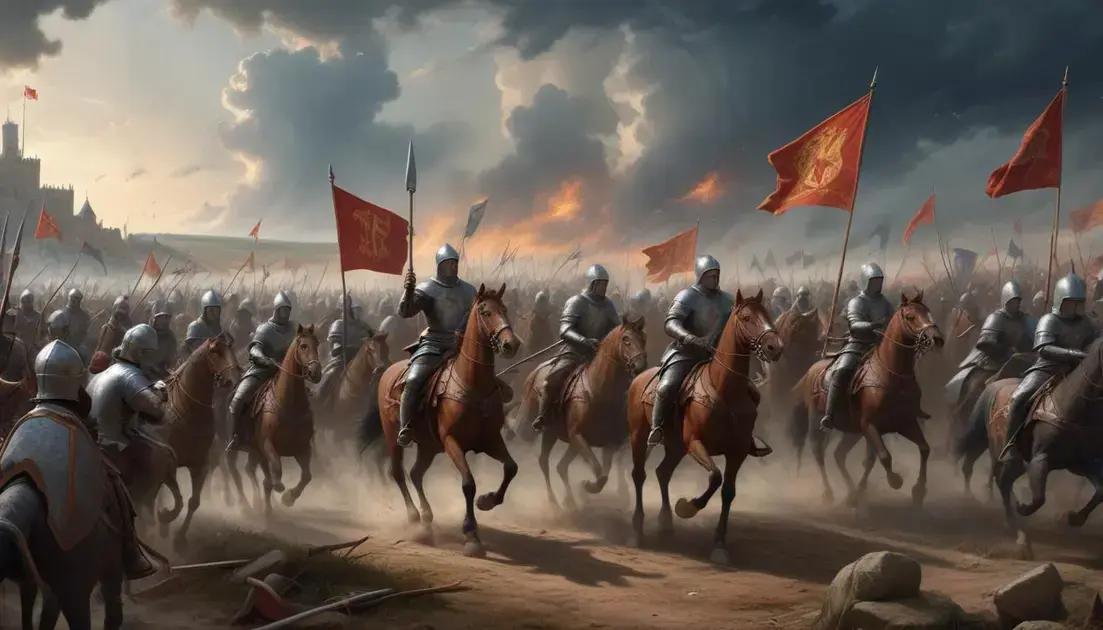
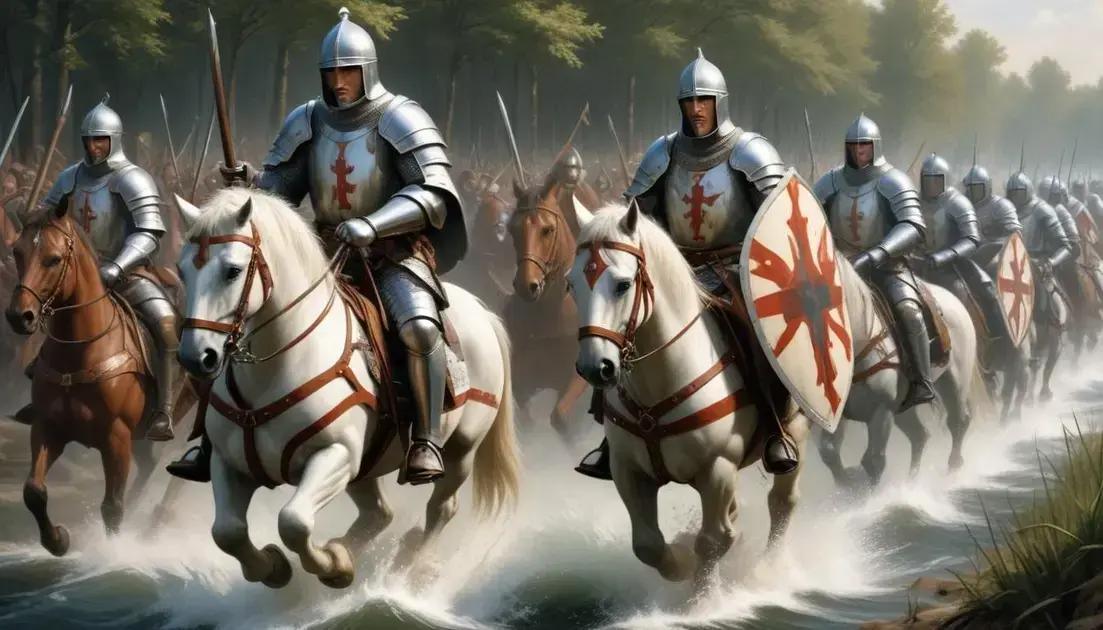
The Crusades were filled with key events and battles. Each battle shaped the course of history. The First Crusade began with a series of significant confrontations. These battles took place in various regions, often involving fierce fighting.
The Siege of Jerusalem
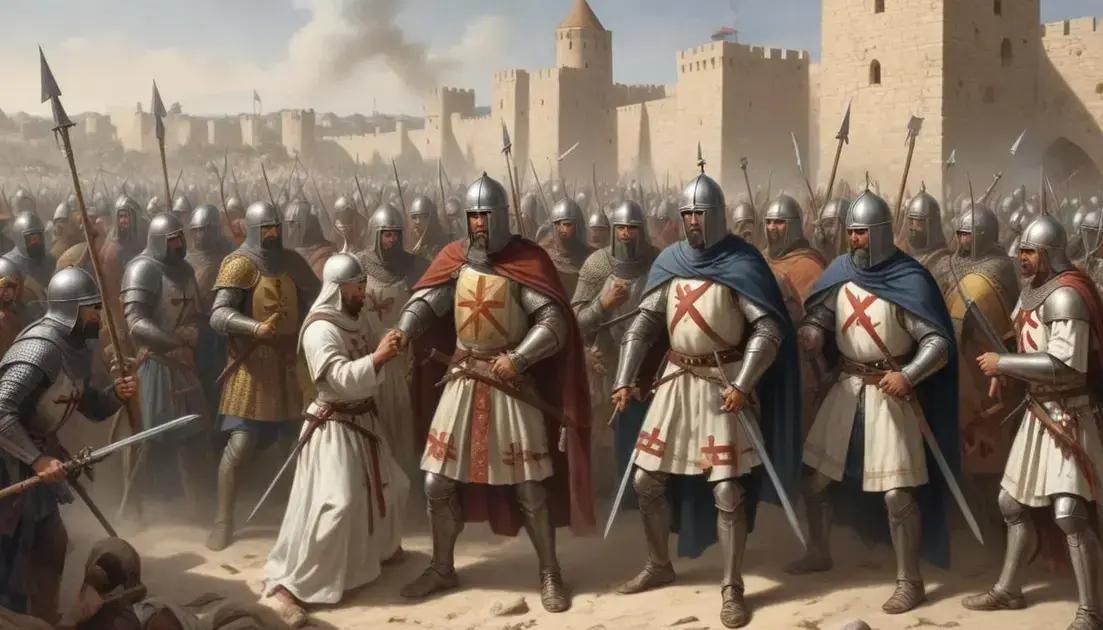
One of the most important events was the Siege of Jerusalem in 1099. Crusaders fought hard to capture the city. After weeks of fighting, they succeeded. The fall of Jerusalem marked a major victory for the Crusaders.
The Battle of Hattin
In 1187, the Battle of Hattin changed everything. The Muslim leader Saladin aimed to reclaim Jerusalem. He decisively defeated the Crusaders. This loss was a huge blow to Christian forces.
The Third Crusade
The Third Crusade, which started in 1189, included famous leaders like Richard the Lionheart. He sought to retake Jerusalem from Saladin. While he won key battles, he never fully captured the city.
Other Notable Engagements
Throughout the Crusades, smaller battles greatly impacted morale. Events like the Battle of Antioch and the Battle of Acre also played vital roles. They shaped alliances and affected strategies on both sides.
These key events and battles showed the struggle between faith and power. They also influenced the relationships among different cultures. Understanding these conflicts gives us insight into the era.
Cultural Exchanges
The Crusades led to important cultural exchanges between East and West. As armies traveled, they brought ideas and customs along with them. This blending of cultures changed both regions forever.
Trade and Commerce
One of the biggest impacts was on trade. Crusaders returned with new goods. Spices, silk, and other treasures became popular in Europe. This increased demand opened new trade routes.
Sharing of Knowledge
Cultural exchange also included knowledge. Crusaders learned about science, medicine, and philosophy from the Muslim world. Scholars translated texts into Latin. This information sparked curiosity and innovation in Europe.
Art and Architecture
Art and architecture were influenced too. European styles blended with Islamic designs. This led to unique buildings with new features, like pointed arches and intricate tile work. Churches and castles showed these new styles.
Religious Influence
Another significant change was in religious thought. The Crusades caused dialogue between Christians and Muslims. Despite conflict, some found common ground in faith and beliefs.
These cultural exchanges helped shape the world. They created links that lasted well beyond the Crusades. Understanding this mix of ideas shows how interconnected cultures can be.
The Impact on Modern Society
The Crusades had a lasting impact on modern society. They shaped cultures, politics, and economies in many ways. Understanding this influence helps us see today’s world more clearly.
Political Changes
One major change was in politics. The Crusades led to the rise of powerful monarchies in Europe. Kings gained more control as they united people for the wars. This shift laid the groundwork for modern nation-states.
Cultural Fusion
Cultural exchanges during the Crusades also matter today. They introduced new ideas and technologies from the East. This blending of cultures still influences art, food, and philosophy. Many practices we enjoy now have roots in this era.
Religious Tensions
However, the Crusades also caused ongoing religious tensions. Conflicts between Christians and Muslims started during this time. These wounds have not fully healed and affect relations even today.
Economic Effects
The Crusades also impacted trade routes significantly. New pathways opened for goods between East and West. This stimulated economies and influenced global trade patterns that continue to this day.
By examining the effects of the Crusades, we see a complex legacy. Their influence stretches from politics to culture and economics in our modern lives.
Conclusion
Understanding the Crusades helps us connect past events to modern life. Their impact reaches far and wide, from politics to culture. People fought for faith and territory, shaping today’s world.
The lessons learned from this period show us how history influences current events. By studying the Crusades, we can learn about cooperation and conflict between cultures.
The stories of the Crusades remind us of the power of belief and the struggles for dominance. They also highlight the importance of dialogue and mutual understanding.
This rich history continues to inform our perspectives today. As we reflect on the Crusades, let’s think about how we can foster peace and cooperation among diverse cultures.
Conclusion
In conclusion, the Crusades have left a lasting mark on our world today. They shaped politics, cultures, and economies in ways we still see. Understanding this history helps us realize how interconnected we are.
The Crusades remind us of the importance of dialogue and cooperation among different cultures. Although conflicts can arise, the stories from this time teach us valuable lessons. They show us the power of belief and the need for understanding.
By studying the impact of the Crusades, we can foster better relationships in our diverse society. It’s vital to remember our shared history as we move forward together, building bridges and finding common ground.