The first powered flight at Kitty Hawk
The first powered flight at Kitty Hawk by the Wright Brothers marked a pivotal moment in aviation history. It demonstrated that human flight was achievable, inspiring future innovations in air travel. Key advancements such as the three-axis control system, lightweight materials, and engine developments emerged from this breakthrough, laying the groundwork for modern aircraft. Today, Kitty Hawk stands as a symbol of perseverance and creativity, encouraging future generations to chase their dreams in aviation and beyond.
Kitty Hawk represents a monumental moment in aviation history, where dreams of flight soared into reality. Curious about how it all began? Let’s dive in!
The Wright Brothers and their journey to invention
The Wright Brothers were pioneers of flight. They faced many challenges but never gave up. Their journey began in Ohio, where they had a passion for flying.
With each attempt, they learned more about how to control an aircraft. They built several gliders to gather knowledge. Each test flight added to their experience.
In 1903, they shifted their focus to powered flight. They thought about what type of engine would work best. After much trial and error, they created their first powered aircraft.
The First Powered Flight
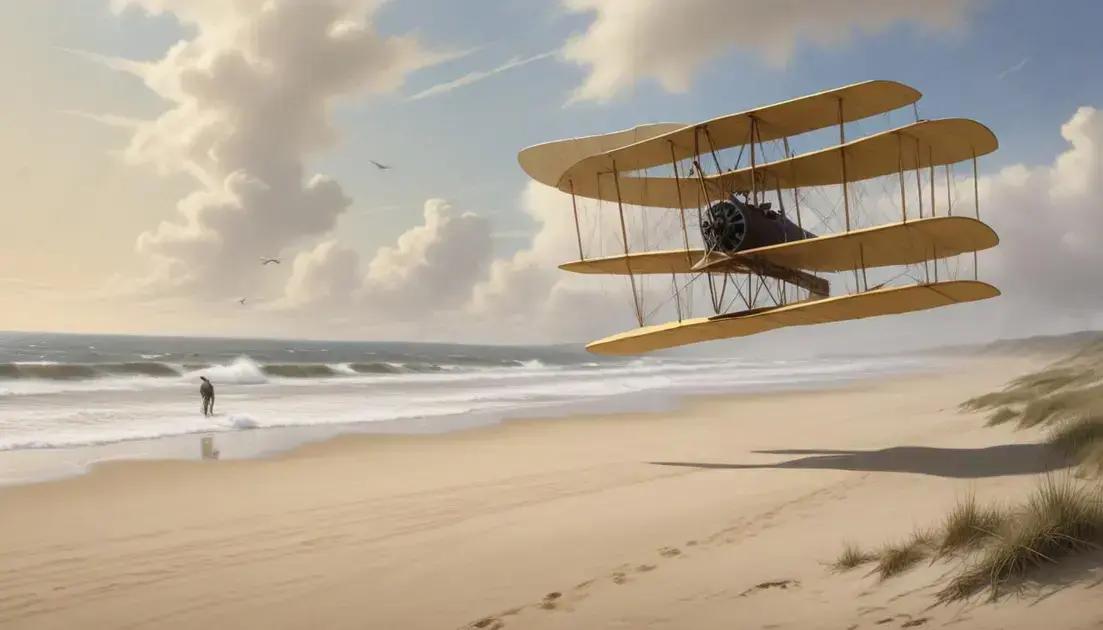
On December 17, 1903, the Wright Brothers achieved what many thought was impossible. Their airplane took off for 12 seconds and flew 120 feet. This moment was the start of a new era in aviation.
Overcoming Obstacles
The brothers faced many setbacks. They had to find the right materials and designs. The weather also sometimes did not cooperate. However, they continued to push forward despite these challenges.
They often worked in secrecy, not wanting others to steal their ideas. This focus helped them refine their designs. They became better inventors with each step they took.
The Legacy of the Wright Brothers
The Wright Brothers left behind more than just an aircraft. They inspired generations to come, showing that with determination and creativity, anything is possible. Their story is a reminder that every great achievement starts with a dream and hard work.
The significance of Kitty Hawk in aviation history
Kitty Hawk holds a special place in aviation history. It was here that the Wright Brothers made their remarkable first powered flight in 1903. This event changed the world forever.
The location was chosen for its favorable winds and soft sands. The conditions were ideal for testing their new flying machine. It was a small, fragile aircraft, but it proved that flight was possible.
Before Kitty Hawk, people dreamed of flying, but no one had succeeded. The Wright Brothers faced many doubts. However, their persistence paid off in this quiet town.
A Milestone in Engineering
Every year, people visit Kitty Hawk to celebrate this milestone. The first flight lasted only 12 seconds but was a giant leap for mankind. This moment showed that humans could defy gravity.
After the first flight, aviation rapidly developed. The Wright Brothers continued to improve their designs, leading to longer and more controlled flights. Kitty Hawk became a symbol of innovation and determination.
Legacy and Inspiration
Today, Kitty Hawk is more than a historical site. It inspires future generations of aviators and engineers. It’s a reminder of how a simple idea can lead to great achievements.
The significance of Kitty Hawk also lies in its role in American history. It marked the beginning of modern aviation, changing how people travel and connect.
Key innovations in early flight technology
Key innovations in early flight technology paved the way for modern aviation. The Wright Brothers weren’t the only ones experimenting with flight. Many inventors had ideas that helped shape aviation.
One major breakthrough was the development of the three-axis control system. This system allowed pilots to steer the aircraft better. It made flying more stable and safer.
Another innovation was the use of lightweight materials. The Wright Brothers used wood and cloth to build their airplanes. This choice reduced weight, which was crucial for flight.
Important Engine Developments
Engines were also an important part of early flight technology. The Wright Brothers designed their own engine, which was powerful enough to lift their aircraft into the air. Their engine was made from lightweight materials to enhance performance.
This focus on power-to-weight ratio was vital. Each improvement in engine design made flight longer and more efficient. Inventors of the time were constantly looking for better solutions.
Impact of Wind Tunnels
Wind tunnels became crucial tools for testing flight ideas. They helped engineers understand how air flows around an airplane. The manipulation of air turned out to be essential for flight design.
In addition, the use of wind tunnels led to more aerodynamic shapes. These shapes helped reduce drag, allowing planes to fly further and faster.
These key innovations laid the foundation for today’s advanced aircraft. Each step in early flight technology was about solving problems and learning from past attempts.
Legacy of the first powered flight at Kitty Hawk
The legacy of the first powered flight at Kitty Hawk is immense. This event changed the course of history in aviation. It inspired countless inventors and dreamers worldwide.
After that first flight in 1903, aviation quickly grew. The Wright Brothers showed that sustained flight was possible. Their success pushed others to explore the skies.
This moment marked the beginning of a new era. People began to imagine air travel as a reality. The sky was no longer just a dream; it became a destination.
Impact on Modern Aviation
The innovations developed by the Wright Brothers laid the groundwork for modern aircraft. Their concepts of lift, control, and structure are still used today. Each new aircraft builds upon their early principles.
Moreover, Kitty Hawk became a symbol of perseverance and creativity. It earned a spot in history as the birthplace of flight. Schools, museums, and memorials celebrate this achievement.
Inspiration for Future Generations
Every year, millions visit Kitty Hawk. They come to learn about aviation’s roots. Young people are inspired by the Wright Brothers’ journey. Their story teaches that determination can lead to great things.
Kitty Hawk reminds everyone that innovation can change the world. The first powered flight showed that dreams could take flight, literally. It laid the foundation for the future of travel and exploration.
Conclusion
In conclusion, the legacy of the first powered flight at Kitty Hawk is a powerful reminder of human innovation and determination. The Wright Brothers proved that with hard work, dreams can take flight. Their journey inspires us to push boundaries and explore new possibilities.
This historic moment changed the world of aviation forever. It opened doors to air travel, connecting people and places like never before. Today, we benefit from their groundbreaking work every time we fly.
Ultimately, Kitty Hawk represents a spirit of perseverance. It encourages future generations to chase their dreams. As we continue to innovate and explore, let us always remember those brave pioneers who first took to the skies.
Tags: