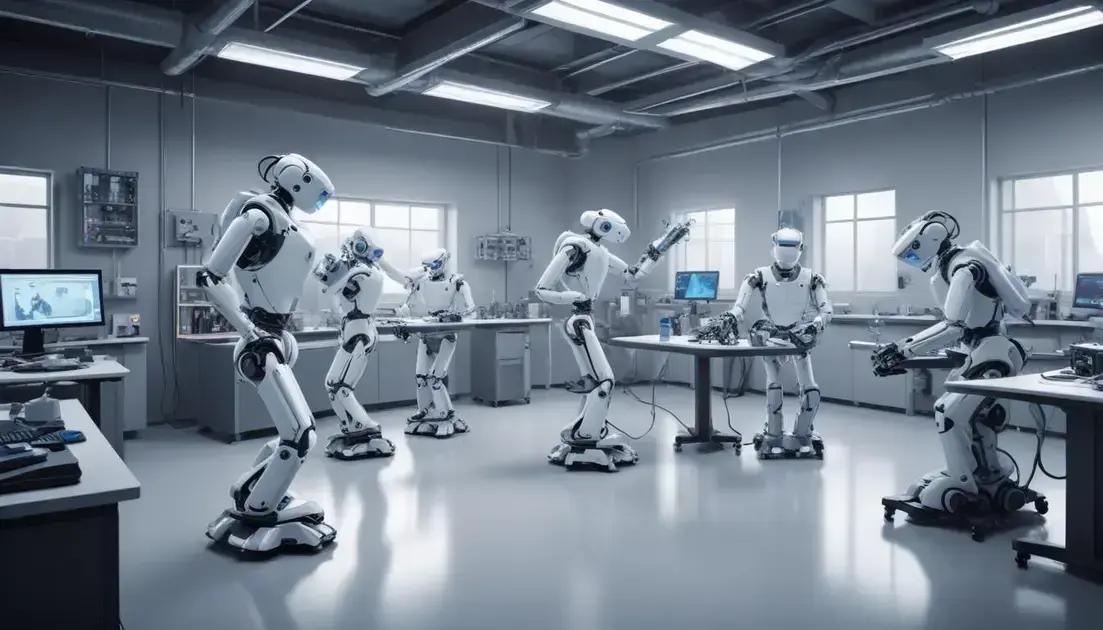
The lab that invented the robots of the future
The future of AI Robotics is bright, with advancements promising increased automation, enhanced healthcare solutions, and improved daily life integration. As robots become smarter, they will take on complex tasks across various industries, allowing humans to focus on creativity. Home robotics will assist with chores, while healthcare innovations will facilitate better patient care. Overall, the evolution of AI Robotics is set to transform our lives and reshape various sectors.
AI Robotics is revolutionizing how we interact with technology. But how did we get here? Let’s dive into the fascinating origins and future of robotics!
Introduction to AI Robotics and its significance
AI Robotics is changing the way we think about machines and technology. These robots can perform tasks that were once done only by humans. For example, they can work in factories, assist in surgeries, and even help elderly people with daily chores.
What Makes AI Robotics Special?
What sets AI Robotics apart is its ability to learn and adapt. Unlike traditional robots, AI robots use algorithms to improve their performance over time. This means they can become smarter the more they are used. It’s almost like they have a brain of their own!
Impact on Daily Life
These robots are not just in labs; they are already in our homes and communities. Think about smart home devices that follow your voice commands. That’s a simple example of AI Robotics at work, making life easier and more efficient.
Importance of AI Robotics
AI Robotics is crucial for future advancements. They help industries grow and improve services. By taking over repetitive and dangerous tasks, robots allow humans to focus on what really matters—creativity and problem-solving.
As AI Robotics keeps advancing, we can expect to see even more exciting changes. From healthcare to education, these technologies can make a real difference. This is why understanding AI Robotics is so important today.
The journey of innovation in robotics
The journey of innovation in robotics has been exciting and full of surprises. Robotics started with simple machines that could only perform basic tasks. These early robots were limited but laid the groundwork for future advancements.
Key Milestones in Robotics
One major milestone was the introduction of programmable robots in the 1960s. These robots could follow a series of commands to complete tasks. They were a big step up from manual machines.
Advancements in Technology
As technology improved, robots became more complex. New materials and better sensors allowed robots to be more agile and responsive. Nowadays, they can navigate environments and interact with people more effectively.
The Role of AI in Robotics
AI has transformed robotics significantly. With AI, robots can learn from experience and make decisions. This means they can adapt to new situations without human help.
Robots Today
Today, we see robots being used in various fields. From manufacturing to healthcare, they help us do tasks faster and more accurately. Robotics continues to evolve, bringing exciting possibilities for the future.
Impact of early AI on future technologies
The impact of early AI on future technologies has been profound. Early AI systems laid the foundation for what we see today. They introduced concepts like machine learning and data processing that are vital now.
The Beginning of AI
In the early days, AI focused on simple tasks. But even then, the potential was evident. Researchers began to understand how machines could learn from data.
Influence on Modern Technologies
As AI evolved, it influenced many fields like healthcare, finance, and transportation. For instance, AI algorithms now help doctors predict diseases early. This has made a significant difference in patient care.
Advancements in Robotics
AI also shaped robotics, enabling smart machines to perform complex tasks. These robots can now work alongside humans in factories and even in homes.
A Glimpse into the Future
Looking ahead, early AI innovations will continue to drive progress. They set the stage for new developments in technology and society. Innovations like autonomous vehicles and smart cities show just how far we can go.
Challenges faced in the development of robots
Developing robots comes with many challenges that engineers must overcome. One major challenge is creating robots that can understand human commands. This requires advanced AI systems that can process natural language.
Technical Limitations
Another challenge is the technology itself. Building reliable sensors and motors can be expensive and time-consuming. Engineers must find ways to make these components work smoothly together.
Safety Concerns
Safety is a significant issue in robotics. Robots must be designed to operate safely around humans. This means adding safety features to prevent accidents.
High Costs
Cost can also be a barrier. Developing advanced robotics often requires significant investment in research and development. Companies need to balance the costs with potential benefits.
Public Acceptance
Lastly, public acceptance is crucial. People may feel uneasy about robots taking over tasks. Educating the public about the benefits of robots is essential for successful integration.
Future prospects of AI Robotics
The future of AI Robotics holds exciting possibilities that can change our lives. As technology improves, robots will become even smarter and more capable.
Advancements in Automation
One major prospect is increased automation in industries. Robots will take on more complex tasks, allowing people to focus on creative work. This will boost productivity in sectors like manufacturing and healthcare.
Integration in Daily Life
We can also expect robots to play a bigger role in our homes. From cleaning to cooking, smart robots will help us manage daily tasks efficiently.
Enhanced Healthcare Solutions
In healthcare, AI Robotics will improve patient care. Surgical robots will assist doctors in performing precise operations. They will also help monitor patients remotely.
Learning and Adaptation
Future AI robots will learn from their experiences. They will adapt to various environments and user needs. This will make them even more useful and versatile.
Overall, the future of AI Robotics looks bright. These advancements will reshape industries and enhance our daily lives in ways we can only begin to imagine.
Conclusion
In conclusion, the future of AI Robotics is bright and full of potential. As robots continue to evolve, they will transform the way we live and work. Automation will increase, making industries more efficient. In our homes, robots will help with daily tasks, giving us more time for what truly matters.
Moreover, advancements in healthcare will lead to better patient care. AI robots will assist doctors and make monitoring patients easier. The ability to learn and adapt will also make robots more useful in various settings.
Overall, embracing AI Robotics can open new doors for innovation and improvement. By understanding its potential, we can prepare for a future where robots play a key role in our lives. The changes ahead are exciting, and the possibilities are endless.