The legacy of the Manhattan Project
The Manhattan Project significantly shaped modern science and society by advancing nuclear energy and weapons technology. Initiated during World War II, it led to groundbreaking discoveries like nuclear fission and the first atomic bombs, which dramatically impacted global politics. The ethical dilemmas arising from its outcomes continue to provoke debate around scientific responsibility and safety, emphasizing the need for a balance between innovation and ethical considerations in future advancements.
The Manhattan Project was not just a scientific achievement, it was a pivotal moment in history that forever changed our perception of technology and ethics. Have you ever considered the weight of its legacy?
The historical context of the Manhattan Project
The historical context of the Manhattan Project dates back to the early 1940s, during World War II. At that time, fears were high that Nazi Germany would develop atomic weapons. This led the U.S. to take swift action.
A group of scientists and military leaders gathered to discuss the threat. They understood that the race for nuclear power had just begun. The project was officially launched in 1942 and involved thousands of people working across the country.
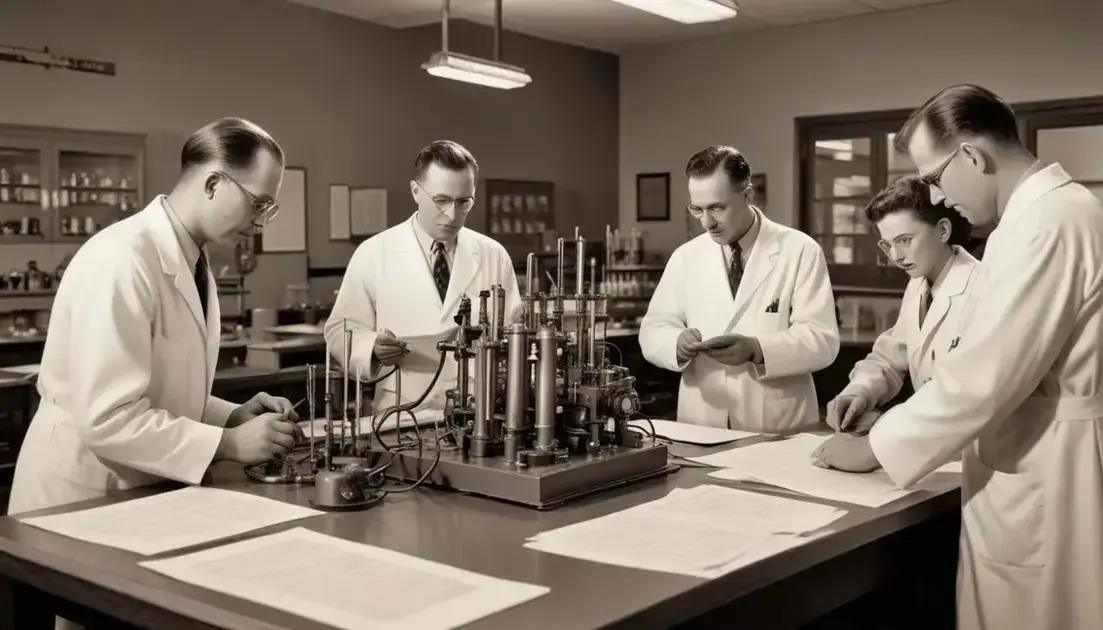
One key figure was J. Robert Oppenheimer, who became the project’s scientific director. He brought together brilliant minds like Enrico Fermi and Richard Feynman. They worked tirelessly to develop the first atomic bomb.
Research centers were established in places like Los Alamos, New Mexico, and Oak Ridge, Tennessee. These locations allowed scientists to collaborate in secret and focus on their groundbreaking work.
The urgency of the project pushed technology to new limits. It wasn’t just about physics; it blended science, engineering, and even politics. By the end of 1945, the outcome of this massive effort would change the world forever.
Scientific developments during the project
The scientific developments during the Manhattan Project were groundbreaking. Scientists worked on complex theories about nuclear fission. Fission is when an atomic nucleus splits, releasing a huge amount of energy.
One of the most important experiments was the Chicago Pile-1. This was the first controlled nuclear chain reaction. Scientists built it under a football field at the University of Chicago in 1942. This success proved that nuclear energy could be harnessed.
Another critical development was the creation of the atomic bomb. The team developed two types: the uranium bomb, known as “Little Boy,” and the plutonium bomb, called “Fat Man.” Each bomb used different materials but had similar destructive power.
To create these weapons, scientists ran many tests. They analyzed isotopes, which are different forms of the same element. This helped them understand how to produce the materials needed for the bombs.
High-speed photography and complex mathematical models also played significant roles. They helped scientists better understand explosions and the bomb’s effects. All these innovations set the stage for modern nuclear physics.
Ethical implications and moral dilemmas
The ethical implications of the Manhattan Project raise many important questions. Scientists developed technology that could either aid humanity or cause great harm. With such power came serious responsibilities.
One major concern was the use of atomic bombs on civilian populations. In 1945, the U.S. dropped bombs on Hiroshima and Nagasaki. This action resulted in massive destruction and loss of life. Many people questioned whether this was necessary to end the war.
Another dilemma involved the secrecy of the project. Scientists worked under strict confidentiality. This kept the public in the dark about the potential dangers. Some scientists felt this was wrong, especially knowing how powerful nuclear weapons could be.
Furthermore, the long-term effects of radiation exposure on survivors raised ethical issues. The legacy of the bomb continues to affect lives today. Questions about accountability and responsibility linger.
As these ethical concerns emerge, we must consider how technology impacts society. The moral lessons from the Manhattan Project challenge us to find a balance between innovation and ethics. This discussion is crucial as we navigate future scientific advancements.
The long-term effects on society and science
The long-term effects of the Manhattan Project on society and science are profound. This project changed the way we view nuclear power and weapons. It opened doors to new scientific fields while also raising concerns.
One major impact is the development of nuclear energy. This technology now provides power to millions. However, it also carries risks, such as nuclear accidents and waste disposal. These concerns remind us of the responsibility that comes with such power.
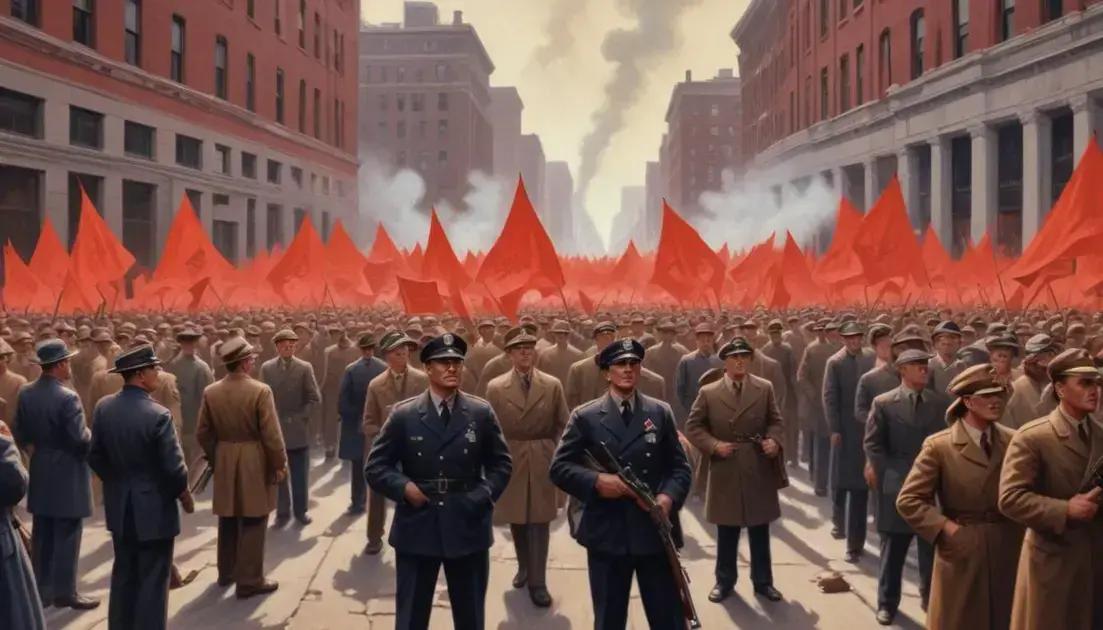
Another effect is the arms race. The project set the stage for countries to develop their own nuclear arsenals. This has led to ongoing tensions between nations. The fear of nuclear conflict remains a significant issue in global politics.
In the realm of science, the Manhattan Project pushed advancements in physics and engineering. New techniques and technologies emerged from this period. These innovations continue to influence research in various fields today.
Moreover, the ethical debates sparked by the project influence scientific research. Questions about safety, responsibility, and the ethics of technology persist. These discussions are crucial as we advance further into the future.
Conclusion
In conclusion, the Manhattan Project had lasting effects on both science and society. It opened new doors in nuclear energy, providing power but also raising important safety issues. The project also sparked an arms race, influencing global politics for decades.
Furthermore, the ethical debates that emerged continue to shape scientific research today. As we move forward, it’s crucial to remember these lessons. Balancing innovation with responsibility is key. By understanding the past, we can pave a better future for science and our world.